Similan Islands Diving: What Every Traveler Should Know
Nestled in the azure waters of the Andaman Sea, the Similan Islands represent one of Thailand’s most spectacular diving destinations. This pristine archipelago, consisting of nine granite islands, has captured the hearts of underwater enthusiasts from around the globe. Whether you’re a seasoned diver or someone considering their first plunge into the world of scuba diving, the Similans offer an underwater paradise that’s both accessible and breathtaking.
The name “Similan” comes from the Malay word “sembilan,” meaning nine, perfectly describing this chain of islands that stretches approximately 70 kilometers northwest of Phuket. What makes this destination truly special isn’t just its crystal-clear waters or abundant marine life – it’s the unique combination of dramatic underwater topography, world-class visibility, and conservation efforts that have preserved its natural beauty for generations of divers to enjoy.
Why the Similan Islands Are a Diver’s Paradise
The Similan Islands have earned their reputation as one of the world’s top diving destinations for several compelling reasons. The underwater landscape here is nothing short of extraordinary, featuring massive granite boulders that create swim-throughs, caverns, and dramatic drop-offs that serve as natural amphitheaters for marine life.
Visibility in these waters typically ranges from 20 to 40 meters, creating an almost surreal underwater experience where you can see for what feels like forever. The water temperature remains consistently warm throughout the diving season, hovering between 26-29°C (79-84°F), making it comfortable for extended dives without the need for thick wetsuits.
What truly sets the Similans apart is the incredible diversity of marine ecosystems. The western sides of the islands feature dramatic drop-offs and deeper waters that attract pelagic species, while the eastern sides offer gentler slopes with vibrant coral gardens perfect for macro photography and newer divers. This variety means that every dive can offer a completely different experience, from adrenaline-pumping encounters with large marine animals to peaceful explorations of colorful reef systems.
Best Time to Visit for Optimal Diving Conditions
Understanding the seasonal patterns of the Similan Islands is crucial for planning your diving adventure. The islands are open to visitors from mid-October through mid-May, coinciding with Thailand’s dry season and the calmest sea conditions. During this period, the southwest monsoons have subsided, leaving behind crystal-clear waters and minimal surface chop.
The peak diving season runs from December through April, when visibility reaches its maximum and weather conditions are most predictable. February and March are often considered the sweet spot, offering the perfect balance of excellent underwater conditions, comfortable air temperatures, and manageable tourist crowds.
Early season diving in November and December can be particularly rewarding for experienced divers, as the marine life tends to be more active after the monsoon period, and you’ll encounter fewer crowds. However, occasional rain showers and slightly reduced visibility are possible during this time.
Late season diving in April and May offers its own advantages, including warmer water temperatures and the possibility of encountering manta rays and whale sharks as they begin their seasonal migrations. The trade-off is typically higher surface temperatures and the potential for afternoon thunderstorms.
Marine Life You’ll Encounter
The biodiversity of the Similan Islands is simply staggering, with over 500 species of fish and numerous types of coral documented in these waters. The marine life here ranges from the tiniest nudibranchs to the ocean’s largest fish, creating opportunities for unforgettable encounters on every dive.
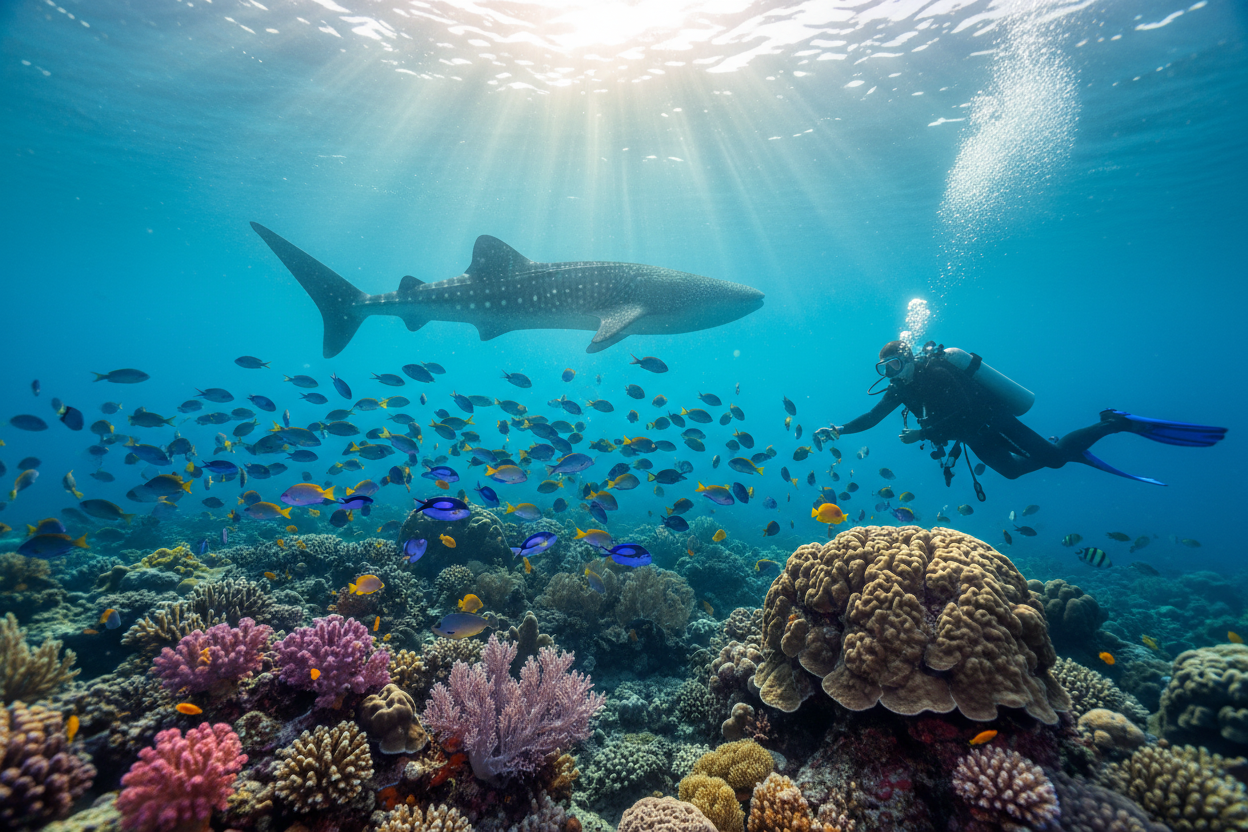
Large pelagic species are among the main attractions, with whale sharks being the crown jewel of Similan diving. These gentle giants, which can grow up to 12 meters in length, are most commonly spotted between February and April, particularly around the deeper sites on the western sides of the islands. Manta rays also grace these waters, often seen at cleaning stations where smaller fish remove parasites from their massive wingspans.
The reef systems teem with tropical fish species that create living kaleidoscopes of color. Schools of barracuda, trevally, and fusiliers patrol the deeper waters, while the coral gardens host parrotfish, angelfish, butterflyfish, and countless other species. Moray eels peer out from crevices, octopi display their remarkable camouflage abilities, and sea turtles glide gracefully through the water columns.
For macro enthusiasts, the Similans offer incredible opportunities to photograph smaller creatures. Nudibranchs in every imaginable color and pattern decorate the coral heads, while ghost pipefish, seahorses, and ornate ghost pipefish provide challenges for underwater photographers seeking the perfect shot.
Top Dive Sites Every Diver Must Experience
Each of the nine Similan Islands offers unique diving opportunities, but several sites have achieved legendary status among the diving community. Richelieu Rock, technically part of the greater Similan area, consistently ranks among the world’s best dive sites. This underwater pinnacle rises from depths of over 30 meters to just below the surface, creating a magnet for marine life.
Elephant Head Rock, located between islands 7 and 8, features massive granite formations that create a maze of swim-throughs and caverns. The site gets its name from a rock formation that resembles an elephant’s head when viewed from the surface. This site is perfect for underwater photography, with dramatic lighting effects created by the sun filtering through the rock formations.
Deep Six, situated on the western side of island 7, offers thrilling drift diving opportunities along a steep wall that drops into the abyss. This site is famous for encounters with larger pelagic species and offers some of the most dramatic underwater topography in the archipelago.
For those seeking gentler diving experiences, the Coral Gardens sites around islands 4 and 5 provide perfect conditions for newer divers or those interested in macro photography. These shallow reefs showcase the incredible coral diversity of the region and serve as nurseries for countless juvenile fish species.
Essential Diving Tips and Safety Considerations
Diving in the Similan Islands requires some specific preparation and awareness of local conditions. The currents here can be unpredictable and sometimes strong, particularly on the western sides of the islands where the deeper, more exciting sites are located. Always dive with experienced local guides who understand the current patterns and can ensure your safety while maximizing your underwater experience.
Most dive operators in the area require divers to have at least an Open Water certification, though some of the more challenging sites may require Advanced Open Water or equivalent experience. If you’re planning to dive the deeper sites or want to maximize your bottom time, consider completing your Nitrox certification before your trip.
The granite boulder formations that make the Similans so spectacular also create unique navigation challenges. It’s easy to become disoriented in the maze of swim-throughs and caverns, so always maintain visual contact with your dive guide and never venture into overhead environments without proper training and equipment.
Surface conditions can change rapidly, and dive boats may need to move between sites quickly to avoid rough seas. Pack your gear in waterproof bags and be prepared for potentially wet boat rides between dive sites.
How to Get There and Where to Stay
Reaching the Similan Islands requires some planning, as they’re located approximately 70 kilometers from the Thai mainland. Most divers access the islands through Phuket or Khao Lak, with Khao Lak being the closer departure point and offering a shorter boat ride to the diving areas.
Day trips from both Phuket and Khao Lak are possible, but the travel time means you’ll have limited time underwater. For serious divers, liveaboard trips ranging from 2 to 7 days offer the best value and diving opportunities. These floating hotels anchor near the best dive sites, allowing for multiple dives per day and the possibility of night diving.
Khao Lak has emerged as the primary gateway to the Similans, offering numerous dive operators, accommodation options, and the shortest transfer time to the islands. The town provides everything from budget guesthouses to luxury resorts, making it easy to find accommodation that fits your budget and preferences.
Phuket offers more diverse accommodation and entertainment options but requires longer boat transfers to reach the diving areas. However, many divers choose to combine their Similan diving adventure with other activities available from Phuket, making it an attractive option for those wanting a more varied vacation experience.
Conservation Efforts and Responsible Diving Practices
The Similan Islands National Park was established in 1982, reflecting Thailand’s commitment to preserving this underwater treasure for future generations. The park’s conservation efforts include strict regulations on visitor numbers, seasonal closures to allow marine life to recover, and ongoing monitoring of coral reef health.
As a responsible diver, you play a crucial role in protecting this fragile ecosystem. Maintain excellent buoyancy control to avoid damaging corals, never touch or harass marine life, and follow the “take only pictures, leave only bubbles” philosophy. Many of the coral formations here are hundreds of years old, and even minor damage can take decades to heal.
Choose dive operators that demonstrate genuine commitment to conservation through their practices. Look for companies that use mooring buoys instead of anchors, limit group sizes, employ local guides, and contribute to marine conservation efforts. Many operators now participate in coral restoration projects and marine life monitoring programs.
The park authorities have implemented various measures to reduce the environmental impact of tourism, including restrictions on certain sunscreens that can damage coral reefs. Using reef-safe sunscreen and following all park guidelines helps ensure that future generations of divers will be able to experience the same underwater wonders you’re enjoying today.
Conclusion
The Similan Islands offer an underwater experience that ranks among the world’s finest, combining dramatic topography, incredible marine biodiversity, and crystal-clear waters into an unforgettable diving adventure. Whether you’re drawn by the possibility of swimming with whale sharks, exploring underwater caverns formed by ancient granite boulders, or simply immersing yourself in some of the most vibrant coral gardens in Southeast Asia, the Similans deliver experiences that will stay with you long after you’ve dried off your wetsuit.
Planning your Similan diving adventure requires consideration of seasonal conditions, choosing the right type of diving experience for your skill level, and selecting operators committed to responsible tourism practices. The effort invested in proper planning pays dividends in the form of safer, more enjoyable diving and the satisfaction of knowing you’re contributing to the preservation of this underwater paradise.
For many divers, a trip to the Similan Islands becomes a transformative experience that deepens their connection to the ocean and reinforces the importance of marine conservation. The memories created in these pristine waters often inspire divers to become advocates for ocean protection, ensuring that places like the Similans continue to thrive for generations to come. Whether this is your first visit or a return to familiar waters, the Similan Islands promise diving experiences that exceed expectations and create lifelong memories.
 English
Leave a Reply