Thailand’s Similan Islands: A Diver’s Paradise
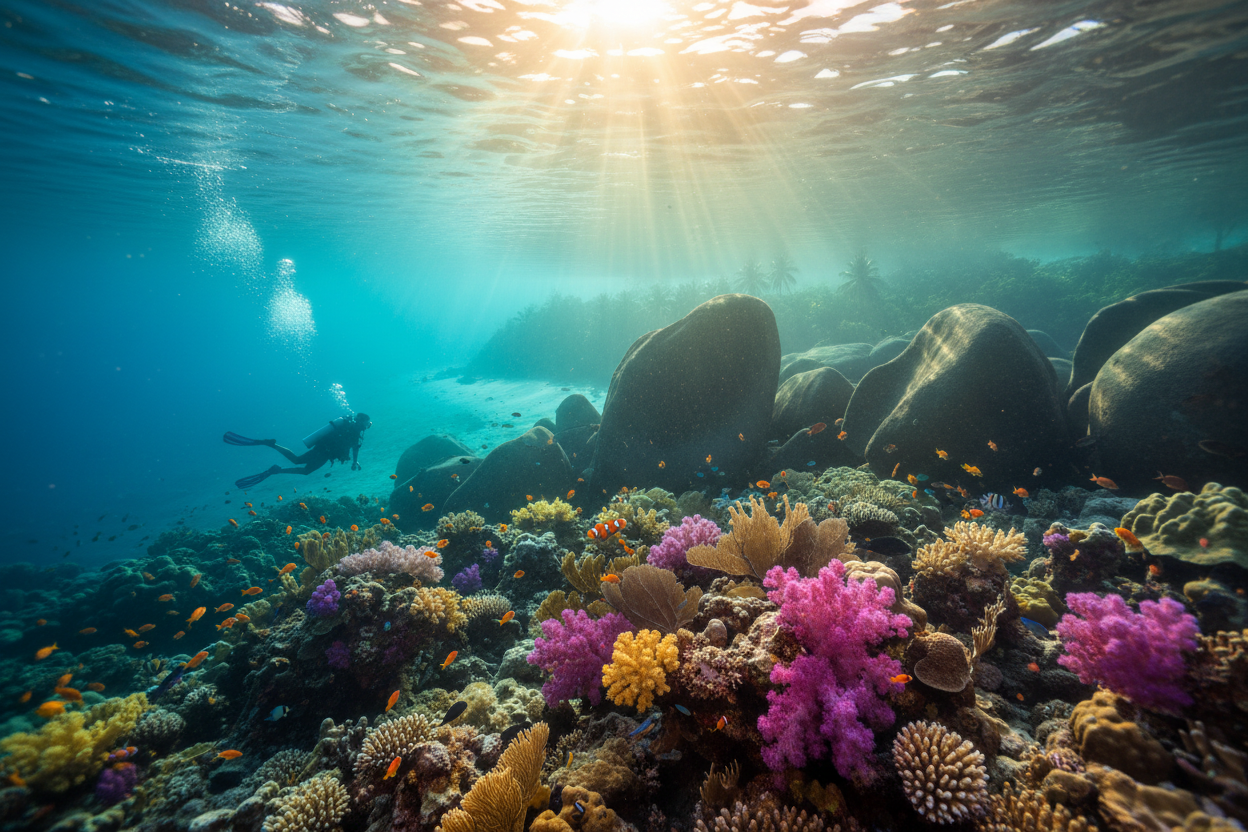
Picture this: you’re floating weightlessly above vibrant coral gardens, surrounded by schools of tropical fish in every color imaginable, while massive granite boulders create underwater cathedrals that seem almost otherworldly. This isn’t just a dream – it’s what awaits you at Thailand’s Similan Islands, one of the world’s most spectacular diving destinations.
Located in the Andaman Sea, about 70 kilometers northwest of Phuket, the Similan Islands National Park comprises nine pristine islands that have earned their reputation as a diver’s paradise. The name “Similan” comes from the Malay word “sembilan,” meaning nine, and each island offers its own unique underwater treasures that continue to captivate divers from around the globe.
Why the Similan Islands Are Every Diver’s Dream
What makes the Similan Islands so special isn’t just one thing – it’s the perfect combination of crystal-clear waters, diverse marine life, and underwater topography that reads like a love letter to the ocean. The visibility here often exceeds 30 meters, creating an almost surreal underwater experience where you can see for what feels like miles in every direction.
The islands sit right in the path of nutrient-rich currents that flow through the Andaman Sea, creating an underwater ecosystem so vibrant and diverse that it rivals any diving destination in the world. From the smallest nudibranchs to the largest whale sharks, the Similan Islands host an incredible variety of marine life that keeps divers coming back year after year.
The underwater landscape itself tells a story millions of years in the making. Massive granite formations create swim-throughs, caves, and overhangs that serve as natural amphitheaters for marine life. These geological wonders, combined with healthy coral reefs, create diving experiences that range from gentle drift dives perfect for beginners to adrenaline-pumping deep dives that challenge even the most experienced divers.
Incredible Marine Life Encounters
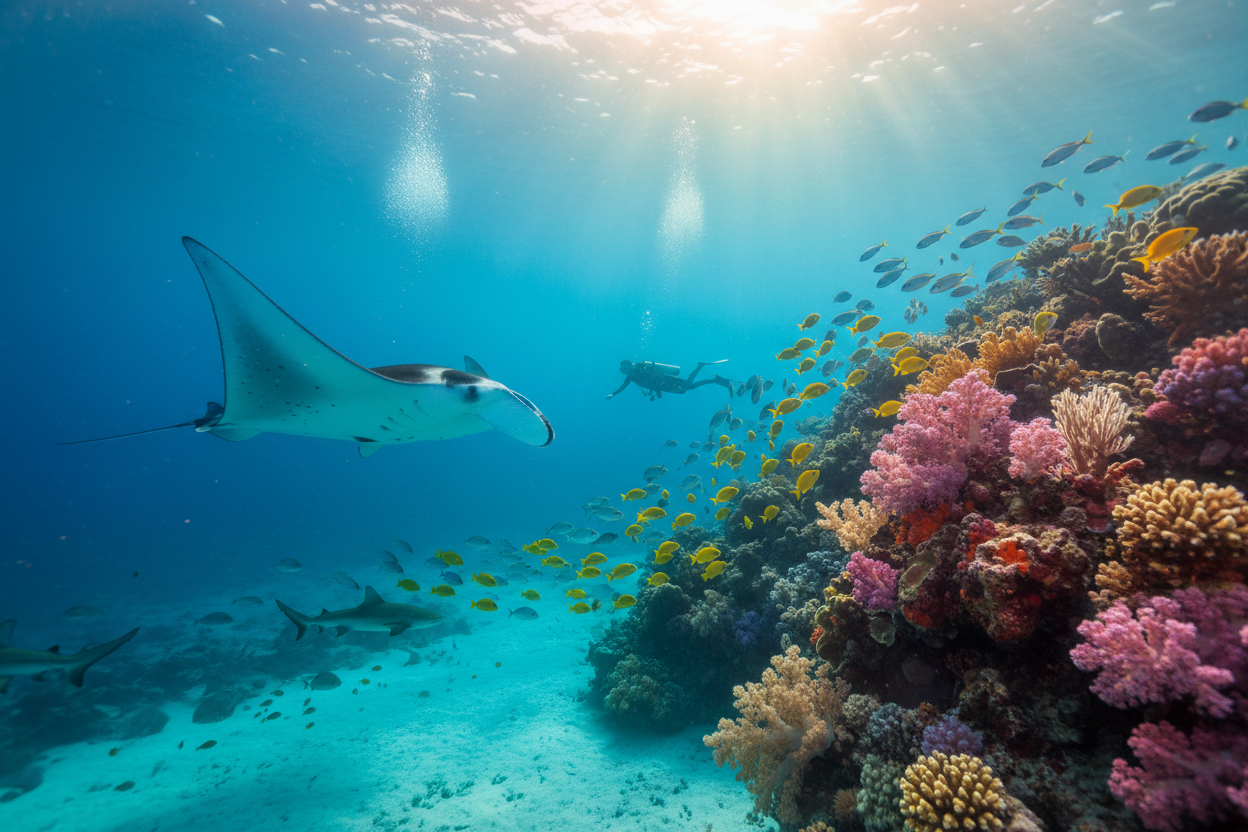
The marine biodiversity at the Similan Islands reads like a who’s who of Indo-Pacific marine life. Manta rays glide gracefully through the water columns, their wingspans reaching up to seven meters, while whale sharks – the gentle giants of the ocean – make regular appearances, especially around Koh Bon and Koh Tachai.
Reef sharks patrol the deeper waters, and if you’re lucky, you might encounter leopard sharks resting on sandy bottoms or nurse sharks tucked away under coral overhangs. The fish life is equally impressive, with massive schools of barracuda creating silvery tornadoes in the blue water, while rainbow runners, trevally, and snappers add splashes of color to every dive.
For macro photography enthusiasts, the Similan Islands offer endless opportunities. Ornate ghost pipefish drift like delicate leaves in the current, while mantis shrimp peer out from their burrows with eyes that seem almost alien. Nudibranchs in every imaginable color and pattern decorate the coral walls, and if you know where to look, you might spot the elusive frogfish perfectly camouflaged against the reef.
The coral reefs themselves are living works of art. Hard corals create underwater gardens with table corals, staghorn corals, and massive barrel sponges providing homes for countless species. Soft corals add movement and color to the reefs, swaying gently in the current like underwater flowers in an ocean breeze.
Top Diving Sites You Cannot Miss
Each dive site around the Similan Islands has its own personality and attractions. Elephant Head Rock, perhaps the most famous site, gets its name from a massive granite boulder that resembles an elephant’s head when viewed from the surface. Underwater, this site features a maze of swim-throughs and caverns that create a playground for both divers and marine life.
Richelieu Rock, while technically not part of the Similan Islands but often included in diving itineraries, stands as one of Thailand’s premier dive sites. This submerged pinnacle attracts some of the largest marine life in the region, including whale sharks, manta rays, and massive schools of fish that create walls of silver in the blue water.
Koh Bon’s west ridge offers thrilling drift diving opportunities where strong currents bring nutrients that attract large pelagic species. The cleaning stations here regularly host manta rays, and the dramatic underwater topography creates an almost alien landscape that feels like diving on another planet.
For those seeking a more relaxed diving experience, the protected bays around islands like Koh Miang offer gentle slopes covered in pristine coral reefs. These sites are perfect for night diving, when the reef comes alive with a completely different cast of characters, including hunting moray eels, octopi, and the mesmerizing dance of mandarin fish during their evening spawning ritual.
Best Time to Visit for Optimal Diving Conditions
Timing your visit to the Similan Islands can make the difference between a good diving trip and an absolutely unforgettable one. The diving season officially runs from November to April, when the southwest monsoon subsides and the Andaman Sea calms to reveal its underwater treasures.
November through January offers some of the best visibility and calmest seas, making this period ideal for underwater photography and encountering larger marine life. The water temperature during these months hovers around 27-29°C, perfect for extended diving sessions without feeling cold.
February and March bring slightly warmer water temperatures and continue to offer excellent diving conditions. This is also when manta ray sightings become more frequent, particularly around Koh Bon and Koh Tachai. The plankton blooms during this period attract these gentle giants, creating some of the most memorable diving experiences possible.
April marks the end of the diving season, but it can offer some of the year’s best diving for those willing to take the chance. The weather can be more unpredictable, but the marine life is often at its most active, and you’ll encounter fewer crowds both above and below the water.
Essential Diving Tips and Preparation
Diving the Similan Islands requires some preparation to ensure you make the most of this incredible experience. The currents here can be strong and unpredictable, so having good buoyancy control and comfort in varying conditions is essential. If you’re not comfortable with drift diving, consider taking a specialty course before your trip.
Bringing the right equipment can significantly enhance your experience. A good underwater camera or housing is almost mandatory – the photo opportunities here are simply too good to pass up. A dive light is essential not just for night diving but for bringing out the true colors of the coral reefs and marine life during day dives.
Consider bringing a reef hook if you plan to dive sites like Richelieu Rock, where strong currents can make it challenging to stay in position to observe cleaning stations or photograph marine life. A surface marker buoy is also recommended for safety during drift dives.
Most importantly, respect the marine environment that makes the Similan Islands so special. Practice good buoyancy control to avoid damaging corals, never touch or harass marine life, and follow the guidance of local dive guides who know these waters intimately.
Planning Your Similan Islands Adventure
Getting to the Similan Islands typically involves flying into Phuket and then taking a speedboat or joining a liveaboard diving trip. Day trips are possible but limit your diving opportunities, while multi-day liveaboard trips offer the chance to explore more remote sites and experience the islands without the crowds.
Liveaboard trips typically range from two to five days, with longer trips often including visits to additional sites like Richelieu Rock and the Burma Banks. These trips offer the ultimate Similan Islands experience, with multiple dives per day and the opportunity to experience the islands’ pristine beauty both above and below water.
For accommodation on land, options range from basic beach bungalows to luxury resorts on nearby Khao Lak, which serves as the main jumping-off point for Similan Islands trips. Khao Lak offers excellent restaurants, dive shops, and the chance to explore Thailand’s mainland attractions between diving days.
The Similan Islands National Park has implemented various conservation measures to protect this marine paradise, including limiting the number of visitors and closing certain areas during turtle nesting season. These efforts ensure that future generations of divers will be able to experience the same wonder that makes the Similan Islands such a special place.
Whether you’re taking your first tentative breaths underwater or you’re a seasoned diver with hundreds of dives in your logbook, the Similan Islands offer experiences that will stay with you long after you’ve dried off your wetsuit. From the gentle giants that patrol these waters to the intricate coral gardens that carpet the seafloor, every dive here tells a story of an ocean ecosystem in perfect harmony. The Similan Islands aren’t just a diving destination – they’re a reminder of why we fell in love with the underwater world in the first place.
 English
Leave a Reply