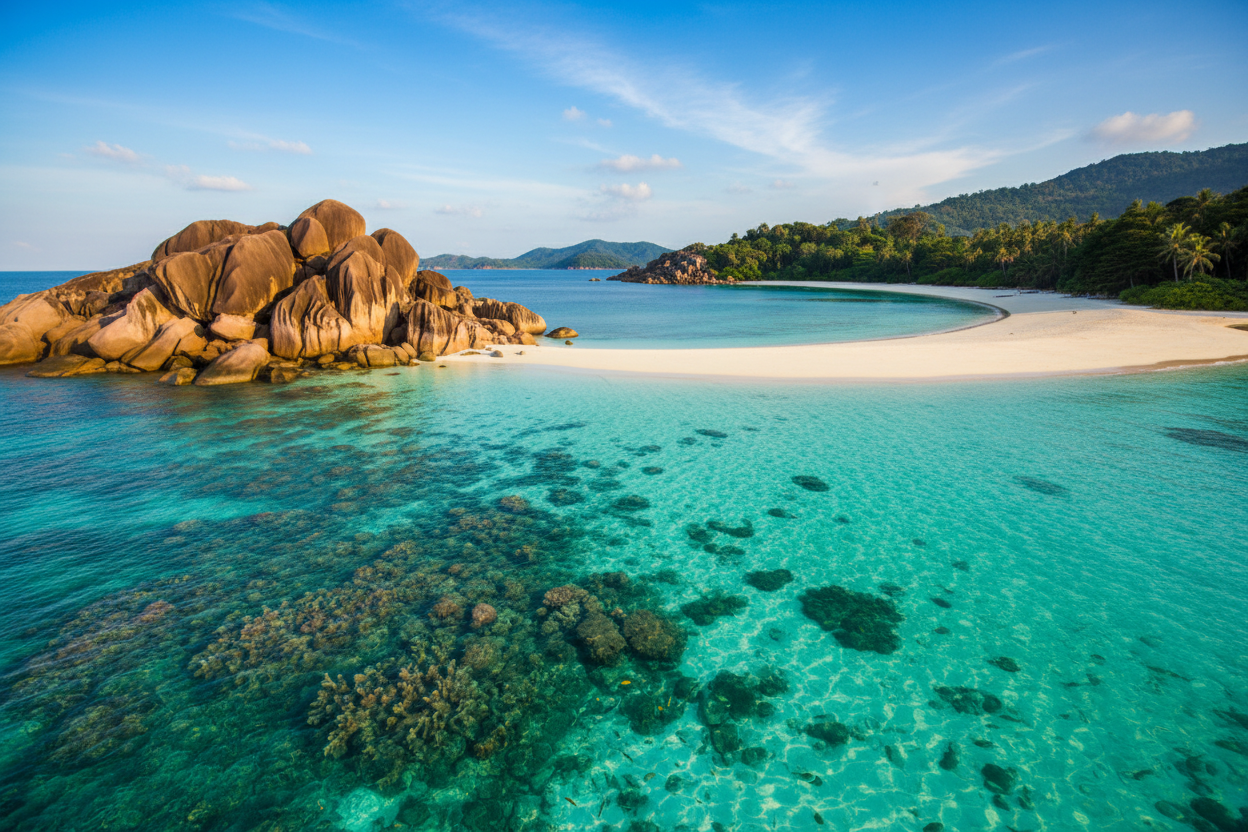
When I first heard about the Similan Islands, I thought I knew what to expect from Thailand’s marine paradise. After all, I’d explored countless tropical destinations and captured their beauty through my lens. But nothing could have prepared me for the ethereal magic that awaited me in this pristine archipelago off Thailand’s west coast. As I set foot on these untouched islands, camera in hand, I realized I was about to document something truly extraordinary.
The Similan Islands aren’t just another travel destination – they’re a photographer’s dream and a nature lover’s sanctuary rolled into one breathtaking experience. Located in the Andaman Sea, approximately 84 kilometers northwest of Phuket, this chain of eleven granite islands offers some of the most spectacular underwater and above-water scenery in Southeast Asia. For travel vloggers and content creators, the Similans present an unparalleled opportunity to capture raw, untouched beauty that feels almost otherworldly.
Planning Your Similan Islands Photography Adventure
Before diving into the visual feast that awaits, proper planning is essential for any successful travel vlog from the Similan Islands. The islands operate on a seasonal schedule, typically open from mid-October to mid-May, when weather conditions are optimal for both travel and filming. This timing coincides perfectly with Thailand’s dry season, ensuring crystal-clear waters and abundant sunshine for your footage.
Getting to the Similans requires a boat journey from either Khao Lak or Phuket, with most operators offering day trips or multi-day liveaboard experiences. For serious vloggers, I highly recommend the liveaboard option – it provides unlimited access to different islands and diving spots, allowing you to capture the magical transformation of these islands from dawn to dusk. The golden hour shots you’ll get are absolutely worth the extra investment.
Equipment-wise, waterproof housing for your camera is non-negotiable. The Similans are famous for their underwater biodiversity, and missing out on filming the vibrant coral reefs and marine life would be a tragedy. I learned this lesson the hard way during my first visit when I relied solely on a basic waterproof case that fogged up during crucial underwater scenes.
Island Number 4: Donald Duck Rock and Iconic Landscapes
Island Number 4, known locally as Koh Miang, serves as the gateway to Similan magic and houses the famous Donald Duck Rock formation. This naturally sculpted granite boulder, resembling the beloved Disney character, has become the most photographed landmark in the archipelago. However, what makes this spot truly special for vloggers isn’t just the rock itself – it’s the incredible vantage point it provides.
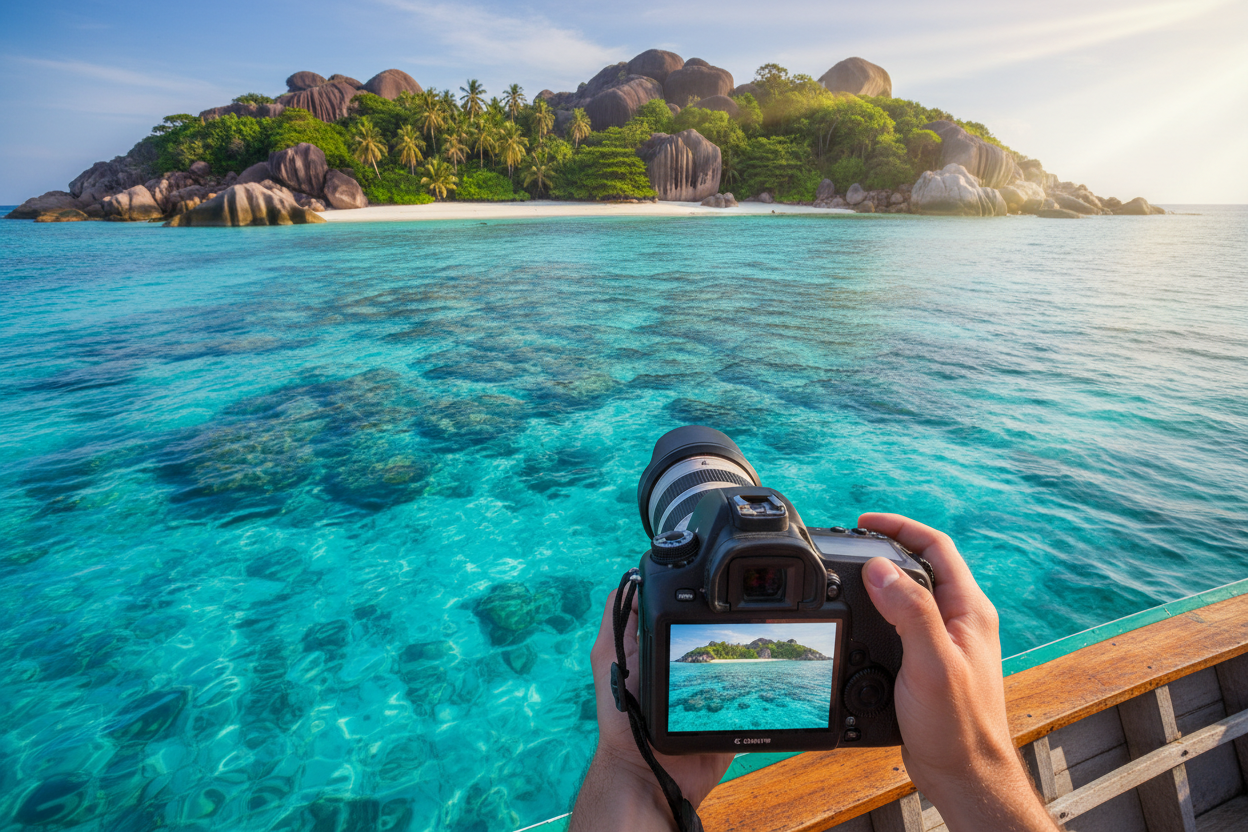
Climbing to the top of Donald Duck Rock offers a panoramic view that captures the essence of the entire Similan experience. From this elevated position, you can film the contrast between the emerald jungle canopy, pristine white sand beaches, and the impossibly blue Andaman Sea stretching to the horizon. The interplay of colors here is so vivid that it almost seems artificially enhanced, making every frame a potential masterpiece.
The best time to film at Donald Duck Rock is during the early morning hours, around 7-8 AM, when the lighting is soft and the tourist crowds haven’t yet arrived. I spent nearly two hours here during my visit, capturing different angles and waiting for the perfect moment when a traditional longtail boat passed by, adding a human element to the pristine natural landscape.
Underwater Cinematography in Crystal Clear Waters
The real magic of the Similan Islands lies beneath the surface, where an underwater wonderland awaits discovery. The visibility here often exceeds 30 meters, creating ideal conditions for underwater filming that rivals any professional aquarium setup. The clarity of the water means you can capture stunning footage even with basic underwater equipment, though professional gear will elevate your content to extraordinary levels.
Richelieu Rock, though technically outside the main island group, represents the pinnacle of Similan diving and filming opportunities. This submerged seamount attracts an incredible diversity of marine life, including whale sharks, manta rays, and schools of barracuda that create mesmerizing underwater tornadoes. Filming here requires patience and respect for the marine environment, but the footage you’ll capture is absolutely priceless.
For those focusing on coral reef documentation, the shallow reefs around Islands 7, 8, and 9 offer spectacular hard coral formations that look like underwater cities. The staghorn and table corals create natural amphitheaters where colorful reef fish perform their daily ballet. I found that filming during mid-morning provided the best natural lighting for showcasing the vibrant colors of both the corals and the tropical fish species.
Capturing Similan’s Unique Granite Formations
What sets the Similan Islands apart from other tropical destinations is their distinctive granite boulder formations. These ancient rocks, smoothed by millions of years of wind and water erosion, create surreal landscapes that look more like alien worlds than earthly beaches. Island Number 8, Koh Similan itself, features the most impressive of these formations, including the famous Sailing Rock.
Sailing Rock offers multiple filming opportunities, from wide establishing shots that showcase its impressive scale to intimate detail work highlighting the intricate patterns carved by nature. The rock’s unique shape creates natural frames and leading lines that add professional composition to your footage. During my visit, I discovered that filming from the water level, looking up at the rock formation, created the most dramatic perspective.
The contrast between these massive granite sculptures and the delicate tropical vegetation growing in their crevices tells a powerful story of nature’s resilience and beauty. I spent considerable time documenting how small plants and trees have found ways to thrive in seemingly impossible conditions, creating miniature gardens among the ancient stones.
Wildlife Encounters and Ethical Filming Practices
The Similan Islands serve as a protected national park, home to diverse wildlife both above and below the water. Responsible vlogging here means maintaining respectful distances from all wildlife while still capturing their natural behaviors. The islands host nesting sea turtles, monitor lizards, and numerous bird species that can add incredible value to your travel documentation.
During turtle nesting season, typically between November and February, you might encounter these magnificent creatures on the beaches of Islands 4 and 8. Filming nesting turtles requires extreme sensitivity – using red-filtered lights, maintaining significant distances, and absolutely no flash photography. The footage you can capture, however, provides powerful content about conservation and the importance of protecting these pristine environments.
Underwater, the diversity is even more impressive. Leopard sharks, reef sharks, moray eels, and countless species of tropical fish call these reefs home. The key to successful underwater wildlife filming is patience and understanding animal behavior. Rather than chasing subjects, I learned to position myself strategically and wait for the wildlife to come to me, resulting in more natural and compelling footage.
Technical Tips for Similan Islands Videography
The unique conditions of the Similan Islands present both opportunities and challenges for videographers. The intense tropical sun creates harsh contrasts, while the pristine waters offer incredible clarity that can be difficult to capture accurately. Understanding how to work with these conditions is crucial for producing professional-quality content.
For above-water filming, polarizing filters are essential for cutting through surface reflections and enhancing the natural colors of the water. The difference between filtered and unfiltered footage is dramatic – the polarizer reveals the incredible blue gradients and underwater features that make the Similans so visually stunning. I also recommend shooting in a flat color profile to maintain maximum flexibility in post-production color grading.
Underwater, the key is understanding how water affects light and color. Red wavelengths disappear first as you descend, so carrying underwater color correction filters or lights is crucial for maintaining accurate colors in your footage. Even at shallow depths of 5-10 meters, the difference in color accuracy with proper filtration is remarkable.
Creating Compelling Storytelling Content
While the natural beauty of the Similan Islands provides stunning visuals, creating engaging vlog content requires thoughtful storytelling that goes beyond pretty pictures. The islands offer numerous narrative opportunities, from conservation stories to adventure documentation to cultural exploration of Thailand’s marine heritage.
One approach that worked particularly well for my content was focusing on the journey of discovery – documenting the anticipation of the boat ride, the first glimpse of the islands on the horizon, and the gradual revelation of their unique beauty. This narrative structure helps viewers experience the adventure alongside you, creating more engaging and relatable content.
The contrast between the pristine natural environment and the careful conservation efforts required to maintain it also provides compelling storytelling angles. Interviewing park rangers, boat operators, and fellow travelers about their experiences and perspectives adds depth and authenticity to your documentation of this special place.
Best Times and Seasons for Filming
Timing your visit to the Similan Islands can make the difference between good footage and extraordinary content. While the islands are only accessible during the dry season, within that window, certain periods offer distinct advantages for different types of filming.
Early season visits, in November and December, often provide the calmest seas and clearest visibility, ideal for underwater filming. The weather is typically more stable, with less chance of afternoon thunderstorms that can disrupt filming schedules. However, this period also sees higher tourist numbers, which can complicate getting clean shots without crowds.
Late season visits, in April and May, offer warmer water temperatures and often encounter larger marine life as the season transitions. The trade-off is potentially rougher seas and the possibility of early monsoon weather affecting travel plans. For wildlife enthusiasts, this period often provides the best opportunities for filming larger species like whale sharks and manta rays.
The Similan Islands represent more than just another beautiful destination – they’re a testament to the incredible diversity and resilience of marine ecosystems. Through thoughtful documentation and respectful filming practices, travel vloggers have the opportunity to share this magic with the world while contributing to its preservation. Every frame captured here carries the responsibility of inspiring others to protect and cherish these irreplaceable natural treasures.
As I reviewed my footage from the Similans, I realized that no camera could fully capture the feeling of floating above pristine coral gardens or watching the sun set behind ancient granite formations. But in trying to document this magic, we create windows for others to glimpse what’s possible when nature is allowed to flourish undisturbed. The Similan Islands remind us that some of Earth’s most beautiful places still exist, waiting to be discovered, respected, and shared with those who will help protect them for future generations.
 English
Leave a Reply