Discovering Thailand’s Marine Paradise
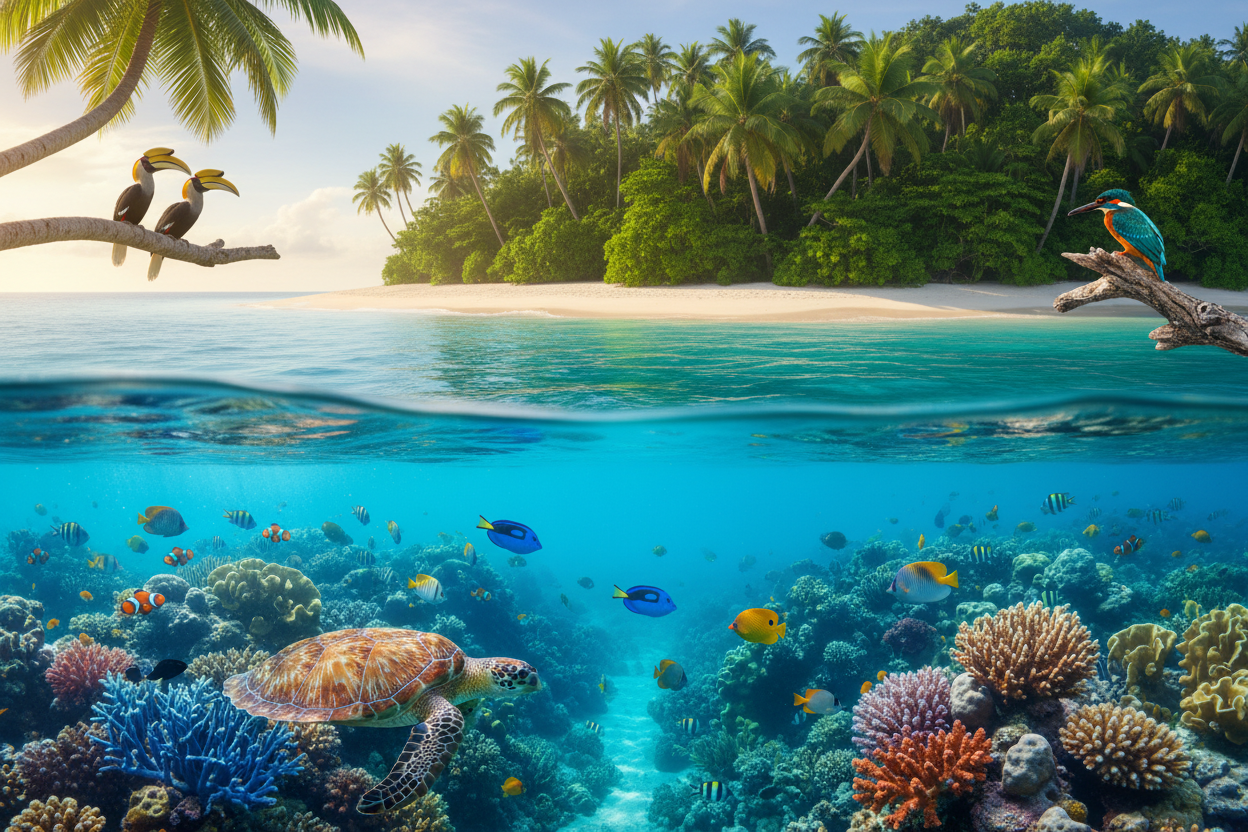
Nestled in the crystal-clear waters of the Andaman Sea, the Similan Islands stand as one of Thailand’s most spectacular natural treasures. This pristine archipelago, consisting of nine granite islands, offers visitors an extraordinary glimpse into both terrestrial and marine biodiversity. Whether you’re a seasoned diver, nature photographer, or simply someone who appreciates the wonders of the natural world, the Similan Islands promise encounters with some of the most remarkable flora and fauna in Southeast Asia.
The name “Similan” derives from the Malay word “sembilan,” meaning nine, which perfectly describes this chain of islands that has captivated marine biologists, conservationists, and adventure seekers for decades. Protected as a national park since 1982, these islands have maintained their ecological integrity, making them a living laboratory where visitors can witness nature’s artistry in its purest form.
The Underwater Kingdom: Marine Life of the Similan Islands
The waters surrounding the Similan Islands teem with an incredible diversity of marine life that rivals any diving destination worldwide. The coral reefs here serve as vibrant underwater cities, hosting an intricate web of relationships between countless species.
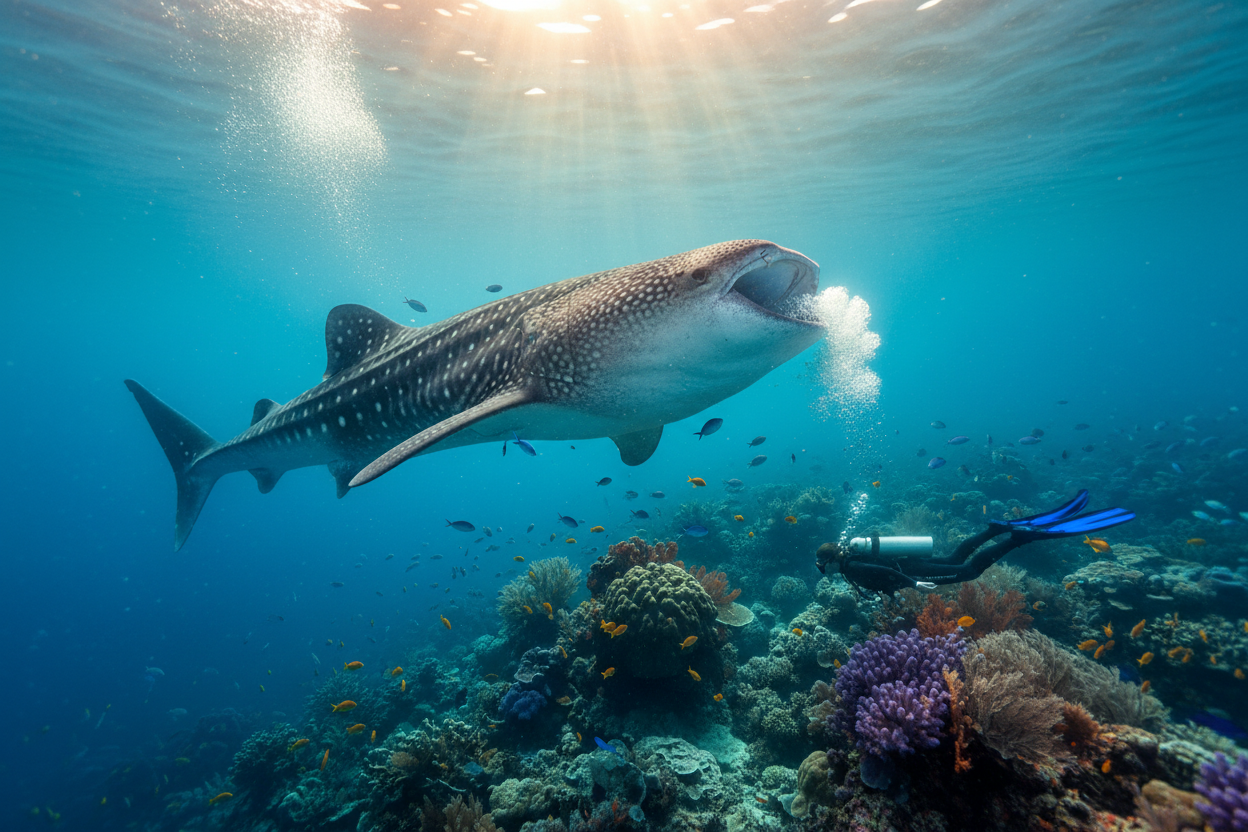
Among the most iconic residents are the massive whale sharks, gentle giants that can reach lengths of up to 12 meters. These magnificent creatures glide through the waters with surprising grace, feeding on plankton and small fish. Encountering a whale shark in the wild remains one of the most humbling experiences nature can offer, and the Similan Islands provide some of the best opportunities for such encounters in Southeast Asia.
Manta rays, with their impressive wingspans reaching up to seven meters, perform underwater ballets around cleaning stations where smaller fish remove parasites from their bodies. These intelligent creatures often approach divers with curiosity, creating magical moments that remain etched in memory forever.
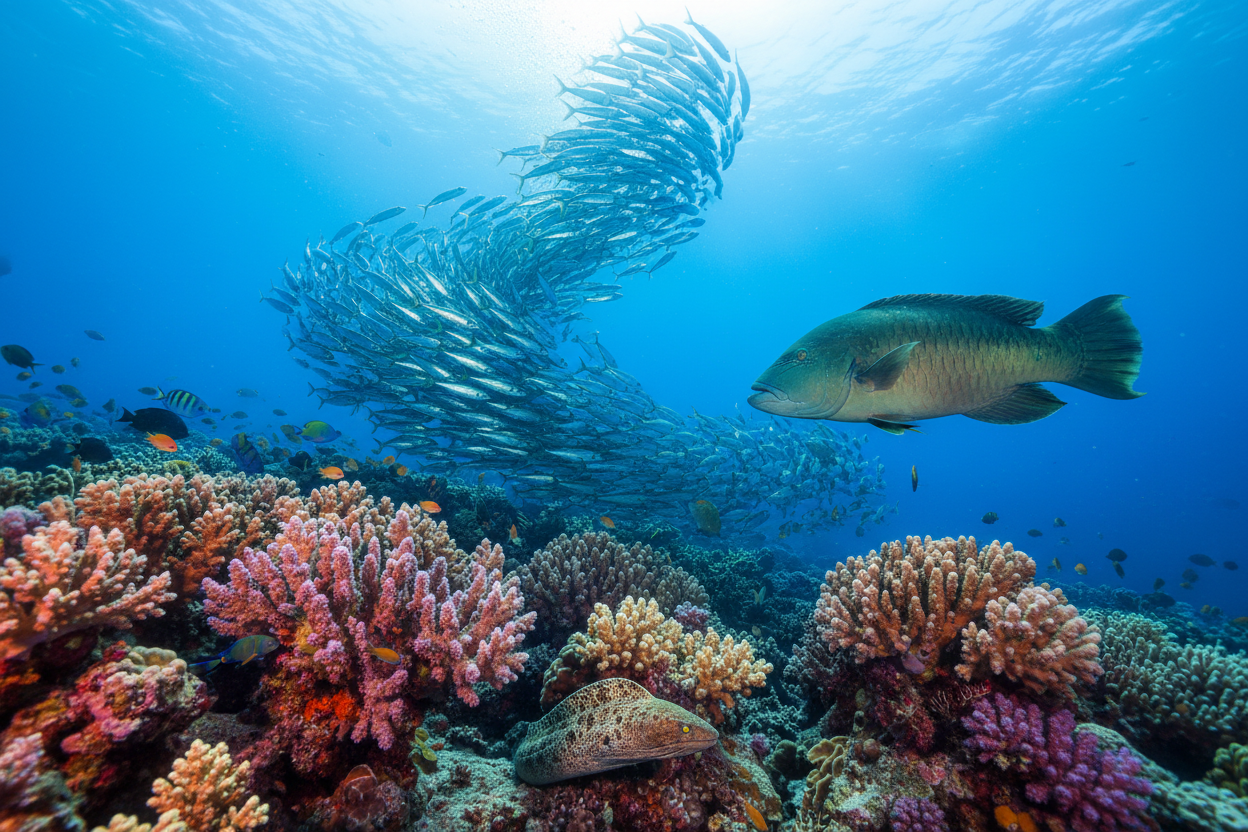
The reef systems themselves burst with color and movement. Schools of barracuda create silvery tornadoes in the blue water, while napoleon wrasse, some weighing over 100 kilograms, patrol their territories with regal authority. The intricate coral formations provide shelter for countless smaller species, from the vibrant parrotfish that help maintain coral health through their feeding habits to the elusive moray eels that peer out from rocky crevices.
Coral Gardens: The Foundation of Marine Biodiversity
The coral reefs of the Similan Islands represent some of the healthiest ecosystems in the region, supporting an estimated 500 species of fish and numerous invertebrates. Hard corals dominate the deeper waters, creating dramatic underwater landscapes with their massive formations and intricate branching patterns.
Staghorn corals extend their delicate branches into the current, while massive brain corals form the backbone of many reef structures. These living organisms work tirelessly, building calcium carbonate skeletons that provide the foundation for entire ecosystems. The symbiotic relationship between corals and zooxanthellae algae creates the vibrant colors that make these reefs so visually stunning.
Soft corals add another dimension to the underwater scenery, swaying gently in the currents like underwater flowers. Sea fans spread their intricate networks to filter-feed from the water column, while colorful sponges fill every available space with their diverse forms and brilliant hues.
Tropical Fish Species: A Rainbow Beneath the Waves
The fish diversity in Similan waters reads like a comprehensive guide to Indo-Pacific marine life. Angelfish glide between coral heads with their distinctive disc-shaped bodies adorned in striking patterns of blue, yellow, and black. Butterflyfish, often seen in monogamous pairs, flutter around coral polyps with their delicate feeding behaviors creating ripples of movement across the reef face.
Groupers of various species claim territories among the coral formations, from the massive potato cod that can weigh over 100 kilograms to the smaller, more colorful coral groupers that dart between hiding spots. These predators play crucial roles in maintaining the ecological balance of the reef ecosystem.
The cleaning stations scattered throughout the reefs serve as fascinating theaters of marine behavior. Here, cleaner wrasses and cleaner shrimp provide grooming services to larger fish, creating temporary truces between predators and prey. Watching a fierce-looking shark patiently hover while tiny cleaner fish remove parasites offers insights into the complex relationships that govern marine ecosystems.
Terrestrial Wildlife: Life Above the Waterline
While the underwater world captures most attention, the terrestrial environments of the Similan Islands harbor their own fascinating communities of plants and animals. The islands’ beaches serve as crucial nesting sites for several sea turtle species, including the critically endangered leatherback turtle and the more commonly observed green turtle.
During nesting season, typically between November and February, female turtles emerge from the sea under cover of darkness to dig their nests in the soft sand above the high tide line. These ancient mariners, guided by magnetic fields and possibly celestial navigation, return to the beaches where they were born to continue the cycle of life.
The rocky shores and tidal pools reveal another layer of biodiversity. Hermit crabs scurry across the sand in their borrowed shells, while ghost crabs emerge at dusk to patrol the beaches. Sally lightfoot crabs, with their bright red and orange coloration, cling to the granite boulders that give the Similan Islands their distinctive character.
Island Vegetation: Tropical Flora Adaptations
The vegetation of the Similan Islands showcases remarkable adaptations to the challenging conditions of small tropical islands surrounded by saltwater. Coastal forests dominated by indigenous species have evolved to withstand salt spray, strong winds, and periodic droughts.
Casuarina trees, with their needle-like leaves and drooping branches, form distinctive silhouettes against the sky while providing crucial stabilization for sandy soils. These hardy trees can tolerate salt spray and poor soils, making them ideal pioneers for coastal environments.
Beach morning glory vines spread across the sand dunes, their purple flowers adding splashes of color while their extensive root systems help prevent erosion. Pandanus palms, also known as screw pines, create natural windbreaks with their distinctive prop roots and spiral-arranged leaves.
The interior forests of the larger islands support more diverse plant communities, including various fig species that provide important food sources for the limited terrestrial wildlife. Epiphytic orchids and ferns take advantage of the humid conditions, creating vertical gardens on tree trunks and branches.
Seasonal Variations and Migration Patterns
The Similan Islands experience distinct seasonal changes that dramatically affect both marine and terrestrial life. The northeast monsoon season, from November to April, brings calmer seas and clearer waters, creating optimal conditions for diving and marine photography. This period coincides with the arrival of several migratory species, including whale sharks and manta rays that follow plankton blooms.
During the southwest monsoon, from May to October, the islands close to tourism to allow ecosystems to recover and to ensure visitor safety during rougher sea conditions. This closure period proves crucial for marine life reproduction and coral spawning events that occur without human disturbance.
Bird migration patterns add another dynamic element to the islands’ biodiversity. Various seabird species use the islands as stopover points during long-distance migrations, while others establish breeding colonies on the more remote islands where human disturbance remains minimal.
Conservation Challenges and Success Stories
The Similan Islands face ongoing conservation challenges despite their protected status. Climate change poses the most significant long-term threat, with rising sea temperatures causing coral bleaching events that can devastate reef ecosystems. Ocean acidification, caused by increased carbon dioxide absorption, threatens the ability of corals and other calcifying organisms to build their skeletons.
Tourism pressure, while providing economic incentives for conservation, also creates management challenges. The Thai government has implemented various measures to balance conservation needs with tourism benefits, including limiting visitor numbers, establishing no-anchor zones, and rotating diving sites to allow recovery periods.
Success stories include the recovery of several fish populations following the establishment of no-take zones and the implementation of sustainable fishing practices in surrounding waters. Sea turtle nesting programs have shown promising results, with increased nesting success rates and hatchling survival through beach protection and monitoring efforts.
Photography Tips for Capturing Similan’s Natural Beauty
Documenting the flora and fauna of the Similan Islands requires preparation and respect for the fragile ecosystems. Underwater photographers should maintain proper buoyancy to avoid damaging corals and use natural lighting whenever possible to minimize stress on marine life.
The golden hours just after sunrise and before sunset provide the most dramatic lighting for terrestrial photography, while the harsh midday sun can be used effectively for underwater shots where the water column filters the light naturally. Macro photography enthusiasts will find endless subjects among the coral polyps, small fish, and invertebrates that populate the reefs.
Patience often rewards photographers with unique behavioral shots, such as cleaning symbioses, feeding behaviors, or territorial displays. Understanding animal behavior and maintaining respectful distances ensures both better photographs and minimal impact on wildlife.
Conclusion: Preserving Paradise for Future Generations
The Similan Islands represent far more than a tourist destination; they embody a living testament to the incredible diversity and resilience of tropical marine ecosystems. From the microscopic coral polyps that build entire reef cities to the magnificent whale sharks that traverse ocean basins, every species plays a vital role in maintaining the delicate balance that makes these islands so extraordinary.
As climate change and human pressures continue to challenge marine ecosystems worldwide, places like the Similan Islands become increasingly precious. They serve as refuges for threatened species, research laboratories for scientists studying tropical ecology, and inspiration for conservation efforts across Southeast Asia.
Visitors to these remarkable islands carry the responsibility of being conservation ambassadors, sharing their experiences while advocating for the protection of these fragile ecosystems. Through responsible tourism, scientific research, and continued conservation efforts, the Similan Islands can continue to thrive as one of the world’s premier examples of marine biodiversity.
The visual feast that awaits in the waters and shores of the Similan Islands offers more than stunning photographs and unforgettable memories. It provides a profound connection to the natural world and a deeper understanding of our responsibility to protect these irreplaceable ecosystems for future generations to discover and cherish.
 English
Leave a Reply