Gozo Island Day Trip: Complete Travel Guide and Itinerary
Tucked away in the Mediterranean Sea, just a short ferry ride from Malta’s main island, lies Gozo—a hidden gem that feels like stepping into a different world entirely. With its dramatic coastlines, ancient temples, and charming villages that seem frozen in time, Gozo offers the perfect escape for travelers seeking authentic Mediterranean beauty without the crowds.
During my recent visit to Malta, I initially planned to spend just one day exploring Gozo, thinking it would be a quick side trip. How wrong I was! This enchanting island captivated me from the moment I stepped off the ferry, and I found myself wishing I had allocated more time to uncover all its secrets. Whether you’re a history buff, nature lover, or simply someone who appreciates unspoiled beauty, Gozo delivers an unforgettable experience that will leave you planning your return visit.
Getting to Gozo Island: Your Journey Begins
The adventure to Gozo starts before you even set foot on the island. The most common and scenic route is taking the Gozo Channel ferry from Cirkewwa in northern Malta to Mgarr Harbor in Gozo. The 25-minute ferry ride itself is part of the experience, offering stunning views of the Mediterranean and your first glimpse of Gozo’s rugged coastline.
Ferries run approximately every 45 minutes during peak season, with the first departure around 6:00 AM and the last around 11:00 PM. During winter months, the schedule becomes slightly less frequent, so checking the current timetable before your trip is essential. The ferry accommodates both pedestrians and vehicles, though I’d recommend leaving your car in Malta and exploring Gozo by bus, rental car, or organized tour once you arrive.
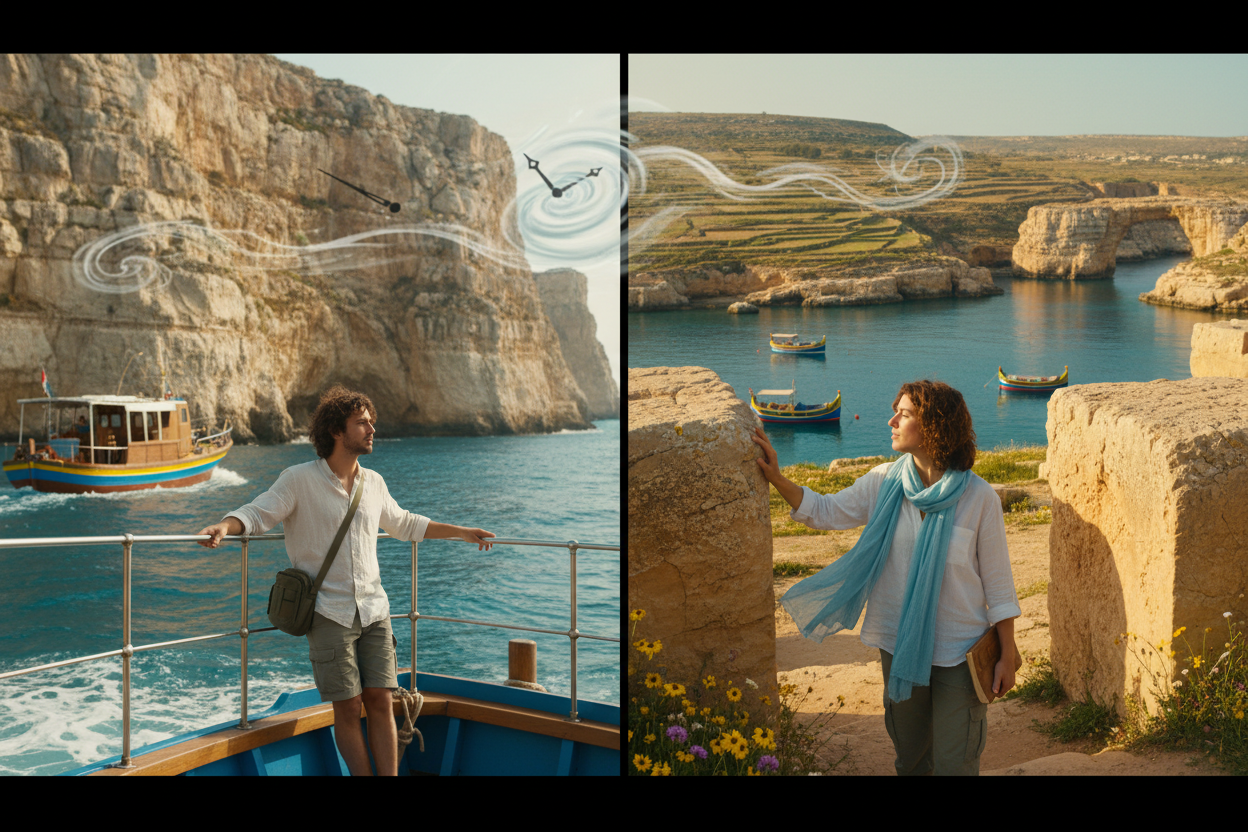
Pro tip: If you’re prone to seasickness, the crossing can be a bit choppy on windy days. Grab some fresh air on the upper deck and focus on the horizon—the views are spectacular and will help distract from any queasiness.
Morning Exploration: Victoria and the Citadel
Start your Gozo adventure in Victoria, the island’s capital and heart. Known locally as Rabat, this charming town buzzes with authentic Maltese life. The narrow streets are lined with traditional limestone buildings, local shops, and inviting cafes where you can grab a traditional pastizzi for breakfast.
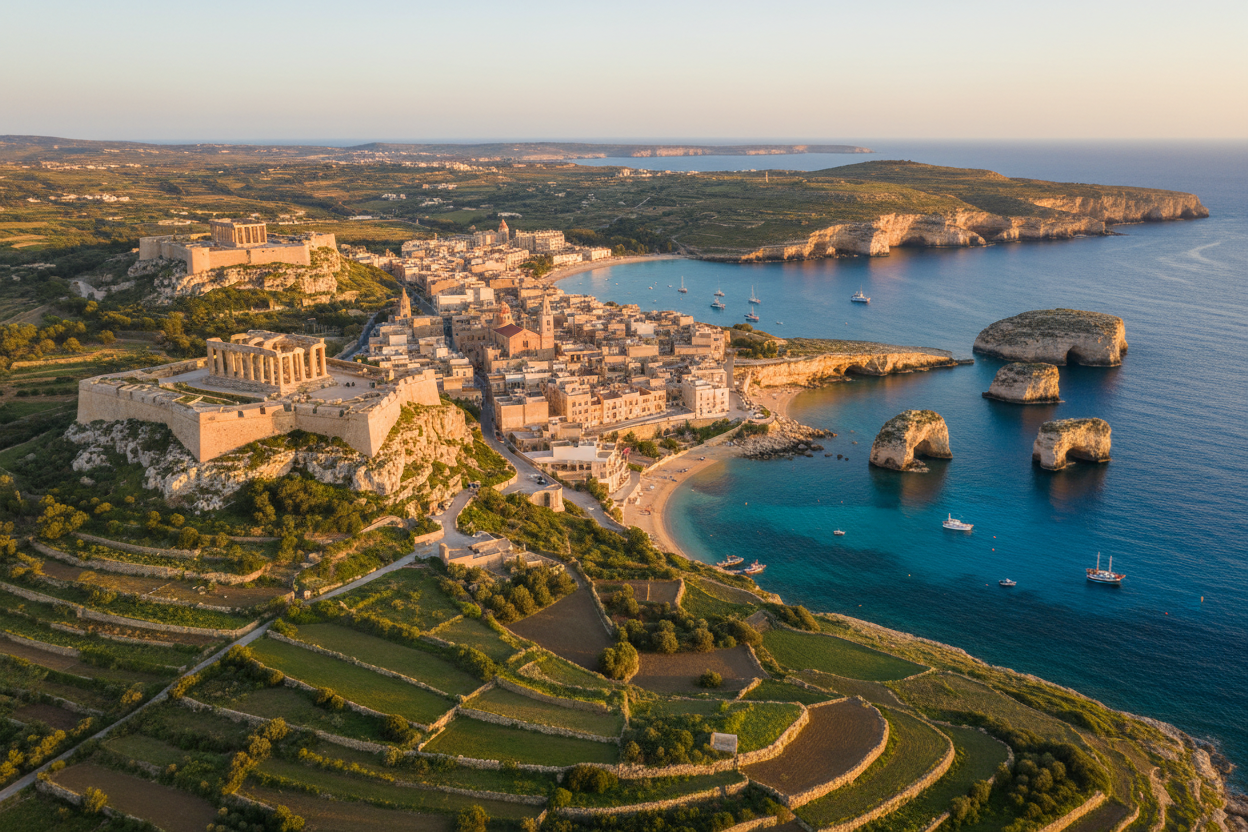
The crown jewel of Victoria is undoubtedly the Citadel, a fortified city that has watched over Gozo for centuries. As you climb the steep streets leading to this ancient fortress, you’ll feel the weight of history beneath your feet. The Citadel houses several museums, including the Cathedral of the Assumption, the Old Prison, and the Archaeological Museum.
What struck me most about the Citadel wasn’t just its historical significance, but the panoramic views it offers. From the bastions, you can see virtually the entire island spread out below—patchwork fields divided by ancient stone walls, distant villages dotting the landscape, and the endless blue of the Mediterranean stretching to the horizon.
Allow at least two hours for your Citadel visit. The museums provide fascinating insights into Gozo’s rich history, from prehistoric times through the Knights of Malta period. The Cathedral, with its unique trompe-l’oeil dome painting, is particularly impressive and tells the story of how Gozitan artists overcame architectural limitations with pure creativity.
Mid-Morning Adventure: The Azure Window’s Legacy and Dwejra Bay
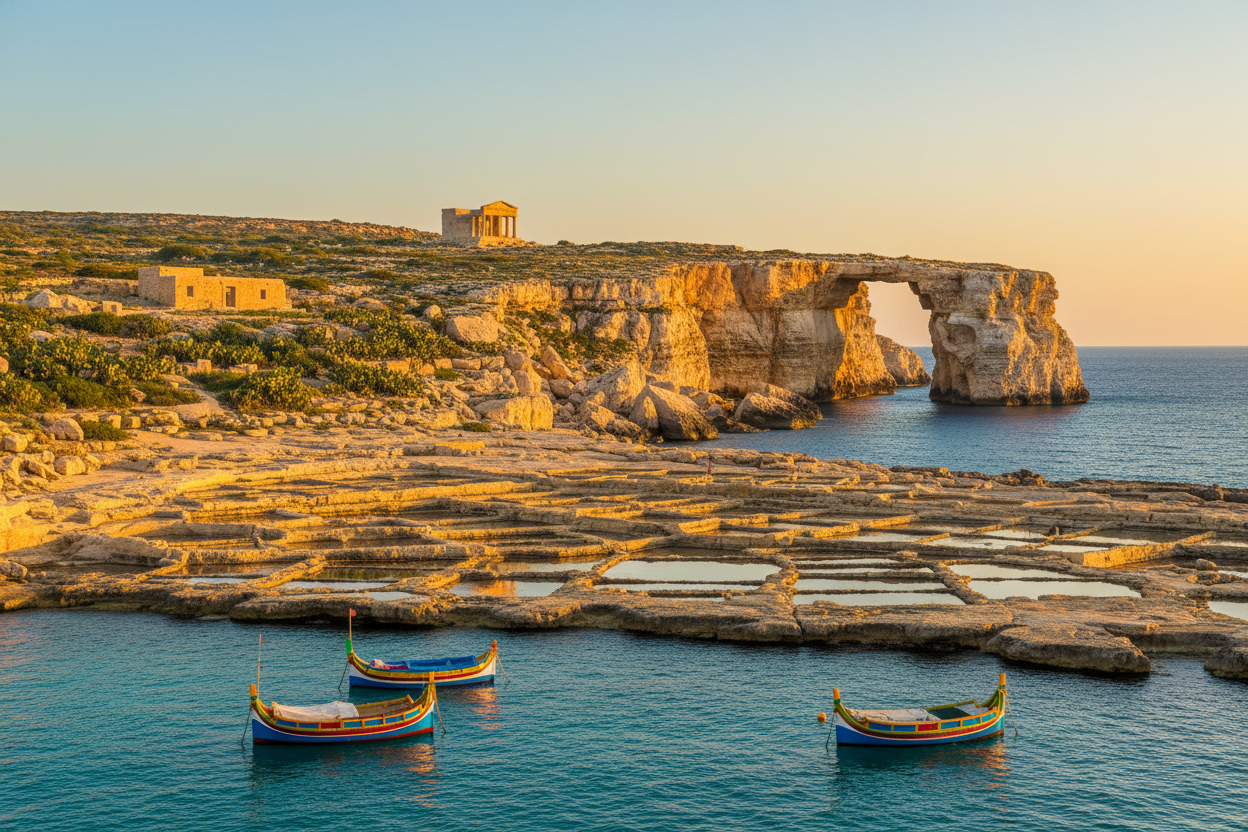
No visit to Gozo is complete without experiencing the dramatic coastal scenery at Dwejra Bay, even though the famous Azure Window collapsed in 2017. While this natural limestone arch was indeed a spectacular sight, the area remains one of Gozo’s most breathtaking locations.
The Inland Sea, a lagoon connected to the ocean through a narrow tunnel, creates an almost surreal landscape. You can take a small boat ride through the tunnel to the open sea—an experience that feels like entering a hidden world. The contrast between the calm, protected waters of the lagoon and the wild Mediterranean beyond is striking.
Nearby, the Fungus Rock stands as a testament to nature’s artistic abilities. This small islet was once so prized by the Knights of Malta for its rare medicinal plant that they posted guards to protect it. Today, it serves as a dramatic backdrop for photos and a reminder of the island’s fascinating natural history.
The entire Dwejra area is perfect for photography, snorkeling, or simply sitting on the limestone cliffs and watching the waves crash against the rocks. The geological formations here tell the story of millions of years of Mediterranean history, carved by wind, water, and time.
Afternoon Discoveries: Ramla Bay and Calypso Cave
After exploring the rugged western coast, head to Gozo’s most famous beach: Ramla Bay. This golden sand beach stands out dramatically against the island’s typically rocky coastline. The reddish-orange sand, unique in the Maltese islands, creates a beautiful contrast with the turquoise Mediterranean waters.
Ramla Bay isn’t just about relaxation, though the swimming here is excellent. According to local legend and Homer’s Odyssey, this area is where the nymph Calypso held Odysseus captive for seven years. You can hike up to Calypso Cave, perched on the hillside overlooking the bay, though the cave itself is more legendary than spectacular.
What makes Ramla Bay special is its unspoiled nature. Unlike many Mediterranean beaches, it remains relatively undeveloped, with just a few small beach bars and restaurants. The surrounding countryside, dotted with traditional farmhouses and ancient terraced fields, provides a glimpse into Gozo’s agricultural heritage.
If you visit during summer, arrive early to secure a good spot and bring sun protection—the beach offers limited natural shade. During cooler months, it’s perfect for peaceful walks and photography, with dramatic waves and ever-changing light conditions.
Cultural Immersion: Traditional Villages and Local Life
One of Gozo’s greatest treasures is its collection of traditional villages, each with its own character and charm. Xlendi, a picturesque fishing village, nestles in a narrow inlet surrounded by towering cliffs. The small harbor, lined with colorful traditional boats called luzzus, provides the perfect setting for a leisurely lunch at one of the waterfront restaurants.
Marsalforn, Gozo’s main resort town, offers a different perspective. While more developed than other villages, it maintains its authentic character with a working harbor, traditional salt pans, and excellent seafood restaurants. The promenade is perfect for an evening stroll, with views across the channel to Malta.
For a taste of rural Gozo life, visit Gharb, a hilltop village that seems untouched by time. The village square, dominated by a beautiful baroque church, serves as the social heart of the community. Here, you might encounter elderly men playing cards in the shade, children kicking footballs in narrow streets, and women hanging laundry from traditional wooden balconies.
These villages offer more than just sightseeing—they provide insight into a way of life that has remained largely unchanged for generations. The pace is slower here, conversations are longer, and the connection to the land and sea remains strong.
Afternoon Exploration: Ggantija Temples
No visit to Gozo would be complete without experiencing the Ggantija Temples, among the world’s oldest free-standing structures. These Neolithic temples, built between 3600 and 3200 BC, predate Stonehenge and the Egyptian pyramids by over a thousand years.
Walking among these ancient stones is a humbling experience. The temples’ massive limestone blocks, some weighing several tons, were moved and precisely positioned using only primitive tools and human power. The sophisticated architectural techniques and astronomical alignments suggest a complex prehistoric society with advanced knowledge of engineering and astronomy.
The site’s museum provides excellent context, explaining the temples’ construction, purpose, and the civilization that created them. The artifacts discovered here, including intricate stone carvings and pottery, offer glimpses into the daily lives and spiritual beliefs of Gozo’s earliest inhabitants.
What fascinated me most was standing in the same spots where people gathered for religious ceremonies over 5,000 years ago. The temples’ acoustic properties, designed to amplify sound during rituals, still work today—whisper in one area, and your voice carries clearly to the opposite end of the structure.
Evening Wind-Down: Sunset Views and Local Cuisine
As your day in Gozo draws to a close, position yourself for one of the Mediterranean’s most spectacular sunsets. The western cliffs near Dwejra or the hilltops around Gharb offer unobstructed views of the sun sinking into the sea, painting the sky in brilliant oranges, pinks, and purples.
For dinner, embrace Gozo’s culinary traditions. The island’s restaurants pride themselves on fresh, locally sourced ingredients. Try the rabbit stew, Malta’s national dish, or sample fresh fish caught by local fishermen that morning. Gozo cheese, made from sheep and goat milk, is particularly delicious and pairs perfectly with local wines.
Many restaurants offer outdoor terraces with stunning views, allowing you to dine while watching the lights of Malta twinkle across the channel. The slower pace of Gozitan dining—where meals are social events rather than rushed affairs—provides the perfect end to your island adventure.
Planning Your Perfect Gozo Day Trip
To make the most of your Gozo day trip, start early and prioritize based on your interests. History enthusiasts should allocate extra time for the Citadel and Ggantija Temples, while nature lovers might prefer spending more time at Dwejra Bay and Ramla Beach.
Transportation on the island is straightforward. Local buses connect all major attractions, though they run less frequently than on mainland Malta. Renting a car provides maximum flexibility, while organized tours offer convenience and local knowledge without the stress of navigation.
Pack layers, as coastal winds can make temperatures feel cooler than expected. Comfortable walking shoes are essential for exploring the Citadel and temple sites. Don’t forget your camera—Gozo offers countless photo opportunities, from ancient architecture to dramatic seascapes.
Consider extending your visit if possible. While a day trip provides a wonderful introduction to Gozo, the island rewards longer stays with hidden beaches, secret hiking trails, and the chance to truly slow down and embrace the Mediterranean lifestyle.
Gozo Island proves that the best travel experiences often come in small packages. This tiny island, just 14 kilometers long and 7 kilometers wide, packs more history, natural beauty, and authentic culture into a single day than many destinations offer in a week. From prehistoric temples to pristine beaches, from ancient fortresses to traditional villages, Gozo provides a perfect microcosm of Mediterranean life at its finest. Whether this becomes your only visit or the first of many, Gozo will leave you with memories that last a lifetime and a deep appreciation for places where time moves just a little bit slower.
 English
Leave a Reply