Mdina Gate to Cathedral: Complete Silent City Walking Route
Stepping through the imposing Mdina Gate feels like crossing a threshold between two worlds. The bustling streets of modern Malta fade away as you enter the Silent City, where centuries of history whisper through narrow alleyways and golden limestone walls. This complete walking route from the main gate to the magnificent cathedral will guide you through one of Europe’s most perfectly preserved medieval cities, revealing hidden corners and architectural treasures that have captivated visitors for over a thousand years.
Mdina, Malta’s ancient capital, earned its nickname “The Silent City” from its peaceful, car-free streets and the hushed reverence that naturally falls over visitors as they explore its timeless beauty. This walking route covers approximately one kilometer but don’t let the short distance fool you – every step reveals layers of history from Arab rule to Norman conquest, from medieval times to baroque splendor.
Starting Your Journey: The Magnificent Mdina Gate
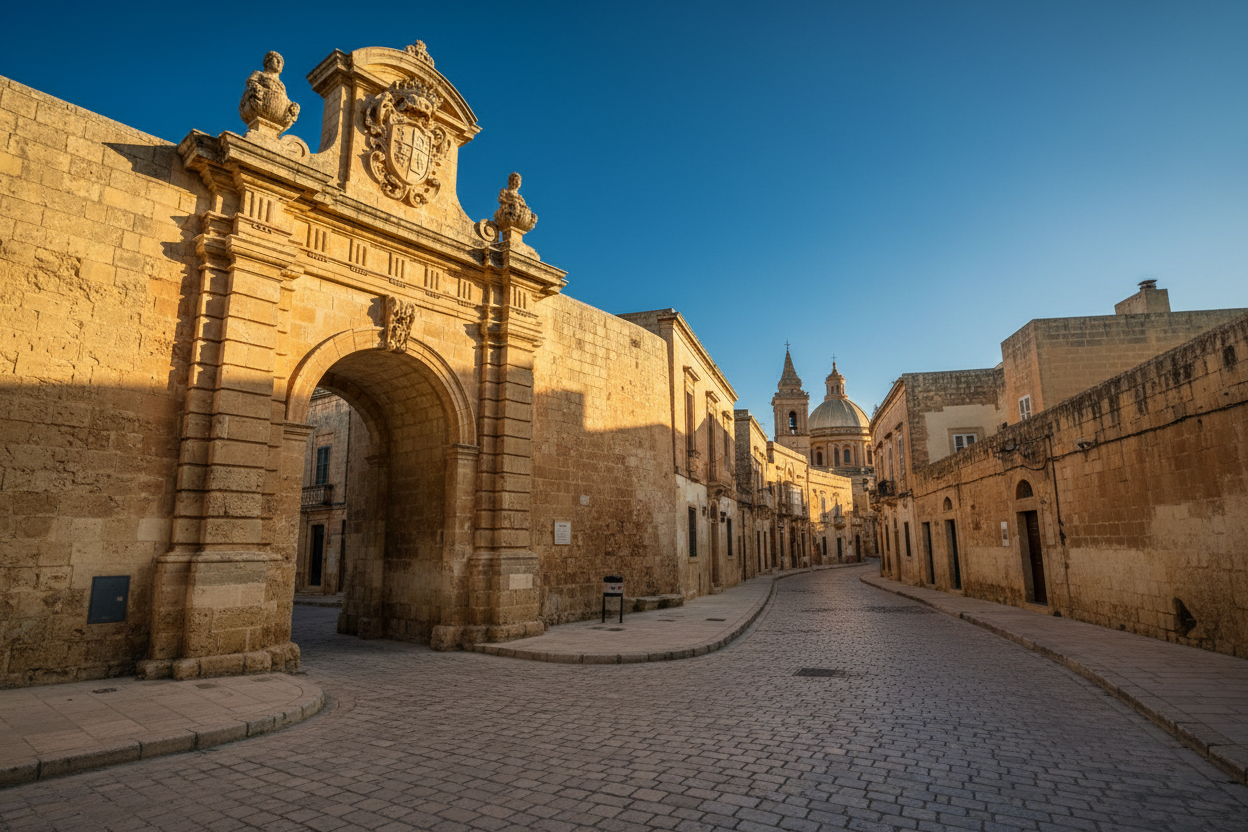
Your adventure begins at the Mdina Gate, rebuilt in the baroque style during the 18th century. The imposing entrance, flanked by two stone lions, serves as your portal into medieval Malta. Take a moment to admire the coat of arms above the archway – it tells the story of Grand Master António Manoel de Vilhena, who commissioned this grand entrance.
As you pass through the gate, notice how the temperature drops slightly and the sounds of modern life fade away. The thick limestone walls aren’t just decorative; they’ve protected this city through sieges, invasions, and the passage of time. The contrast between the bright Mediterranean sun outside and the cool shadows within immediately signals that you’ve entered somewhere special.

Before proceeding, glance back at the gate from inside. The view frames the modern world beyond like a living photograph, emphasizing the remarkable preservation of this ancient city. This perspective offers one of the most Instagram-worthy shots of your visit, though the real magic lies in simply experiencing the moment.
Walking the Historic Streets: From Gate to Bastion Square
From the gate, follow Villegaignon Street, the main thoroughfare that cuts through the heart of Mdina. The street takes its name from a French knight who played a crucial role in the Great Siege of Malta in 1565. As you walk along this ancient path, the honey-colored limestone buildings seem to glow with an inner light, especially during the golden hour before sunset.
The narrow street is lined with palazzos that have housed noble families for centuries. Many still serve as private residences, their heavy wooden doors and ornate knockers hinting at the aristocratic life that continues within these walls. The Palazzo Vilhena, now housing the Natural History Museum, stands as a testament to baroque architecture at its finest.
Notice how the street gently curves – this isn’t accidental. The medieval planners designed these winding paths to confuse invaders and create natural defensive positions. What once served military purposes now creates charming vistas around every corner, each turn revealing new architectural details and hidden courtyards.
As you approach Bastion Square, the street opens up slightly, offering your first glimpse of the cathedral’s dome rising majestically above the surrounding buildings. This preview builds anticipation for the architectural masterpiece that awaits at your journey’s end.
Exploring the Noble Palazzos and Hidden Courtyards
The stretch between Bastion Square and the cathedral showcases some of Mdina’s most impressive noble residences. These aren’t museum pieces but living buildings where families have maintained their ancestral homes for generations. The Palazzo Falson, dating back to the 13th century, represents one of the oldest and best-preserved examples of medieval architecture in Malta.
Look for the distinctive Maltese balconies that adorn many buildings. These enclosed wooden galleries, painted in vibrant blues and greens, allowed residents to observe street life while maintaining privacy. The intricate woodwork and geometric patterns reflect both European and North African influences, telling the story of Malta’s position as a cultural crossroads.
Don’t miss the small courtyards visible through open doorways. These private spaces, often adorned with potted plants and featuring ancient wells, provided cool retreats during hot summer days. Some courtyards contain archaeological remains, with Roman columns and medieval stonework incorporated into later constructions.
The Casa Inguanez deserves special attention as the residence of Malta’s oldest noble family. The building’s facade combines different architectural periods, creating a visual timeline of the island’s history. The family has lived continuously in Mdina for over 900 years, making them living guardians of the city’s traditions.
Architectural Marvels Along the Cathedral Route
As you progress toward the cathedral, the architecture becomes increasingly grand. The buildings seem to compete for attention, each displaying unique baroque elements that reflect the wealth and taste of their original owners. Ornate doorways crowned with elaborate pediments lead to mysterious interiors, while wrought-iron balconies create intricate shadows on limestone walls.
The Palazzo Santa Sophia stands out for its perfectly preserved Norman architecture. Built in the 13th century, it represents one of the few remaining examples of this architectural style in Malta. The building’s simple lines and robust construction contrast beautifully with the more elaborate baroque structures surrounding it.
Street-level details reward careful observation. Ancient drainage channels carved into the stone pavement still function after centuries, directing rainwater away from buildings. Small niches in walls once housed oil lamps that illuminated the streets after dark, while larger recesses contained religious statues that provided spiritual comfort to residents and visitors.
The gradual ascent toward the cathedral creates a natural sense of pilgrimage. Each step brings you closer to the spiritual heart of the city, while the narrowing streets create an intimate atmosphere that encourages quiet contemplation. This carefully planned approach maximizes the impact of your first glimpse of the cathedral square.
Arriving at the Majestic Mdina Cathedral
The moment you emerge into Cathedral Square, the full majesty of St. Paul’s Cathedral overwhelms your senses. The baroque facade, completed in the late 17th century, rises like a limestone cliff face, its twin bell towers framing a composition of perfect proportions. The cathedral stands on the site where St. Paul himself is said to have met the Roman governor Publius, making this one of Christianity’s most historically significant locations.
The cathedral’s exterior tells stories through its decorative elements. The central portal features intricate carvings depicting scenes from St. Paul’s life, while the coat of arms above reminds visitors of the various rulers who contributed to the building’s construction. The baroque style reflects the Counter-Reformation’s emphasis on inspiring awe and devotion through architectural grandeur.
Before entering, walk around the cathedral to appreciate its full dimensions. The building occupies a significant portion of the small city, emphasizing the central role of faith in medieval life. The side entrances reveal different architectural details, each contributing to the overall harmony of the design.
The cathedral square itself deserves attention. The open space, rare in Mdina’s dense urban fabric, creates a sense of ceremony and importance. The square has witnessed countless religious processions, civic celebrations, and quiet moments of personal reflection. Standing here, you become part of a continuous human story stretching back over a millennium.
Inside the Cathedral: A Journey Through Sacred Art
Stepping inside St. Paul’s Cathedral transports you into a world of baroque splendor and spiritual significance. The interior, completely rebuilt after the 1693 earthquake, represents one of the finest examples of baroque church architecture in the Mediterranean. The nave stretches toward the altar in perfect perspective, drawing your eyes upward to the painted ceiling that depicts scenes from St. Paul’s life.
The floor beneath your feet tells its own remarkable story. Made entirely of marble tombstones, it covers the burial places of knights, nobles, and clergy who shaped Malta’s history. Each stone is a work of art, featuring heraldic symbols, Latin inscriptions, and intricate designs that reflect the deceased’s status and achievements. Walking on these stones connects you physically with centuries of Maltese history.
The side chapels house artistic treasures that would be centerpieces in smaller churches. The Chapel of the Blessed Sacrament features silverwork of extraordinary quality, while the various altarpieces showcase the talents of Italian and Maltese artists. The cathedral museum, accessible through a side entrance, displays additional religious artifacts and provides context for understanding the building’s historical significance.
Don’t miss the cathedral’s acoustics – a whispered prayer near the altar can be heard clearly throughout the nave. This acoustic design wasn’t accidental but reflected the builders’ deep understanding of how architecture could enhance the spiritual experience.
Completing Your Silent City Experience
As your walking route concludes at the cathedral, take time to absorb the complete experience of Mdina. The journey from gate to cathedral represents more than a simple walk; it’s a passage through time that reveals how different civilizations have left their mark on this remarkable city. The silence that gives Mdina its nickname isn’t empty but filled with the echoes of history.
Consider retracing your steps to notice details you might have missed on your initial journey. The changing light throughout the day transforms the limestone buildings, creating new shadows and highlighting different architectural features. Early morning visits offer the most peaceful experience, while late afternoon provides the most dramatic lighting for photography.
The complete walking route typically takes two to three hours, depending on your pace and interest in exploring side streets and building interiors. However, many visitors find themselves returning multiple times, drawn by the city’s timeless atmosphere and the new discoveries that each visit brings.
Your journey through the Silent City from gate to cathedral offers more than just sightseeing – it provides a profound connection to European history and Mediterranean culture. The perfectly preserved medieval streets, noble palazzos, and magnificent cathedral create an immersive experience that few destinations can match. Whether you’re interested in architecture, history, or simply seeking a peaceful escape from modern life, this walking route through Mdina delivers an unforgettable encounter with one of Malta’s greatest treasures.
 English
Leave a Reply