The Myths and Legends of the Similan Islands: Ancient Tales from Thailand’s Marine Paradise
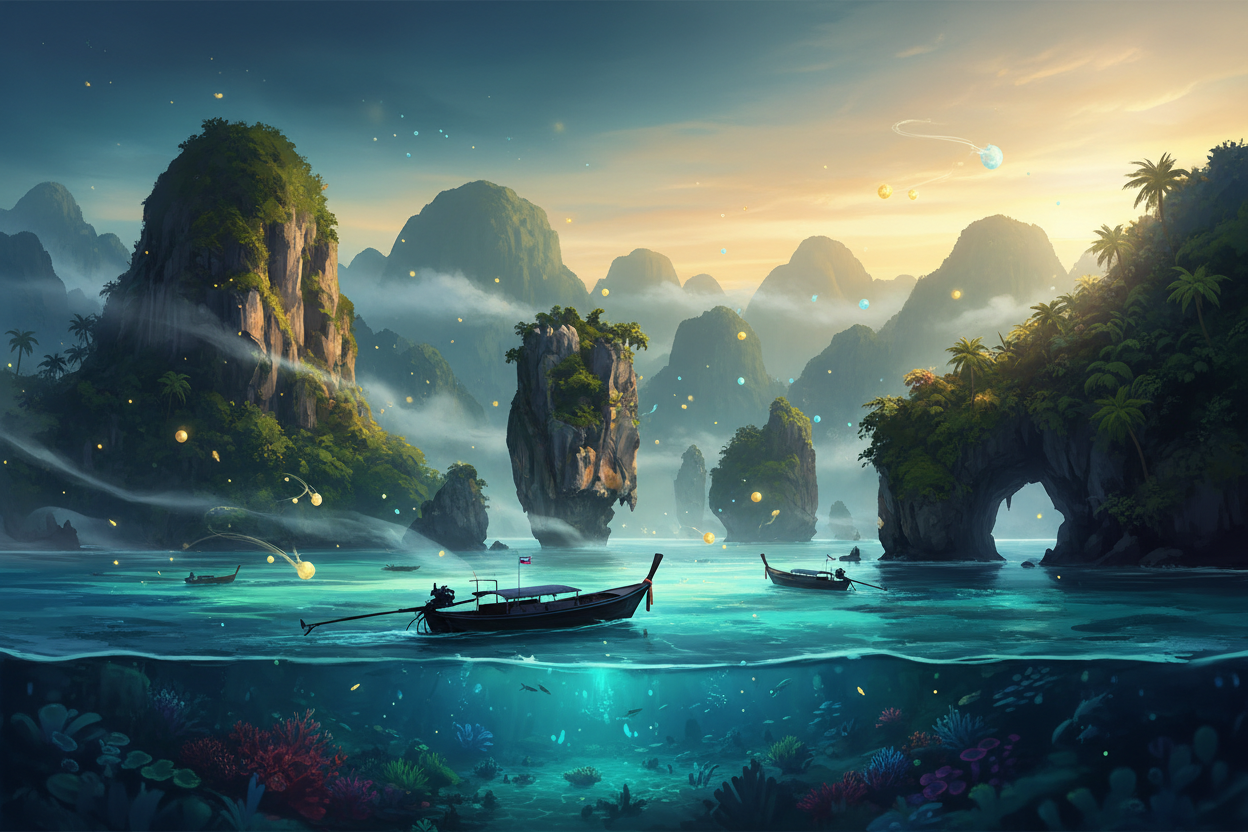
Deep within the Andaman Sea, where crystal-clear waters meet pristine white beaches, lies a cluster of nine granite islands known as the Similan Islands. While most visitors come for the world-class diving and stunning natural beauty, few realize they’re stepping into a realm steeped in ancient folklore and mystical tales that have been passed down through generations of Thai fishermen and local communities.
The Similan Islands aren’t just a natural wonder—they’re a living repository of cultural heritage where reality blends seamlessly with legend. From the very name itself to the spirits believed to guard these waters, every aspect of the Similans carries echoes of stories that predate modern tourism by centuries.
The Origin of the Name: A Tale Written in Stone
The word “Similan” derives from the Malay word “sembilan,” meaning nine, referring to the nine main islands in the archipelago. However, local legend tells a more enchanting story about how these islands came to be named.
According to ancient Thai folklore, a powerful sea goddess once ruled these waters. She had nine daughters, each more beautiful than the last, who would dance on the waves during full moon nights. One day, a jealous sea demon cursed the daughters, turning them into stone islands as punishment for their beauty. The goddess, heartbroken but powerless to reverse the curse, named the islands after her nine beloved daughters—Sembilan, which eventually became Similan.
This legend explains why local fishermen have always treated the islands with reverence, believing that the spirits of the nine daughters still watch over these waters, protecting those who show proper respect while punishing those who harm the marine environment.
The Guardian Spirits of Koh Tachai
While technically part of the greater Similan National Park, Koh Tachai holds its own special place in local mythology. This island, whose name means “the place of the hermit,” is said to be home to powerful guardian spirits that have protected the area for over a thousand years.
The most famous legend tells of an ancient hermit monk who arrived on the island centuries ago, seeking enlightenment through meditation and communion with nature. After years of spiritual practice, he achieved such a high level of consciousness that upon his death, his spirit merged with the island itself, becoming its eternal protector.
Local fishermen report strange phenomena around Koh Tachai—sudden changes in weather that protect the island from storms, mysterious lights seen dancing above the water at night, and an inexplicable sense of peace that washes over visitors. Many believe these are signs of the hermit’s continued presence, watching over both the island’s natural beauty and the safety of those who visit with pure intentions.
The Whale Shark Prophecy
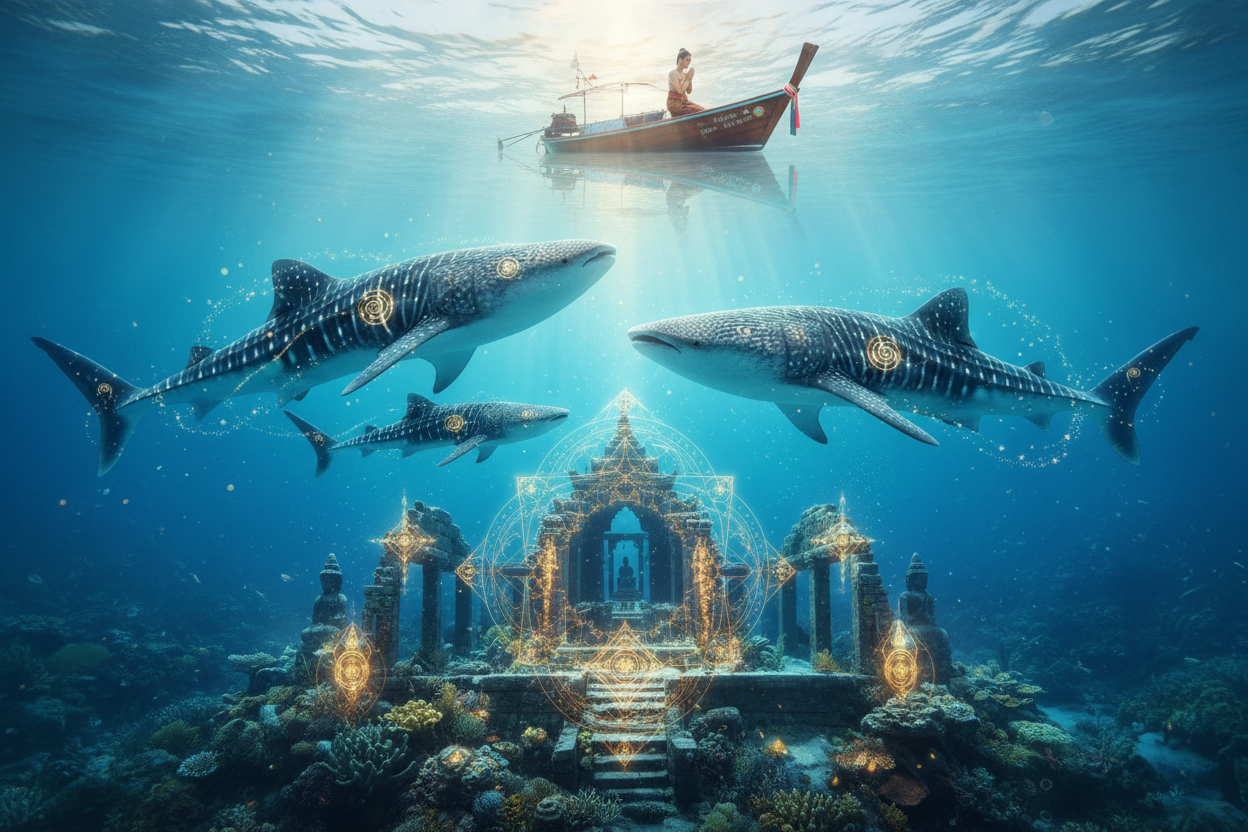
Perhaps no creature is more revered in Similan folklore than the whale shark, known locally as “pla chalarm yai.” These gentle giants, which can grow up to 40 feet in length, are considered sacred messengers in traditional Thai maritime culture.
An ancient prophecy speaks of whale sharks as harbingers of great change. According to this legend, when whale sharks gather in unusual numbers around the Similan Islands, it signals a time of transformation—either great prosperity or significant challenges for the region. The prophecy states that those who encounter a whale shark and show it proper respect will be blessed with good fortune, while those who harm or disturb these creatures will face the wrath of the sea spirits.
Interestingly, this ancient belief has found new relevance in modern conservation efforts. The increasing presence of whale sharks around the Similans in recent years has been interpreted by some locals as a sign that the islands’ protected status and conservation efforts are bringing positive change to the marine ecosystem.
The Cursed Treasure of Pirate’s Cave
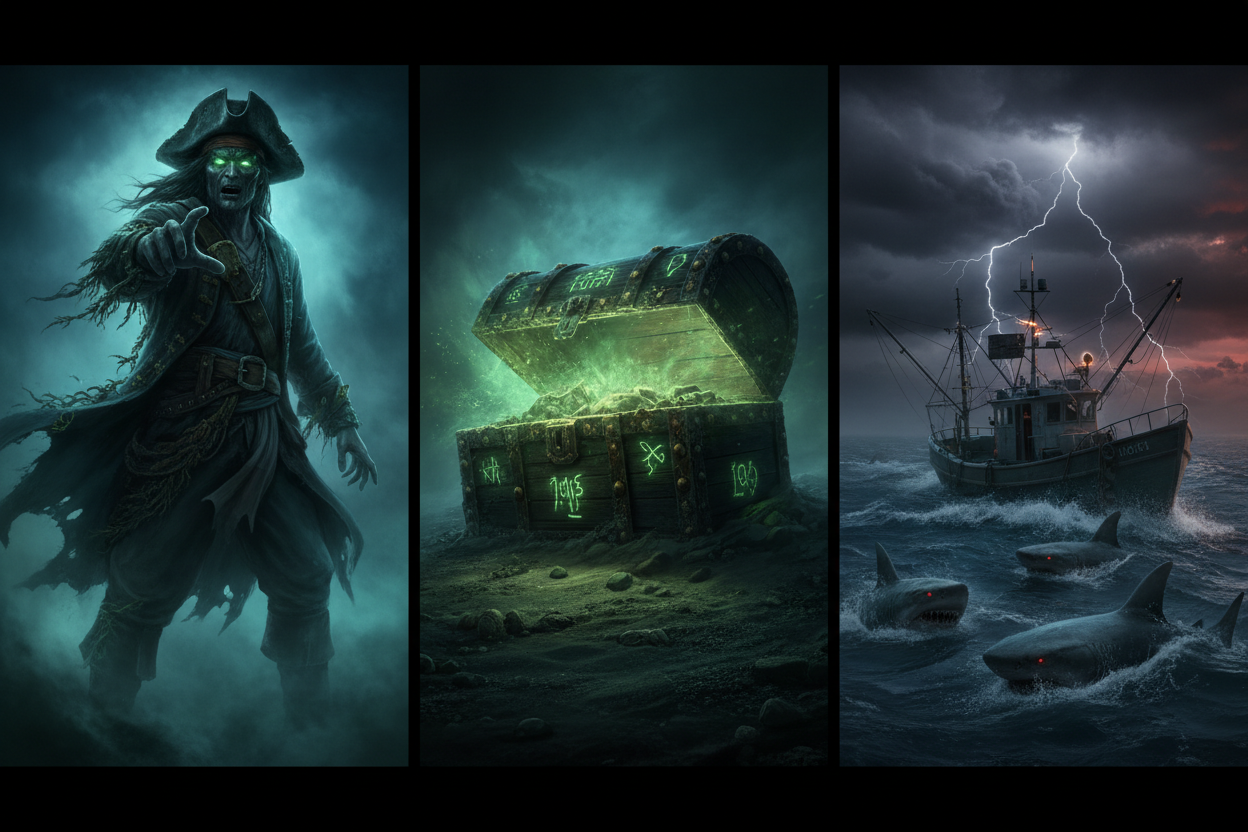
The waters around the Similan Islands have long been a crossroads for maritime trade, and with trade comes the inevitable presence of pirates. One of the most enduring legends involves a notorious pirate captain known as “Naga Thong” (Golden Serpent), who supposedly hid a vast treasure somewhere within the islands’ many caves and crevices.
According to the tale, Naga Thong was more than just a pirate—he was a sorcerer who made a pact with sea demons to gain power over the winds and waves. His treasure wasn’t just gold and jewels, but also magical artifacts that could control the weather and summon sea creatures to do his bidding.
Before his death in a battle with rival pirates, Naga Thong supposedly cursed his treasure, ensuring that anyone who found it without solving his riddles would face a terrible fate. The curse is said to manifest as violent storms, equipment failures, and encounters with aggressive marine life. Several modern treasure hunters claim to have found evidence of the pirate’s presence, but none have successfully located the main cache—and those who’ve tried too aggressively have reportedly faced mysterious misfortunes.
The Singing Stones of Koh Bon
Koh Bon, the northernmost island in the Similan chain, is famous among divers for its manta ray cleaning stations. However, local folklore attributes the island’s ability to attract these majestic creatures to a much more mystical phenomenon—the singing stones.
Legend holds that the granite boulders scattered around Koh Bon are actually petrified musicians from an ancient underwater kingdom. These musicians once played such beautiful music that it could calm storms and heal wounded sea creatures. When their underwater city was destroyed by a great earthquake, the musicians were turned to stone, but their music lives on as a subtle vibration that emanates from the rocks.
This “song of the stones” is said to be what draws manta rays, whale sharks, and other large marine animals to the area. Local dive guides often speak of feeling a strange resonance when placing their hands on certain rocks, and some claim that the island’s unique acoustic properties—the way sound carries differently here than at other locations—are evidence of the legend’s truth.
The Spirit Boats of the Full Moon
One of the most haunting legends associated with the Similan Islands involves ghostly boats that appear during full moon nights. These phantom vessels, known as “reua phi,” are said to be the spirits of fishermen who died at sea, forever searching for their way home.
The legend states that these spirit boats appear as traditional long-tail boats with glowing lanterns, silently gliding across the water near the islands. Those who encounter them report feeling an overwhelming sense of sadness and longing. However, the spirits are not malevolent—they’re simply lost souls seeking peace.
According to tradition, if you encounter a spirit boat, you should offer prayers for the departed and float a small offering of flowers or incense on the water. This act of kindness is believed to help guide the lost spirits to their final rest and brings good luck to the living.
Modern Echoes of Ancient Beliefs
While skeptics might dismiss these tales as mere folklore, the legends of the Similan Islands continue to influence modern behavior and conservation efforts in remarkable ways. Many local boat operators still perform traditional blessing ceremonies before entering the waters, seeking protection from the guardian spirits.
The respect for whale sharks embedded in ancient prophecies has translated into strong local support for marine conservation. Dive operators often share these stories with visitors, not just as entertainment, but as a way to instill respect for the marine environment and its creatures.
Even the Thai government has acknowledged the cultural significance of these legends. The national park authorities have incorporated traditional beliefs into their conservation messaging, understanding that protecting the islands’ cultural heritage is just as important as preserving their natural beauty.
Experiencing the Magic Today
Visitors to the Similan Islands today can still experience echoes of these ancient tales. The best time to feel the mystical atmosphere is during early morning or late afternoon visits when the light creates dramatic shadows among the granite boulders, making it easy to imagine spirits dwelling within the rocks.
Many dive sites around the islands bear names that reflect their legendary status—Elephant Head Rock, Fantasy Reef, and Deep Six are just a few examples where the boundary between natural wonder and mythical realm seems particularly thin.
For those interested in experiencing the cultural side of the Similans, several tour operators now offer “legend tours” that combine snorkeling and diving with storytelling sessions led by local guides who grew up hearing these tales from their grandparents.
Preserving Stories for Future Generations
As the Similan Islands continue to attract visitors from around the world, there’s growing recognition of the need to preserve not just the natural environment, but also the rich cultural heritage embedded in these ancient stories. Local communities are working with researchers to document oral traditions before they’re lost to modernization.
These efforts have revealed that many of the legends contain practical wisdom about weather patterns, marine behavior, and navigation techniques that helped generations of fishermen survive in these waters. The stories weren’t just entertainment—they were sophisticated knowledge systems disguised as folklore.
The myths and legends of the Similan Islands remind us that every natural wonder carries within it the dreams, fears, and wisdom of the people who have called it home. As you explore these magnificent islands, whether diving among the coral reefs or simply relaxing on the pristine beaches, remember that you’re not just visiting a tourist destination—you’re entering a realm where the boundary between the natural and supernatural has always been beautifully, mysteriously thin.
These ancient tales continue to live on, carried forward by the wind and waves, waiting to enchant new generations of visitors who come seeking not just underwater adventures, but a deeper connection to the timeless mysteries of the sea.
 English
Leave a Reply