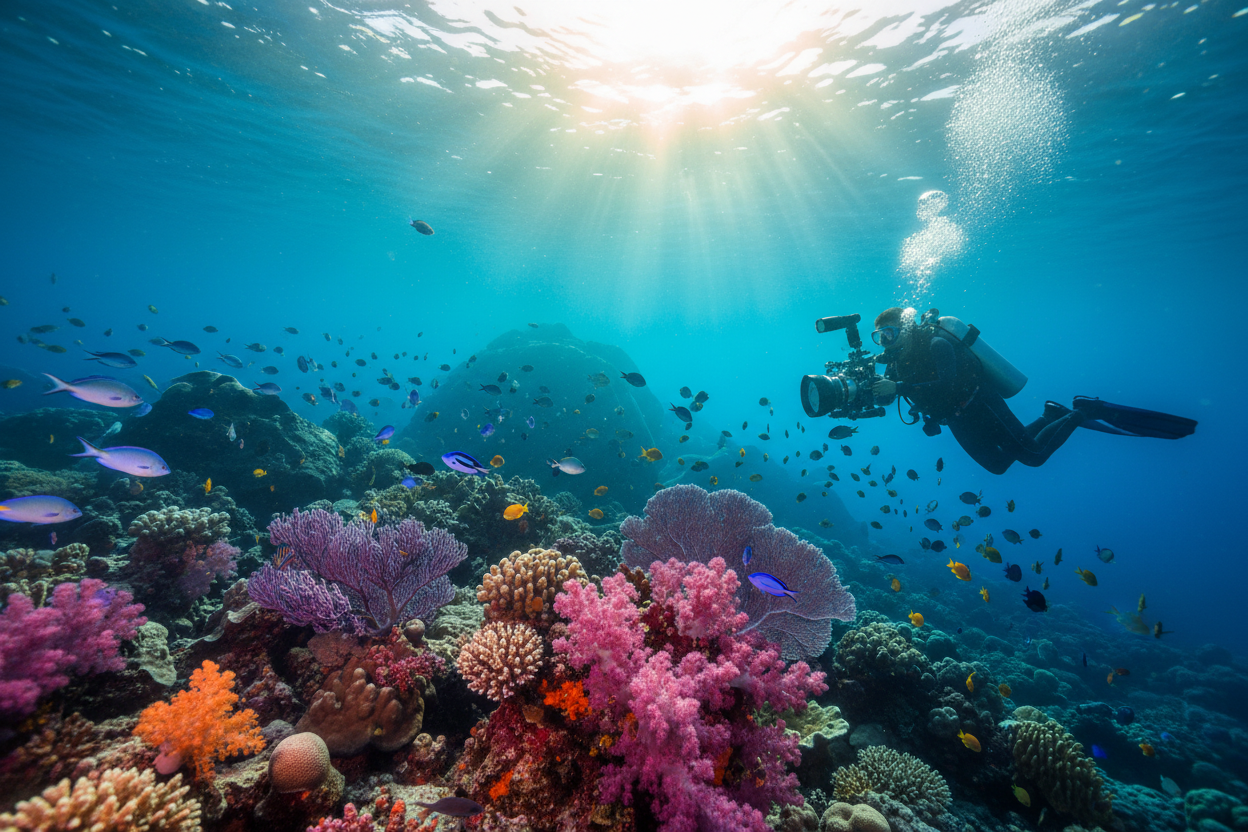
Nestled in the turquoise waters of the Andaman Sea, the Similan Islands represent one of Thailand’s most treasured underwater photography destinations. As someone who has spent countless hours beneath these pristine waters, I can confidently say that few places on Earth offer such a spectacular combination of marine biodiversity, crystal-clear visibility, and photogenic underwater landscapes. Whether you’re a seasoned underwater photographer or just starting your journey into the depths, the Similan Islands provide an unparalleled canvas for capturing the ocean’s most breathtaking moments.
This archipelago of nine granite islands has been protected as a national park since 1982, ensuring that its underwater ecosystems remain largely untouched by human interference. The result is a photographer’s paradise where vibrant coral reefs, diverse marine life, and dramatic underwater topography create endless opportunities for stunning imagery. From macro photography enthusiasts seeking tiny nudibranchs to wide-angle specialists chasing whale shark encounters, the Similan Islands cater to every style of underwater photography.
Richelieu Rock: The Crown Jewel of Underwater Photography
Without question, Richelieu Rock stands as the most celebrated underwater photography location in the Similan Islands region. This submerged pinnacle, located north of the main island chain, rises from depths of over 30 meters to just break the surface at low tide. What makes Richelieu Rock extraordinary isn’t just its unique geological formation, but the incredible concentration of marine life that calls it home.
The rock’s horseshoe shape creates natural amphitheaters where photographers can position themselves to capture schooling fish against dramatic backdrops. During my visits, I’ve witnessed massive schools of barracuda creating silver tornadoes, while chevron barracuda patrol the deeper sections in perfectly synchronized formations. The site’s reputation for whale shark encounters is well-deserved, with these gentle giants frequently appearing between February and April.
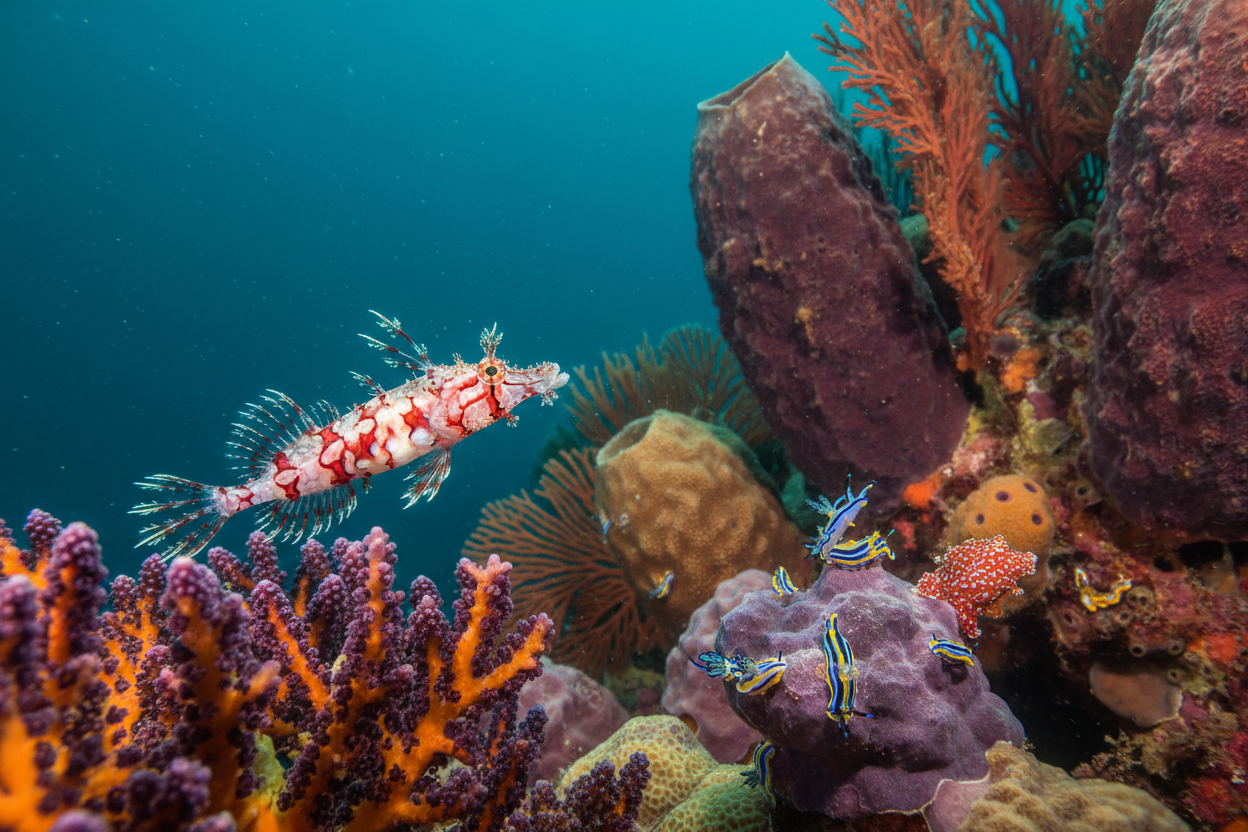
For macro photographers, Richelieu Rock offers an abundance of subjects that are often overlooked by divers focused on larger marine life. The rock’s surface is carpeted with colorful soft corals, sea fans, and barrel sponges that provide homes for countless small creatures. Ornate ghost pipefish drift gracefully among the coral branches, while various species of nudibranchs create tiny splashes of color against the purple and orange coral backdrop.
Koh Bon: Manta Ray Photography Paradise
Koh Bon has earned its reputation as one of the world’s premier manta ray photography destinations, and for good reason. The island’s western ridge features a cleaning station where reef manta rays regularly visit to have parasites removed by cleaner fish. This predictable behavior creates exceptional opportunities for photographers to capture these magnificent creatures in their natural environment.
The key to successful manta ray photography at Koh Bon lies in understanding the animals’ behavior and positioning yourself appropriately. Manta rays are curious creatures, often approaching photographers who remain calm and stationary. I’ve found that positioning myself slightly below the cleaning station, with the sun behind me, creates the most dramatic lighting conditions for capturing these graceful giants.
Beyond the manta rays, Koh Bon’s underwater landscape offers diverse photographic opportunities. The site features a series of underwater ridges and valleys covered in healthy hard corals, creating excellent wide-angle photography scenarios. Schools of fusiliers, snappers, and trevally frequently patrol these areas, providing dynamic subjects for action photography.
Elephant Head Rock: Dramatic Topography and Marine Diversity
Elephant Head Rock, located on the western side of Similan Island number eight, presents one of the most visually striking underwater landscapes in the archipelago. The site features massive granite boulders that have tumbled into the sea, creating a maze of swim-throughs, caverns, and dramatic overhangs that provide endless compositional opportunities for underwater photographers.
The interplay of light and shadow among these granite formations creates natural spotlights that can dramatically illuminate subjects. During midday dives, shafts of sunlight penetrate the spaces between boulders, creating cathedral-like lighting effects that transform ordinary subjects into extraordinary photographs. The site’s varied topography supports an equally diverse marine community, from tiny gobies hiding in coral crevices to large pelagic species cruising the deeper waters.
What sets Elephant Head Rock apart is its accessibility to photographers of all skill levels. The shallower sections, ranging from 5 to 15 meters, provide excellent opportunities for beginners to practice their underwater photography techniques, while the deeper areas offer more challenging subjects for experienced photographers. The site’s protected location on the lee side of the island typically ensures calm conditions and excellent visibility.
Deep Six: Technical Diving and Rare Marine Encounters
For advanced underwater photographers seeking unique subjects, Deep Six represents the ultimate challenge in the Similan Islands. This deeper dive site, with depths ranging from 16 to 35 meters, attracts larger pelagic species and offers opportunities to photograph marine life that’s rarely seen in shallower waters.
The site’s deeper nature means that available light becomes limited, making artificial lighting essential for quality underwater photography. However, the investment in proper strobes and lighting equipment pays dividends when you encounter the site’s signature species. Grey reef sharks patrol the deeper sections, while massive schools of bigeye trevally create impressive bait balls that provide spectacular wide-angle photography opportunities.
Deep Six’s coral formations differ significantly from the shallower sites, featuring species adapted to lower light conditions. These deeper corals often display more muted colors in natural light, but reveal their true beauty when illuminated with artificial lighting. The site regularly attracts experienced underwater photographers specifically seeking the challenge of deeper water photography and the unique marine encounters it provides.
Christmas Point: Macro Photography Haven
Christmas Point, located on the southern tip of Similan Island number nine, serves as a macro photographer’s dream destination. The site’s relatively shallow depths and calm conditions create ideal environments for close-up photography, while the incredible diversity of small marine life ensures that every dive yields new photographic subjects.
The coral gardens at Christmas Point host an impressive variety of nudibranchs, with new species discoveries still being made regularly. During night dives, the site transforms completely, with nocturnal creatures emerging from their daytime hiding places. Hunting crabs, feeding fish, and mating behaviors provide dynamic subjects for photographers willing to explore the site after dark.
The site’s consistent conditions make it an excellent location for underwater photography workshops and training. The relatively shallow maximum depth of 25 meters allows for extended bottom times, giving photographers ample opportunity to work with their subjects and perfect their techniques. The abundance of photogenic subjects means that even novice photographers typically return from dives with impressive images.
Photography Tips for Similan Islands Success
Successful underwater photography in the Similan Islands requires careful preparation and an understanding of the unique conditions found in these waters. The visibility, which often exceeds 30 meters, allows for dramatic wide-angle compositions, but also means that subjects can appear farther away than they actually are. Adjusting your approach distance and strobe positioning accordingly will dramatically improve your results.
The strong currents that bring nutrients to the Similan Islands also present challenges for photographers. Learning to work with the current rather than fighting against it will conserve energy and improve your ability to compose shots carefully. Many of the best photographic opportunities occur when positioning yourself in current shadows created by rock formations or coral heads.
Equipment considerations specific to the Similan Islands include bringing backup batteries, as the remote location makes equipment replacement impossible during your stay. The high-energy diving and photography sessions typical of Similan trips drain batteries faster than normal. Additionally, the abundance of both macro and wide-angle opportunities makes a versatile lens setup essential for maximizing your photographic potential.
Conservation and Responsible Photography
As underwater photographers, we bear a special responsibility for protecting the marine environments that provide us with such incredible subjects. The Similan Islands’ status as a national park reflects the Thai government’s commitment to conservation, but the health of these reefs depends on every visitor’s actions.
Practicing neutral buoyancy becomes even more critical when carrying camera equipment, as the additional gear can affect your trim and increase the risk of accidental coral contact. Taking time to master your buoyancy skills before attempting underwater photography will protect both the reef environment and improve your photographic results.
The “take only pictures, leave only bubbles” philosophy takes on special meaning in the Similan Islands, where the pristine condition of the reefs allows for photography opportunities that have become rare in many other destinations. By following responsible diving practices and supporting conservation-minded dive operators, photographers can help ensure that future generations will have the same opportunities to capture the beauty of these underwater landscapes.
The Similan Islands represent more than just another diving destination; they offer a window into what healthy marine ecosystems can achieve when properly protected. For underwater photographers, these islands provide an unparalleled combination of marine biodiversity, pristine conditions, and photographic opportunities that create memories lasting far beyond the final dive. Whether you’re drawn by the promise of whale shark encounters at Richelieu Rock, the graceful manta rays of Koh Bon, or the intricate macro subjects of Christmas Point, the Similan Islands deliver experiences that will elevate your underwater photography to new heights. The key to success lies in respecting these fragile ecosystems while capturing their beauty, ensuring that the Similan Islands continue to inspire and reward underwater photographers for generations to come.
 English
Leave a Reply