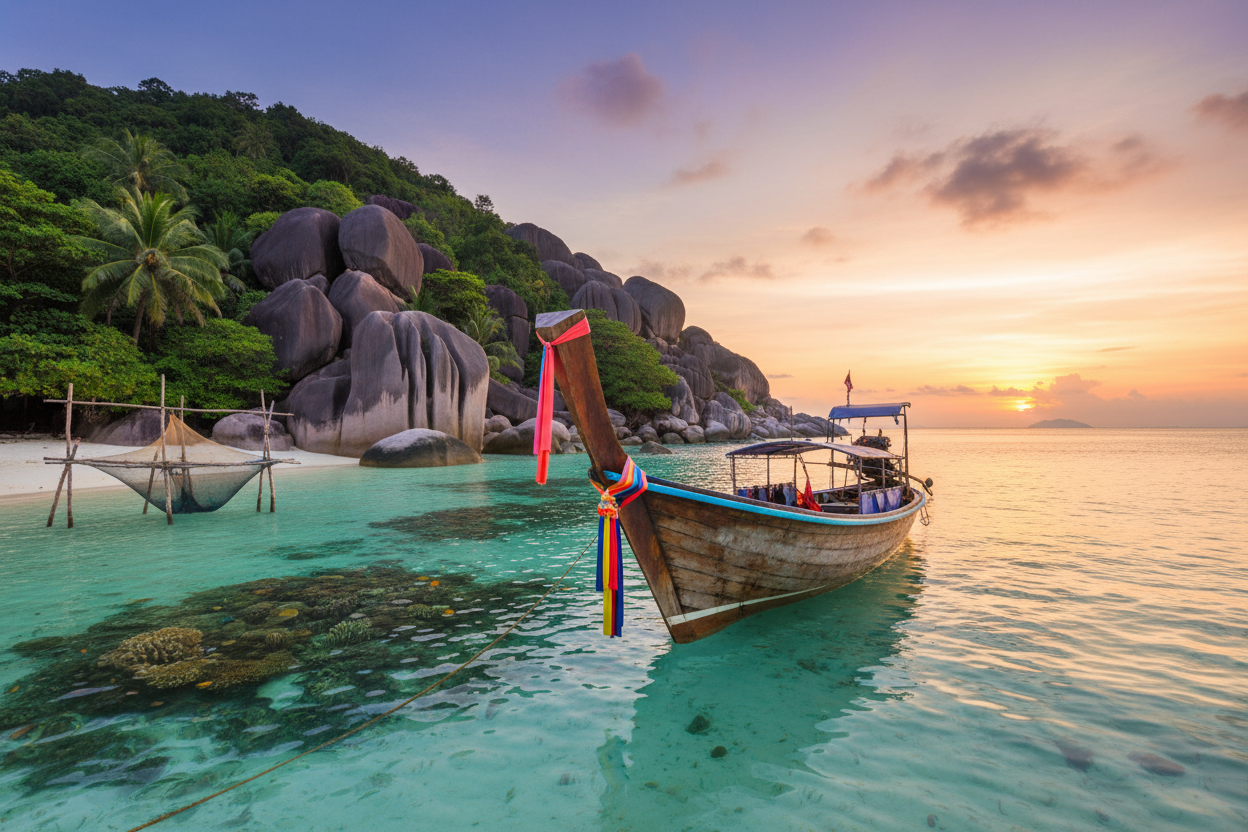
Thailand’s Hidden Marine Paradise
Nestled in the turquoise waters of the Andaman Sea, approximately 84 kilometers northwest of Phuket, lie nine granite islands that have captured the hearts of marine enthusiasts, conservationists, and cultural historians alike. The Similan Islands, whose name derives from the Malay word “sembilan” meaning nine, represent far more than just a pristine diving destination. These remarkable islands carry within their coral reefs and ancient stones a rich tapestry of maritime history, cultural heritage, and ecological significance that spans centuries.
From their role as crucial navigation points for ancient traders to their transformation into one of Thailand’s most protected marine sanctuaries, the Similan Islands have witnessed the ebb and flow of civilizations while maintaining their natural splendor. Today, as we explore their depths and shores, we uncover stories that connect us to Thailand’s maritime past and remind us of our responsibility to preserve these treasures for future generations.
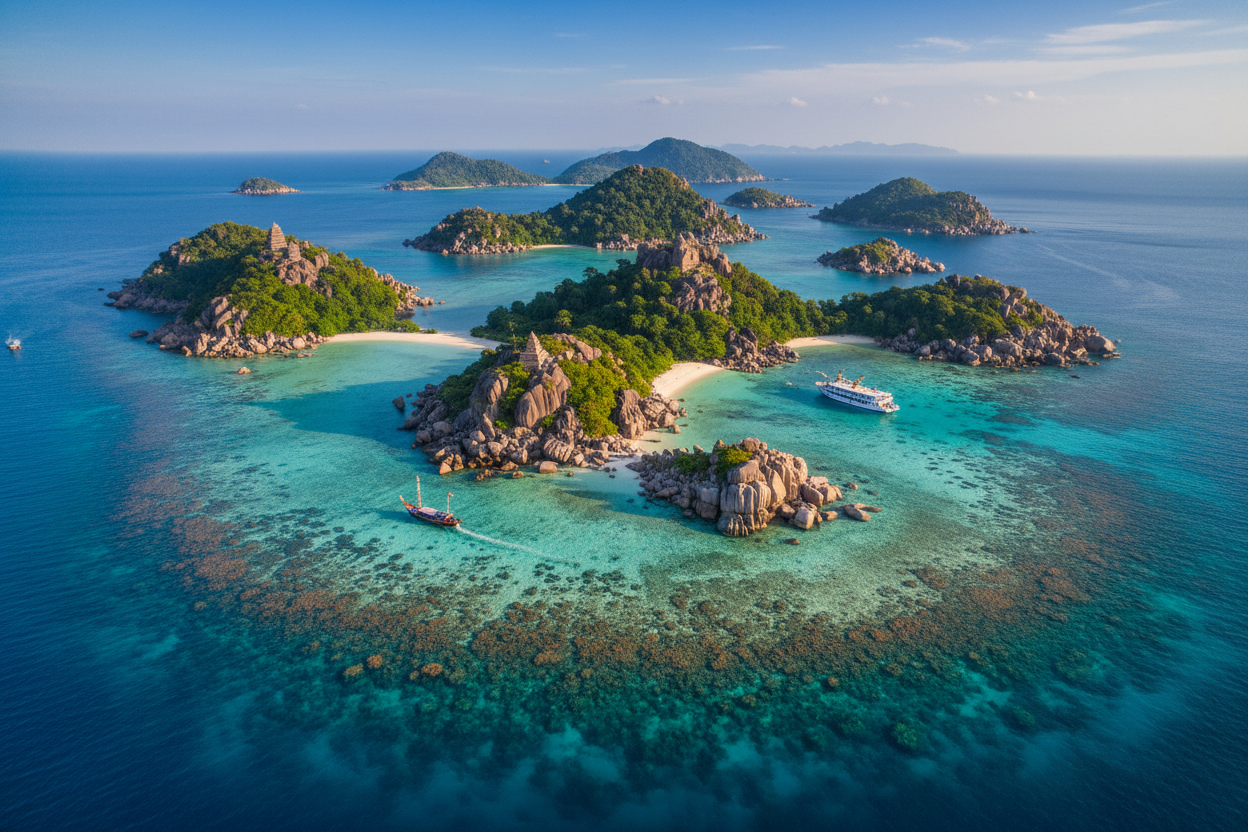
Ancient Maritime Routes and Early Inhabitants
Long before the Similan Islands became a world-renowned diving destination, they served as vital waypoints along ancient maritime trade routes that connected the Indian Ocean with Southeast Asia. Archaeological evidence suggests that these islands have been known to seafarers for over a thousand years, serving as landmarks for merchants traveling between India, Burma, and the Malay Peninsula.
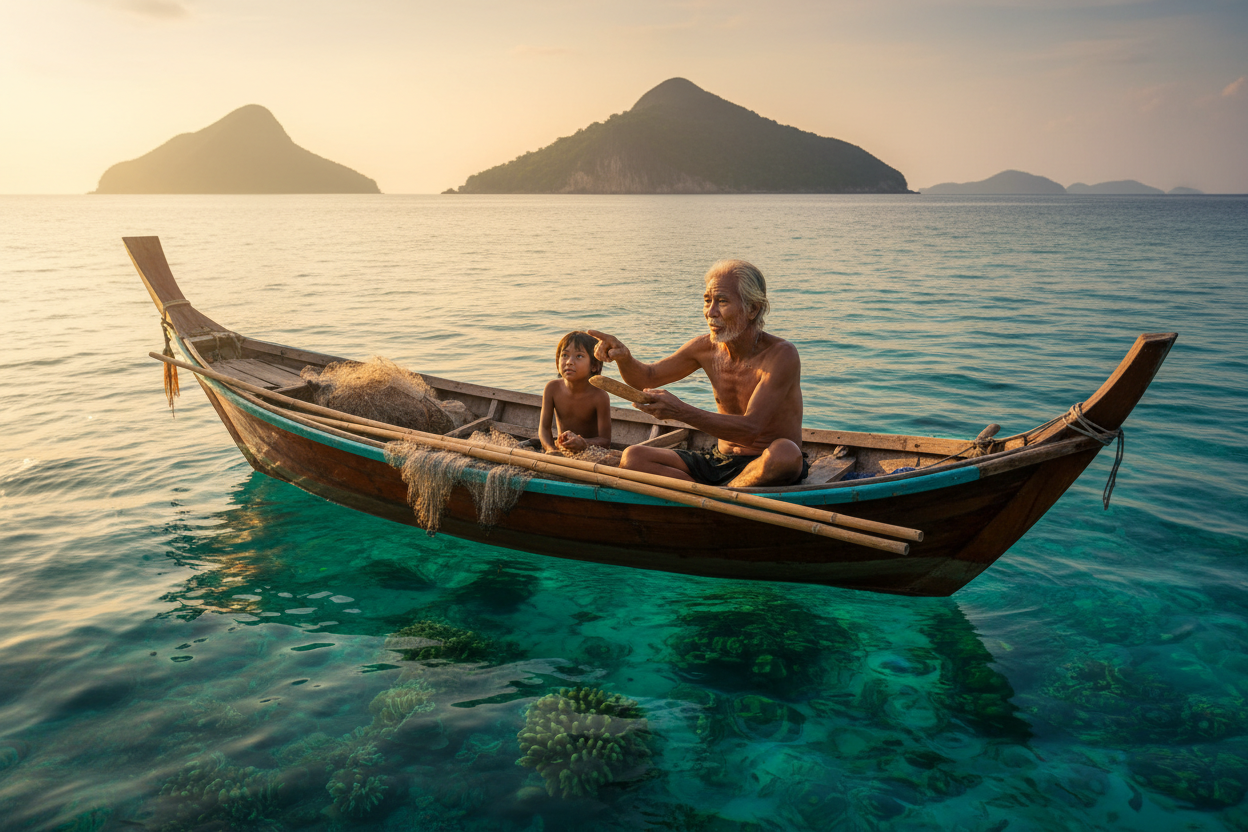
The earliest recorded inhabitants were likely the Moken people, often called “sea gypsies,” who lived nomadic lives aboard their traditional boats called kabang. These skilled maritime nomads possessed an intimate knowledge of the Andaman Sea’s currents, weather patterns, and seasonal changes.
Chinese and Arab traders also frequented these waters, using the distinctive granite formations of the Similan Islands as navigation markers. The largest island, Ko Similan, with its iconic Sail Rock formation, became a particularly important landmark that helped sailors determine their position and plan their routes across the often treacherous Andaman Sea.
Colonial Era and the Birth of Modern Navigation
During the colonial period, as European powers expanded their influence throughout Southeast Asia, the Similan Islands gained new strategic importance. British colonial authorities, who had significant interests in Burma and the Malay Peninsula, began documenting these islands more systematically in the 19th century.
The establishment of formal shipping lanes and the introduction of steam-powered vessels brought increased maritime traffic through the area. Colonial maps from this period show the Similan Islands clearly marked as important navigation points, with detailed notes about water depths, reef locations, and safe anchorage spots. This documentation proved invaluable for the development of modern nautical charts that are still used today.
During this era, the islands also served as emergency shelter for vessels caught in the fierce monsoon storms that regularly sweep across the Andaman Sea. Many ships’ logs from the late 1800s and early 1900s contain references to taking refuge in the protected waters around the Similan Islands, waiting for storms to pass before continuing their journeys.
World War II and Strategic Importance
The Second World War brought a darker chapter to the history of the Similan Islands. As Japanese forces occupied much of Southeast Asia, the Andaman Sea became a crucial theater of naval operations. The remote location of the Similan Islands made them attractive to various military forces seeking hidden bases and supply points.
Local fishermen’s accounts, passed down through oral tradition, tell of military vessels using the sheltered waters around the islands for clandestine operations. Some evidence suggests that Allied forces may have used the islands as covert meeting points for intelligence operations and supply runs to resistance fighters in Burma and Thailand.
The war years also marked a period of isolation for the islands, as civilian maritime traffic was severely restricted. This unintended protection allowed the marine ecosystems around the Similan Islands to flourish undisturbed, contributing to the exceptional biodiversity that visitors marvel at today.
Local Traditions
Traditional fishing techniques developed around the Similan Islands represent important cultural heritage. Methods such as “plaa too” fishing, using traditional wooden boats and handwoven nets, have been practiced for centuries. While modern fishing methods have largely replaced these traditional techniques, some local communities work to preserve this knowledge as part of their cultural identity.
The Rise of Marine Conservation
The transformation of the Similan Islands from a remote maritime waypoint to a protected marine sanctuary represents one of Thailand’s most successful conservation stories. In 1982, recognizing the exceptional marine biodiversity and the need to protect these fragile ecosystems, the Thai government designated the Similan Islands as Thailand’s 15th national park.
This designation marked a turning point in the islands’ history, shifting their primary significance from navigation and fishing to conservation and sustainable tourism. The establishment of Mu Ko Similan National Park created strict regulations governing fishing, anchoring, and development activities around the islands.
The conservation efforts have revealed the true ecological treasure that the Similan Islands represent. The waters around these islands support over 500 species of fish, including whale sharks, manta rays, and numerous species of reef sharks. The coral reefs, featuring both hard and soft corals, create underwater landscapes of extraordinary beauty and complexity.
Marine biologists have documented the presence of several endemic species around the Similan Islands, making them not just nationally but internationally significant for marine conservation. The protection of these ecosystems has also preserved important breeding and feeding grounds for endangered species such as sea turtles and dugongs.
Modern Tourism and Cultural Impact
The development of scuba diving tourism in the 1980s and 1990s brought global attention to the Similan Islands, fundamentally changing their role in Thai culture and economy. What began as a destination for adventurous divers has evolved into one of Thailand’s premier marine tourism attractions, drawing hundreds of thousands of visitors annually.
This tourism boom has created new cultural dynamics around the islands. Local communities in nearby Khao Lak and other coastal areas have adapted their traditional maritime skills to serve the tourism industry. Former fishermen have become dive guides and boat operators, using their intimate knowledge of local waters to share the islands’ natural wonders with visitors from around the world.
The economic transformation has also led to new forms of cultural expression. Local artisans create souvenirs and artwork inspired by the marine life of the Similan Islands, while restaurants develop cuisine that celebrates both traditional Thai flavors and the fresh seafood that the surrounding waters provide.
However, the popularity of the Similan Islands has also created significant challenges. The sheer volume of visitors has put pressure on the fragile marine ecosystems, leading to periodic closures during monsoon seasons and implementation of strict visitor quotas. These management strategies reflect an ongoing effort to balance cultural and economic benefits with environmental protection.
Contemporary Challenges and Future Preservation
Today, the Similan Islands face complex challenges that test the balance between preservation and accessibility. Climate change poses perhaps the greatest long-term threat, with rising sea temperatures causing coral bleaching events that threaten the very ecosystems that make these islands special.
The Thai government has responded with increasingly sophisticated management strategies, including seasonal park closures, daily visitor limits, and strict regulations on diving and snorkeling activities. These measures, while sometimes controversial among tourism operators, reflect a commitment to ensuring that future generations can experience the same natural wonders that have made the Similan Islands culturally significant for centuries.
Local communities continue to play a crucial role in conservation efforts, with many former fishermen now working as park rangers and environmental educators. Their traditional knowledge of marine ecosystems, combined with modern conservation science, creates a powerful foundation for protecting the islands’ natural heritage.
Educational programs have also become an important part of the islands’ cultural mission. Visitors learn not only about marine biology but also about the maritime history and cultural significance of the Similan Islands, fostering a deeper appreciation for both their natural and cultural value.
Conclusion: A Living Heritage
The Similan Islands represent a remarkable convergence of natural beauty, maritime history, and cultural significance that continues to evolve in the modern era. From their origins as navigation points for ancient traders to their current status as a world-class marine sanctuary, these nine granite islands have consistently demonstrated their importance to human civilization and natural conservation.
Their history reminds us that cultural significance is not static but grows and changes as each generation finds new ways to connect with these special places. The transformation from fishing grounds to diving destination, from military waypoint to conservation showcase, illustrates how places can maintain their essential character while adapting to new roles and responsibilities.
As we look toward the future, the Similan Islands face the challenge of maintaining their cultural and ecological integrity in an increasingly connected and pressured world. The success of this endeavor will depend on continued collaboration between local communities, conservation scientists, government agencies, and the millions of visitors who come to experience these islands’ unique magic.
 English
Leave a Reply