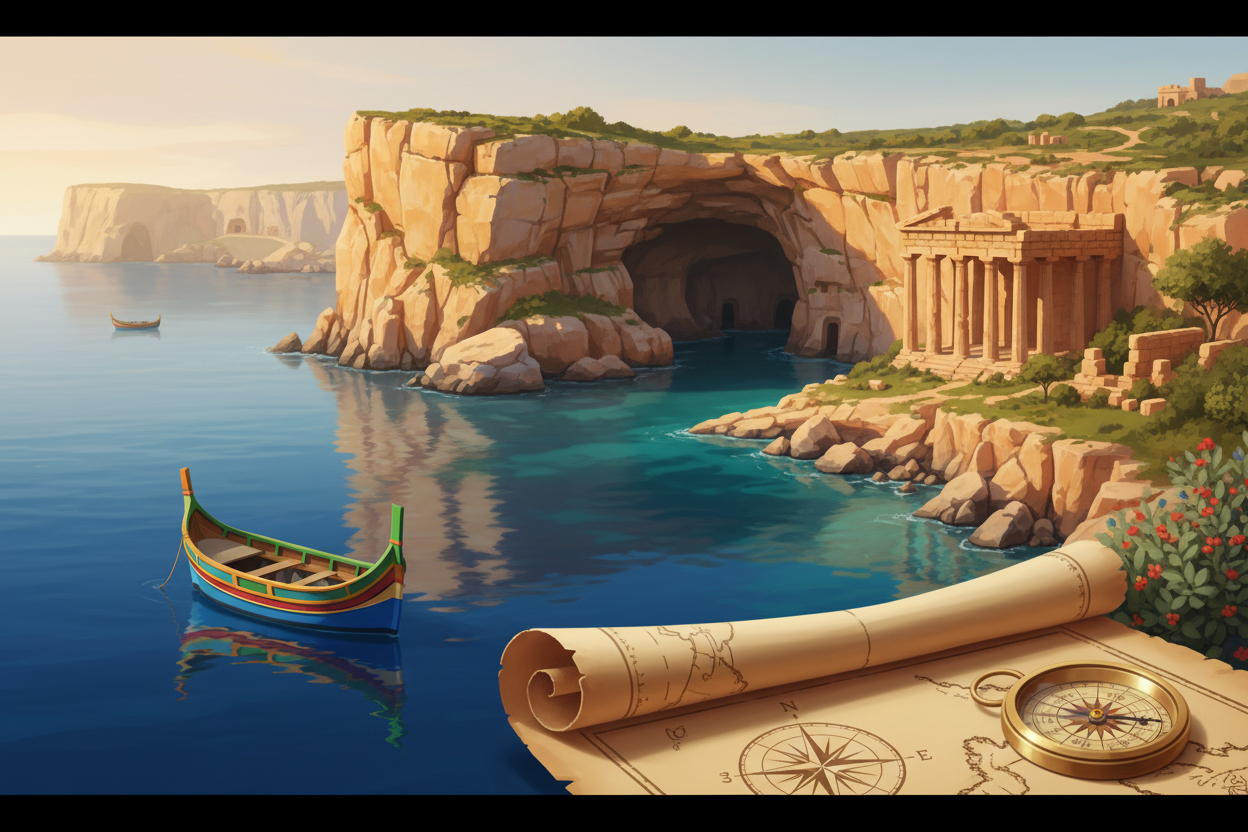
10 Hidden Gems in Malta You Won’t Find in Tourist Guides
While most visitors to Malta flock to the well-documented attractions like Valletta’s Grand Harbour or the Blue Lagoon in Comino, this Mediterranean archipelago harbors countless secrets that even seasoned travel guides overlook. Having spent considerable time exploring every nook and cranny of these islands, I’ve discovered places that will make your Malta experience truly unforgettable. These hidden gems offer authentic glimpses into Maltese culture, stunning natural beauty, and fascinating history without the overwhelming crowds.
From secret swimming spots to ancient temples tucked away in quiet valleys, Malta’s best-kept secrets are waiting for curious travelers willing to venture off the beaten path. Let me share with you ten extraordinary places that locals cherish but tourists rarely discover.
The Enchanting Blue Grotto’s Secret Sister: Il-Hofra z-Zghira
While everyone knows about the famous Blue Grotto, few have heard of Il-Hofra z-Zghira, a smaller but equally mesmerizing sea cave located near Zurrieq. This hidden cavern offers the same magical blue illumination but without the tourist boats and entrance fees. The best time to visit is during the early morning when the sunlight creates an ethereal glow on the water’s surface.
Getting there requires a short hike along the coastal cliffs, but the reward is worth every step. Local fishermen have been using this spot for generations, and you might catch them preparing their nets while sharing stories about the old days. The water here is crystal clear and perfect for a refreshing swim, though you’ll need to be comfortable with rocky entry points.
Fomm ir-Rih Bay: Malta’s Best Kept Beach Secret
Tucked away on Malta’s northwestern coast, Fomm ir-Rih Bay remains one of the island’s most pristine beaches. The name translates to “mouth of the wind,” and you’ll understand why when you feel the refreshing breeze that sweeps across this secluded stretch of golden sand. Unlike the crowded beaches of Golden Bay or Mellieha, Fomm ir-Rih offers tranquility that’s becoming increasingly rare in Malta.
The journey to reach this hidden paradise involves a steep descent down a winding path, which naturally filters out casual beachgoers. This effort is rewarded with some of the clearest waters you’ll find anywhere in the Mediterranean. The bay is also a favorite spot for local surfers when the conditions are right, adding an authentic touch to your beach experience.
The Forgotten Village of Gharb in Gozo
While most Gozo visitors stick to Victoria and the coastal attractions, the village of Gharb offers an authentic glimpse into traditional Maltese life. This sleepy settlement, whose name simply means “west,” feels frozen in time with its narrow streets, traditional limestone houses, and locals who still gather in the village square for their evening conversations.
The village church, dedicated to the Visitation of Our Lady, contains some remarkable Baroque artwork that rivals anything you’ll find in more famous locations. What makes Gharb special is its unchanged character – here you’ll find elderly residents tending to their rooftop gardens, children playing traditional Maltese games, and a pace of life that harks back to simpler times.
Wied il-Ghasri: A Natural Swimming Pool Paradise
This narrow inlet on Gozo’s northern coast creates one of nature’s most perfect swimming pools. Wied il-Ghasri, which means “valley of juice,” is a fjord-like formation where the sea has carved a channel through the limestone cliffs, creating a protected swimming area with incredibly deep, clear water.
The approach requires scrambling down rocky terrain, but once you reach the water’s edge, you’ll find yourself in what feels like a private aquatic sanctuary. The high cliffs provide natural windbreaks, making the water surprisingly calm even when the surrounding seas are rough. Local diving enthusiasts consider this one of the best spots for underwater exploration, with visibility often exceeding 30 meters.
The Ancient Cart Ruts of Clapham Junction
Near the Dingli Cliffs lies one of Malta’s most mysterious archaeological sites, locally known as Clapham Junction due to its resemblance to a busy railway intersection. These prehistoric cart ruts, carved deep into the limestone bedrock, have puzzled archaeologists for decades. Some tracks disappear over cliff edges, while others seem to lead nowhere, adding to the site’s enigmatic appeal.
Unlike the more famous cart ruts at other locations, this site remains largely uncommercialized. You can walk freely among these ancient grooves, some of which are over 5,000 years old, and contemplate the civilization that created them. The site offers spectacular views across the Mediterranean, making it perfect for combining historical exploration with scenic photography.
Ta’ Cenc Cliffs: Gozo’s Dramatic Southern Edge
The southern coast of Gozo hides one of the Mediterranean’s most dramatic cliff formations. Ta’ Cenc Cliffs rise majestically from the sea, offering breathtaking panoramic views that extend to Malta and beyond on clear days. This area remains refreshingly undeveloped, with only a luxury hotel discretely positioned to take advantage of the spectacular setting.
The cliffs are home to unique flora and fauna, including several endemic species that have adapted to the harsh coastal environment. Bird watchers will find this location particularly rewarding during migration seasons, when various species use these cliffs as resting points during their Mediterranean crossings. The sunsets here are absolutely spectacular, painting the limestone cliffs in shades of gold and crimson.
The Hidden Chapel of Santa Maria tal-Virtù
Nestled in a quiet valley near Rabat, this tiny medieval chapel represents one of Malta’s most atmospheric religious sites. Santa Maria tal-Virtù dates back to the 15th century and contains some of the finest medieval frescoes on the islands. The chapel’s intimate size and peaceful surroundings create a contemplative atmosphere that’s impossible to find in Malta’s grander churches.
What makes this place truly special is its authentic medieval character, largely unchanged by modern renovations. The frescoes, though faded, still convey the artistic skill of Malta’s medieval painters. The chapel is usually locked, but the key can be obtained from the nearby parish, and locals are always happy to help visitors appreciate this hidden treasure.
Salina Bay Salt Pans: A Living Heritage Site
While many tourists photograph the salt pans at Marsalforn, few discover the more extensive and historically significant salt works at Salina Bay. These ancient salt pans have been in continuous operation for over 350 years, representing one of Malta’s oldest surviving industries. The geometric patterns created by the salt harvesting pools form a striking landscape that changes dramatically with the seasons.
Visiting during the salt harvesting season (May through September) offers the chance to observe traditional methods still in use today. The salt workers, often from families who have been in this business for generations, are usually happy to explain the process and share stories about this ancient trade. The area also provides excellent opportunities for photographing both the industrial heritage and the diverse bird life that frequents these shallow pools.
The Mysterious Hypogeum of Hal Saflieni’s Lesser-Known Cousin
While the famous Hypogeum requires advance booking and has strict visitor limits, few people know about the smaller but equally fascinating underground chambers scattered throughout Malta. One such site, located near Paola but away from the main tourist areas, offers similar Neolithic architecture without the crowds or restrictions.
These underground chambers, carved from living rock over 5,000 years ago, demonstrate the sophisticated engineering skills of Malta’s prehistoric inhabitants. The acoustic properties of these spaces are remarkable, with whispers carrying clearly across the chambers. Local archaeological societies sometimes organize visits to these lesser-known sites, providing insights into Malta’s rich prehistoric heritage.
Wied iz-Zurrieq: The Valley Time Forgot
This peaceful valley, located inland from the Blue Grotto area, offers a completely different perspective on Malta’s natural beauty. Wied iz-Zurrieq is a fertile depression where traditional farming methods are still practiced, creating a patchwork of small fields divided by ancient stone walls. The valley floor follows a seasonal watercourse that creates a green corridor through Malta’s typically arid landscape.
Walking through this valley feels like stepping back in time, with traditional farm buildings, ancient irrigation systems, and terraced fields that have been cultivated for centuries. The area is particularly beautiful in spring when wildflowers carpet the valley floor and migratory birds use the watercourse as a resting place. Local farmers still use traditional methods here, and you might encounter them tending to their crops or maintaining the ancient stone walls that define their properties.
Conclusion: Discovering the Real Malta
These hidden gems represent the authentic Malta that exists beyond the tourist brochures and crowded attractions. Each location offers something unique – whether it’s the natural beauty of secluded beaches and dramatic cliffs, the historical significance of ancient sites, or the cultural richness of traditional villages and working landscapes.
What makes these places truly special is not just their physical beauty or historical importance, but the way they connect visitors with the real Malta. Here you’ll encounter locals going about their daily lives, witness traditional practices that have survived for generations, and experience the islands’ natural environment in its unspoiled state.
The next time you visit Malta, consider venturing beyond the well-trodden tourist paths. These hidden gems are waiting to be discovered, offering experiences that will create lasting memories and provide genuine insights into what makes Malta such a remarkable destination. Remember to respect these special places – their preservation depends on visitors who appreciate their value and treat them with the care they deserve.
 English
Leave a Reply