Malta Churches: Baroque Masterpieces and Religious Heritage
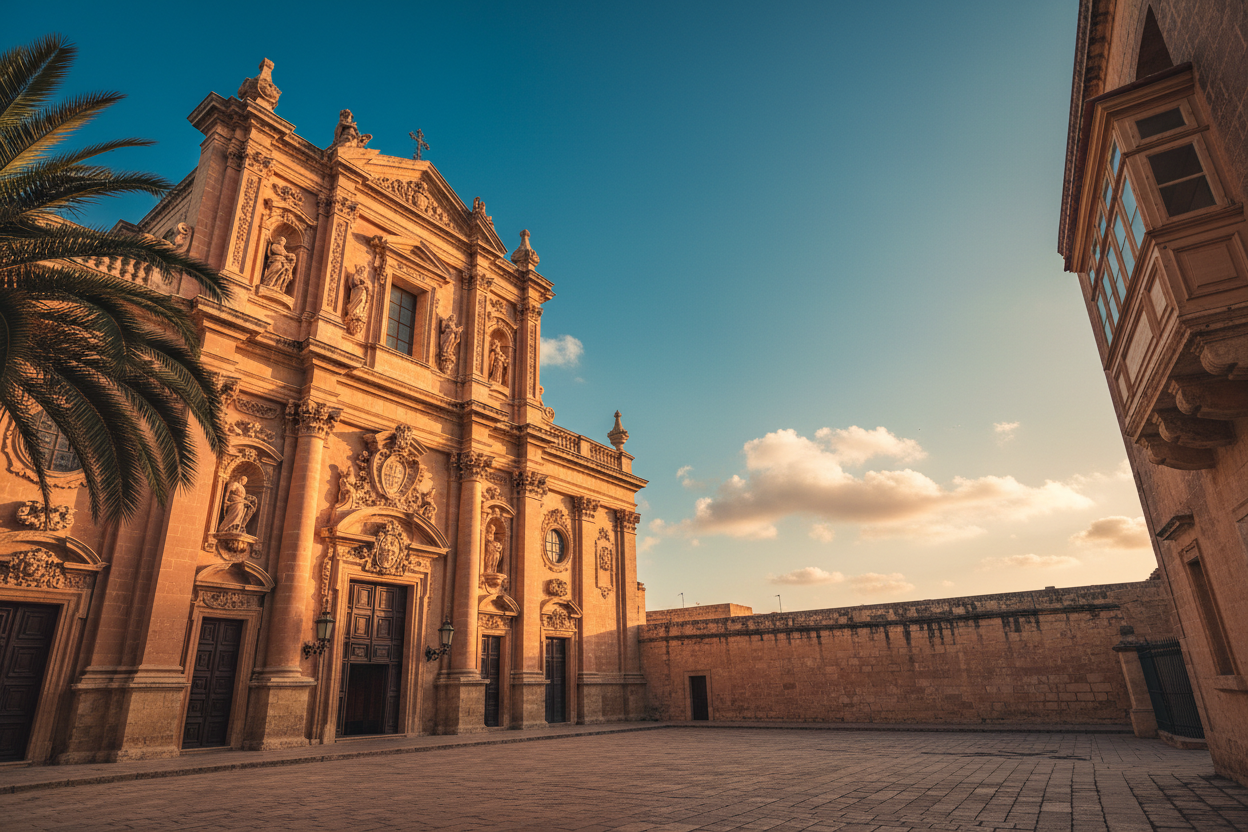
Stepping onto the sun-drenched islands of Malta feels like walking into a living museum where every corner whispers tales of devotion and artistic brilliance. With over 365 churches scattered across just 316 square kilometers, Malta boasts one of the highest concentrations of religious buildings in the world. These aren’t just places of worship – they’re magnificent baroque masterpieces that showcase centuries of religious heritage, architectural innovation, and cultural identity.
The Maltese islands have been shaped by faith as much as by the Mediterranean winds. From the moment the Knights of St. John arrived in 1530, they transformed this strategic archipelago into a fortress of Christianity, leaving behind a legacy of stunning churches that continue to captivate visitors and locals alike. Each stone facade tells a story, each gilded altar reflects the island’s golden age, and each bell tower stands as a testament to unwavering faith.
The Golden Age of Maltese Church Architecture
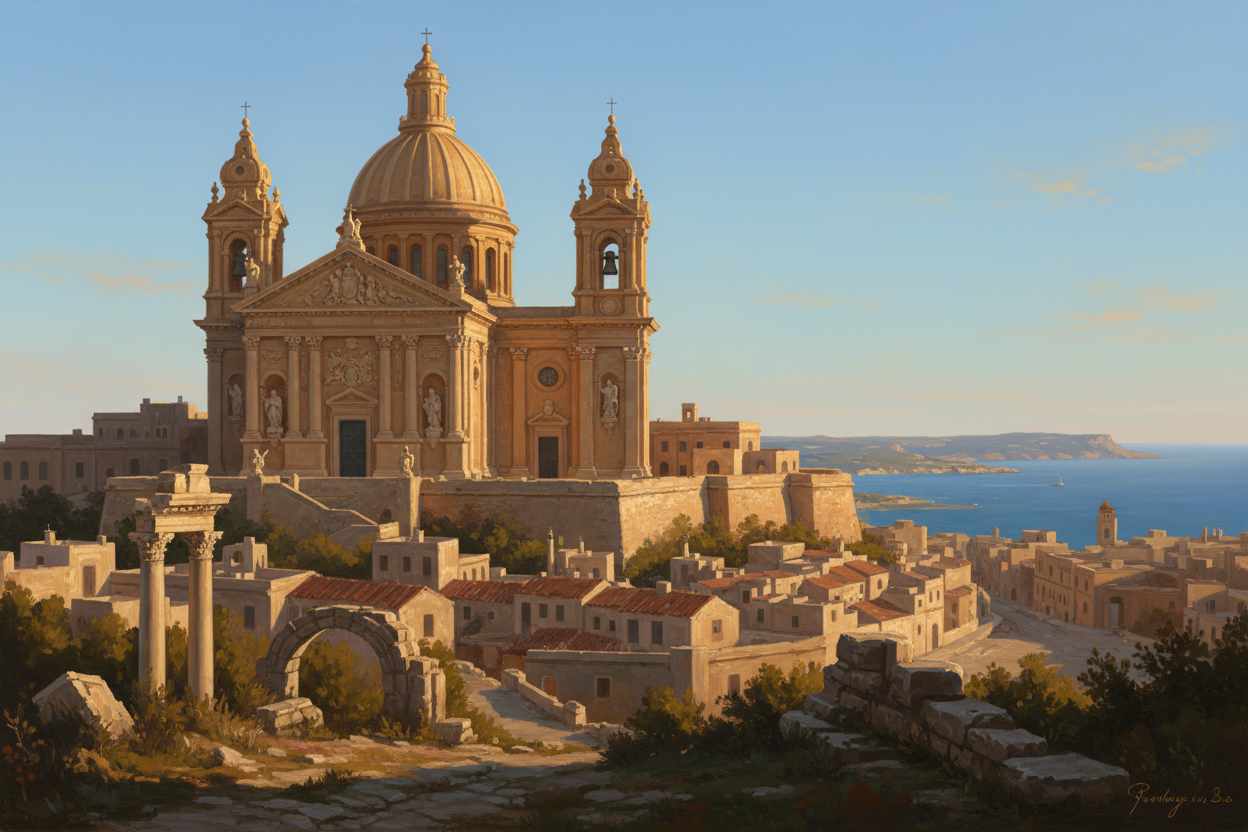
Malta’s ecclesiastical architecture reached its zenith during the 17th and 18th centuries, coinciding with the baroque movement that swept across Europe. The Knights of St. John, flush with wealth from their maritime victories and European donations, commissioned some of the most talented architects and artists of their time to create churches that would rival those of Rome itself.
The baroque style found fertile ground in Malta’s limestone landscape. Local craftsmen, working alongside Italian masters, developed a distinctive Maltese baroque that blended European sophistication with Mediterranean sensibilities. The result was a collection of churches that managed to be both grandly theatrical and intimately spiritual, perfectly suited to the island’s dramatic coastlines and honey-colored stone.
What makes Maltese baroque particularly fascinating is how it adapted to local conditions. The islands’ frequent earthquakes influenced structural decisions, while the intense Mediterranean sun shaped the way light was incorporated into interior designs. Architects learned to work with Malta’s unique globigerina limestone, a material that could be carved with remarkable precision when freshly quarried but hardened beautifully over time.
St. John’s Co-Cathedral: The Crown Jewel of Valletta
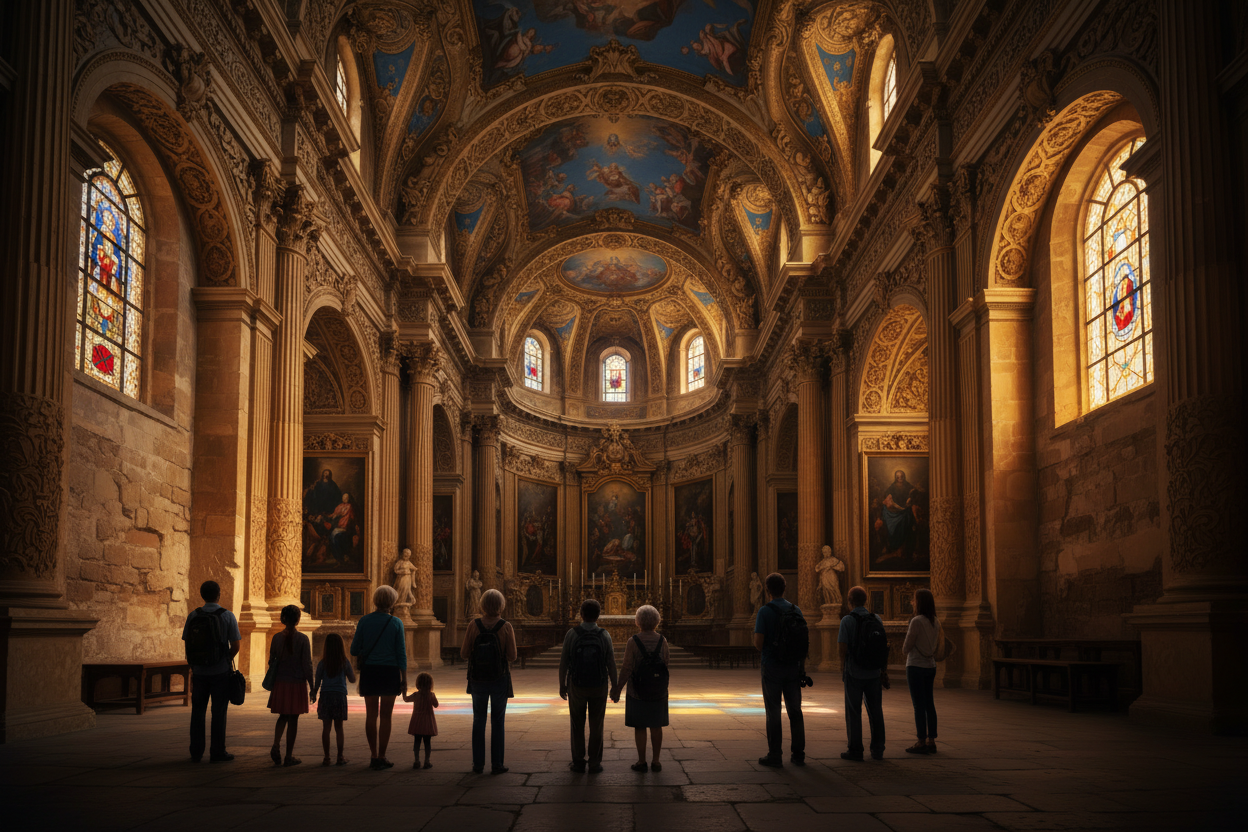
No discussion of Malta’s religious architecture can begin anywhere other than St. John’s Co-Cathedral in Valletta. From the outside, this fortress-like structure might seem austere, but step inside and prepare to have your breath taken away. The interior represents one of the finest examples of baroque art in Europe, a symphony of gold, marble, and masterful craftsmanship that took decades to complete.
The cathedral’s floor alone is worth the visit – a stunning tapestry of multicolored marble tombstones commemorating the Knights of St. John. Each inlaid marble masterpiece tells the story of a knight’s life, creating what many consider the most beautiful floor in the world. Above, Mattia Preti’s magnificent ceiling paintings depict scenes from the life of St. John the Baptist, creating an immersive experience that draws the eye heavenward.
The side chapels, each dedicated to a different langue (language group) of the Knights, showcase the international character of the Order. The Chapel of Italy, with its elaborate baroque decorations, stands in beautiful contrast to the more restrained Chapel of Germany. Meanwhile, Caravaggio’s masterpiece “The Beheading of Saint John the Baptist” – the only painting the master ever signed – hangs in the oratory, adding another layer of artistic significance to this already remarkable space.
Parish Churches: The Heart of Community Life
While St. John’s Co-Cathedral might steal the headlines, Malta’s parish churches form the true backbone of the island’s religious and social life. These community churches, many dating back several centuries, serve as focal points for neighborhoods and villages across the archipelago. Each has its own personality, reflecting the character and devotion of its congregation.
The Parish Church of St. Lawrence in Birgu stands as one of the finest examples of this tradition. Built on the site of a medieval church, the current structure showcases the evolution of Maltese ecclesiastical architecture. Its baroque facade, added in the 18th century, perfectly complements the earlier Gothic elements, creating a harmonious blend that speaks to Malta’s layered history.
In the hilltop town of Mdina, the Cathedral of St. Paul tells the story of Malta’s conversion to Christianity. Legend has it that St. Paul himself was shipwrecked on these shores in 60 AD, and this cathedral stands on the supposed site of the Roman governor’s palace where the apostle performed his first miracle on the island. The current baroque structure, rebuilt after the devastating earthquake of 1693, features stunning frescoes and a magnificent dome that dominates the ancient city’s skyline.
Architectural Features That Define Maltese Churches
Maltese churches share certain distinctive characteristics that set them apart from their European counterparts. The use of local limestone gives these buildings their characteristic honey-gold color, which seems to glow warmly in the Mediterranean light. This stone, while beautiful, also presented unique challenges and opportunities for architects and stonemasons.
The facades of Maltese baroque churches typically feature elaborate sculptural decorations, with saints, angels, and religious symbols carved directly into the limestone. These facades often incorporate multiple levels of decoration, creating a sense of movement and drama that draws the eye upward toward heaven. Bell towers, usually positioned to one side rather than centrally, became distinctive landmarks that could be seen from great distances across the flat Maltese landscape.
Inside, these churches showcase the baroque love of theatrical lighting and dramatic spaces. High windows are strategically placed to create shafts of light that illuminate altars and artwork at different times of day, turning each visit into a potentially different visual experience. The interiors often feature extensive use of gilded wood and painted ceilings, creating environments that feel both opulent and spiritually uplifting.
The Role of Italian Masters and Local Craftsmen
The creation of Malta’s baroque churches was truly an international effort, bringing together some of Europe’s finest artists with skilled local craftsmen. Italian architects like Tommaso Dingli and Francesco Buonamici worked alongside Maltese stonemasons who had developed exceptional skills working with the local limestone.
Mattia Preti, the Calabrian artist who spent the final decades of his life in Malta, left an indelible mark on the island’s churches. His dynamic baroque style, influenced by Caravaggio, can be seen not just in St. John’s Co-Cathedral but in parish churches across the islands. Preti understood how to work with Malta’s intense light, creating paintings that seem to glow from within.
Local craftsmen contributed their own expertise, particularly in stone carving and decorative arts. Maltese artisans developed techniques for working with globigerina limestone that allowed for incredibly detailed sculptural work. They also became masters of creating decorative elements from local materials, including the distinctive Maltese crosses that appear throughout the islands’ churches.
Religious Festivals and Living Heritage
Malta’s churches aren’t merely historical monuments – they remain vibrant centers of community life and religious devotion. The island’s famous festa season, running from May through September, transforms these baroque masterpieces into the focal points of elaborate celebrations that blend religious devotion with community pride.
Each parish celebrates its patron saint with a festa that can last for days. Churches are decorated with flowers, lights, and elaborate banners, while their baroque interiors provide the perfect backdrop for solemn religious ceremonies. The contrast between the ornate church interiors and the exuberant street celebrations creates a uniquely Maltese experience that has remained largely unchanged for centuries.
These festivals also provide opportunities to see church treasures that are normally kept in storage. Silver processional items, elaborate vestments, and precious reliquaries emerge for special occasions, reminding visitors that these churches house collections of religious art and artifacts that span centuries.
Conservation Challenges and Modern Efforts
Preserving Malta’s ecclesiastical heritage presents unique challenges. The islands’ position in the Mediterranean exposes these limestone structures to salt air, intense sun, and occasional severe weather. The very softness that makes Maltese limestone so suitable for carving also makes it vulnerable to erosion over time.
Modern conservation efforts have had to balance historical authenticity with practical preservation needs. Skilled craftsmen work to maintain traditional techniques while incorporating modern conservation science. The restoration of St. John’s Co-Cathedral, completed in recent years, serves as a model for how historical buildings can be preserved while remaining accessible to both worshippers and visitors.
These conservation efforts extend beyond the buildings themselves to include the precious artworks, manuscripts, and religious artifacts housed within these churches. Climate control, security systems, and careful handling procedures help ensure that future generations will be able to experience these baroque masterpieces in all their glory.
Conclusion: A Living Testament to Faith and Art
Malta’s churches represent far more than architectural achievements – they embody the soul of a nation that has maintained its faith and cultural identity through centuries of change. These baroque masterpieces continue to serve their original purpose as places of worship while also standing as monuments to human creativity and devotion.
For visitors to Malta, exploring these churches offers a journey through time and art that few destinations can match. Whether you’re drawn by religious faith, architectural interest, or simply appreciation for beautiful spaces, Malta’s churches provide experiences that linger long after you’ve returned home. They remind us that the greatest art often emerges from the deepest human experiences – faith, community, and the eternal human desire to create something beautiful that will outlast our brief time on earth.
The baroque churches of Malta stand as proof that small islands can harbor treasures of global significance. In their golden stone walls and soaring spaces, we find not just the history of Malta, but a testament to the power of faith and art to create something truly transcendent. These sacred spaces continue to inspire, comfort, and amaze, just as their builders intended centuries ago.
 English
Leave a Reply