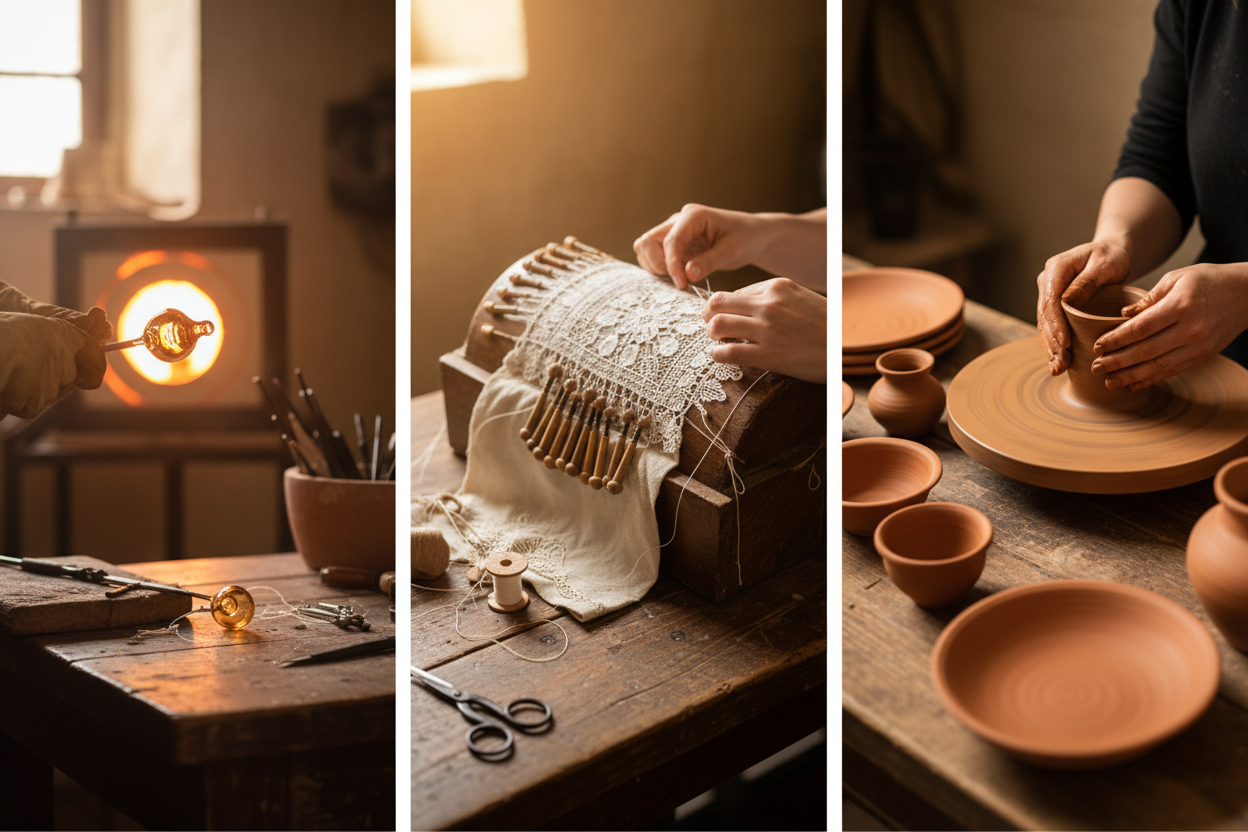
Malta Traditional Crafts: Glass Blowing, Lace Making, and Pottery
Nestled in the heart of the Mediterranean, Malta stands as a testament to centuries of cultural heritage and artistic tradition. This small island nation has preserved its traditional crafts with remarkable dedication, passing down techniques through generations that continue to flourish today. Among the most celebrated of these ancient arts are glass blowing, lace making, and pottery – three distinct crafts that tell the story of Malta’s rich cultural tapestry and showcase the incredible skill of its artisans.
These traditional Maltese crafts aren’t merely tourist attractions or museum pieces; they’re living, breathing art forms that continue to evolve while maintaining their authentic roots. Each craft reflects different aspects of Maltese culture, from the island’s strategic position along ancient trade routes to its deep Catholic traditions and the resourcefulness of its people. Whether you’re a craft enthusiast, cultural explorer, or simply someone who appreciates handmade beauty, Malta’s traditional crafts offer a fascinating glimpse into the soul of this remarkable island.

The Ancient Art of Maltese Glass Blowing
Glass blowing in Malta has a history that stretches back several centuries, with the craft reaching its golden age during the 16th and 17th centuries. The island’s strategic location made it a natural hub for trade, and Venetian glass masters brought their expertise to Malta, establishing workshops that would become the foundation of the island’s glass-making tradition.
The most famous center for Maltese glass blowing is the village of Ta’ Qali, where visitors today can witness master craftsmen transforming molten glass into stunning works of art. The process itself is mesmerizing – watching as skilled artisans gather glowing glass on the end of a blowpipe, shaping it with tools that have remained virtually unchanged for centuries. The rhythmic dance between fire, breath, and human skill creates pieces that range from delicate ornaments to functional household items.

What makes Maltese glass particularly distinctive is its incorporation of local elements and themes. Many pieces feature the iconic Maltese cross, traditional Mediterranean colors like deep blues and golden yellows, and patterns inspired by the island’s baroque architecture. The glass often captures the essence of Malta’s natural beauty, with swirling patterns that evoke the movement of waves against limestone cliffs or the play of sunlight through crystal-clear Mediterranean waters.
Modern Maltese glass artists have successfully balanced tradition with innovation. While they maintain the fundamental techniques passed down through generations, contemporary pieces often incorporate modern design elements and serve both decorative and functional purposes. From elegant vases that grace hotel lobbies to intricate jewelry that tourists treasure as authentic souvenirs, Maltese glass continues to find new expressions while honoring its ancient roots.
Maltese Lace Making: Threads of Tradition
Perhaps no craft is more intimately associated with Malta than lace making, an art form that has become synonymous with the island’s cultural identity. Maltese lace, known locally as “bizzilla,” represents one of the finest examples of Mediterranean needlework, characterized by its intricate geometric patterns and exceptional quality.
The origins of Maltese lace making can be traced back to the 16th century, when the Knights of St. John ruled the island. Some historians believe the craft was introduced by the wives and daughters of the knights, while others suggest it arrived through trade connections with Italy and Spain. Regardless of its exact origins, lace making quickly became an essential skill for Maltese women, serving both as a source of income and a mark of social accomplishment.
Traditional Maltese lace is created using a technique called “punto in aria” (stitches in the air), which produces a distinctive raised effect that sets it apart from other European lace traditions. The patterns are typically geometric, featuring stars, crosses, and floral motifs that reflect both religious symbolism and natural beauty. The most prized pieces are worked entirely in white or cream-colored silk or cotton thread, creating an ethereal quality that has made Maltese lace highly sought after by collectors worldwide.
The village of Gozo, Malta’s sister island, has long been considered the heart of lace-making tradition. Here, generations of women have gathered in small groups, sharing techniques and stories while their nimble fingers create works of extraordinary beauty. The social aspect of lace making cannot be understated – it has served as a way for women to connect, share news, and maintain community bonds while creating something of lasting beauty.
Today, authentic Maltese lace faces challenges from machine-made imitations and changing lifestyles, but dedicated artisans and cultural organizations work tirelessly to preserve this precious tradition. Visitors to Malta can still find genuine handmade lace in specialty shops and can even observe demonstrations by master lace makers who are eager to share their knowledge with interested observers.
Pottery: Shaping Malta’s Clay Heritage
Pottery making in Malta represents one of the island’s oldest continuous craft traditions, with archaeological evidence suggesting that Maltese potters have been working with clay for over 5,000 years. This ancient craft has evolved from purely functional necessity to include decorative and artistic expressions that reflect Malta’s unique cultural heritage.
Traditional Maltese pottery is characterized by its distinctive reddish-brown color, achieved through the use of local clay that contains high iron content. This natural material, combined with traditional firing techniques, creates pottery with a warm, earthy appearance that perfectly complements the island’s Mediterranean aesthetic. The clay itself tells a story of Malta’s geological history, formed over millennia from the weathering of the island’s characteristic limestone.
Maltese potters have traditionally specialized in creating functional items essential to daily life – water jugs, storage vessels, cooking pots, and decorative tiles. The iconic “quartara,” a large water storage jar with a distinctive bulbous shape, remains one of the most recognizable examples of traditional Maltese pottery. These vessels were designed not just for function but also for the island’s hot, dry climate, with their shape and clay composition helping to keep water cool through natural evaporation.
The decorative aspects of Maltese pottery often incorporate religious and cultural symbols. Many pieces feature hand-painted designs including the Maltese cross, traditional floral patterns, and scenes from rural life. The colors typically reflect the island’s natural palette – ochres, terracottas, and earth tones that echo the landscape of Malta’s countryside.
Contemporary Maltese potters continue to honor traditional techniques while exploring new artistic directions. Modern studios produce both functional pottery for everyday use and artistic pieces that serve as cultural ambassadors for Malta’s craft heritage. The pottery workshops scattered across the island welcome visitors who want to try their hand at the potter’s wheel or simply observe master craftsmen at work.
Preserving Malta’s Craft Heritage for Future Generations
The preservation of Malta’s traditional crafts faces both challenges and opportunities in the modern world. Tourism has provided new markets and appreciation for these ancient skills, but it has also led to commercialization that sometimes compromises quality and authenticity. The key lies in finding the right balance between making these crafts economically viable and maintaining their cultural integrity.
Several organizations and institutions in Malta are dedicated to preserving these traditional skills. The Malta Crafts Council works to promote authentic craftsmanship and provides support for artisans seeking to maintain traditional techniques. Educational programs in schools help ensure that young Maltese people understand and appreciate their craft heritage, even if they don’t pursue these skills professionally.
The role of master craftsmen as teachers and cultural custodians cannot be overstated. These skilled artisans serve as living libraries of knowledge, possessing techniques and insights that cannot be learned from books or videos. Their willingness to share their expertise with apprentices and visitors ensures that these traditions continue to flow from one generation to the next.
Technology has also played a role in preservation efforts. Digital documentation of techniques, online marketing platforms for authentic crafts, and virtual demonstrations have helped reach broader audiences while maintaining the integrity of traditional methods. Social media has enabled Maltese craftspeople to connect with collectors and enthusiasts worldwide, creating new opportunities for cultural exchange and economic sustainability.
Experiencing Malta’s Traditional Crafts Today
For visitors to Malta, experiencing these traditional crafts firsthand offers a unique window into the island’s cultural soul. Many workshops and studios welcome tourists who want to observe artisans at work or even try their hand at these ancient techniques. The experience of watching molten glass take shape, seeing intricate lace patterns emerge from simple threads, or feeling clay transform under skilled hands provides a deeper appreciation for the skill and patience required to master these crafts.
The best places to experience authentic Maltese crafts include the Ta’ Qali Crafts Village for glass blowing, various workshops in Gozo for lace making, and pottery studios scattered throughout both Malta and Gozo. These locations offer not just shopping opportunities but genuine cultural experiences where visitors can interact with master craftsmen and learn about the history and techniques behind each art form.
When purchasing traditional Maltese crafts, it’s important to seek out authentic, handmade pieces rather than mass-produced imitations. Genuine crafts may cost more, but they represent hours of skilled work and carry with them the cultural heritage of Malta. Many authentic pieces come with certificates of authenticity or can be purchased directly from the artisans who created them.
Malta’s traditional crafts of glass blowing, lace making, and pottery represent far more than mere tourist attractions or decorative objects. They are living expressions of the island’s cultural DNA, connecting contemporary Malta to its rich historical heritage while providing sustainable livelihoods for skilled artisans. These crafts tell stories of trade routes and cultural exchange, of religious devotion and practical necessity, of community bonds and individual creativity.
As Malta continues to evolve in the modern world, the preservation and celebration of these traditional crafts becomes increasingly important. They serve as anchors to the past while providing inspiration for future generations of artists and craftspeople. For visitors and locals alike, engaging with these traditional crafts offers a tangible connection to Malta’s authentic cultural heart – a reminder that in our increasingly digital world, there remains profound beauty and meaning in the work of human hands guided by centuries of accumulated wisdom.
Whether you’re drawn to the fiery spectacle of glass blowing, the delicate precision of lace making, or the earthy satisfaction of pottery, Malta’s traditional crafts invite you to slow down, appreciate the process of creation, and connect with a cultural heritage that continues to thrive in the modern Mediterranean.
 English
Leave a Reply