Malta Fishing Culture: Harbors, Boats, and Maritime Heritage
Nestled in the heart of the Mediterranean Sea, Malta has been shaped by the rhythmic dance of waves against limestone cliffs for millennia. This small archipelago nation carries within its soul a deep connection to the sea that goes far beyond mere geography. The fishing culture of Malta represents more than just an economic activity – it’s a living testament to centuries of maritime tradition, passed down through generations of weathered hands and salt-stained boats.
From the colorful luzzu boats bobbing in ancient harbors to the bustling fish markets that come alive at dawn, Malta’s fishing heritage tells the story of a people who have always looked to the sea for sustenance, livelihood, and identity. Today, as modern Malta balances tourism with tradition, this maritime culture continues to thrive, offering visitors and locals alike a glimpse into an authentic way of life that has remained remarkably unchanged despite the passage of time.
The Ancient Roots of Maltese Maritime Tradition
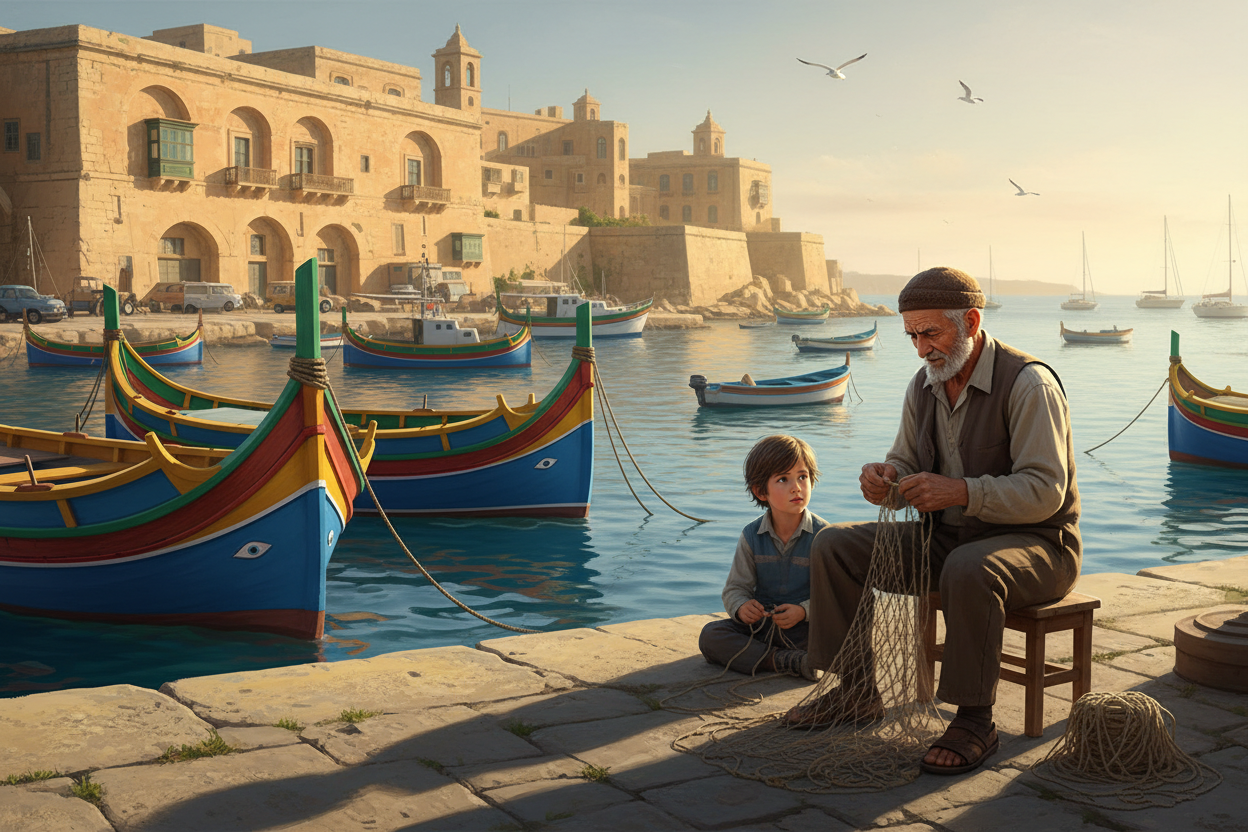
Malta’s relationship with the sea stretches back over 7,000 years, making it one of the oldest continuous maritime cultures in the Mediterranean. Archaeological evidence suggests that the earliest inhabitants of these islands were already skilled seafarers, using primitive boats to navigate between Malta, Gozo, and Comino. The strategic location of Malta at the crossroads of ancient trade routes meant that fishing was not just about survival – it was about connecting with the broader Mediterranean world.
The Phoenicians, who arrived around 750 BC, brought with them advanced fishing techniques and boat-building knowledge that would influence Maltese maritime culture for centuries to come. They introduced the use of nets, hooks, and lines that are still recognizable in modern Maltese fishing practices. The Romans later expanded these traditions, establishing Malta as a crucial supply point for their Mediterranean fleet and developing the first organized fishing communities around what are now Valletta’s Grand Harbor and Marsaxlokk Bay.
Perhaps most significantly, the Knights of St. John, who ruled Malta from 1530 to 1798, transformed the islands into a maritime fortress. While their focus was primarily military, they also encouraged local fishing industries to support their growing population. It was during this period that many of Malta’s most distinctive fishing traditions crystallized, including the blessing of boats, the development of specialized fishing calendars based on religious feast days, and the establishment of fishing cooperatives that still exist today.
Traditional Maltese Fishing Boats: The Iconic Luzzu
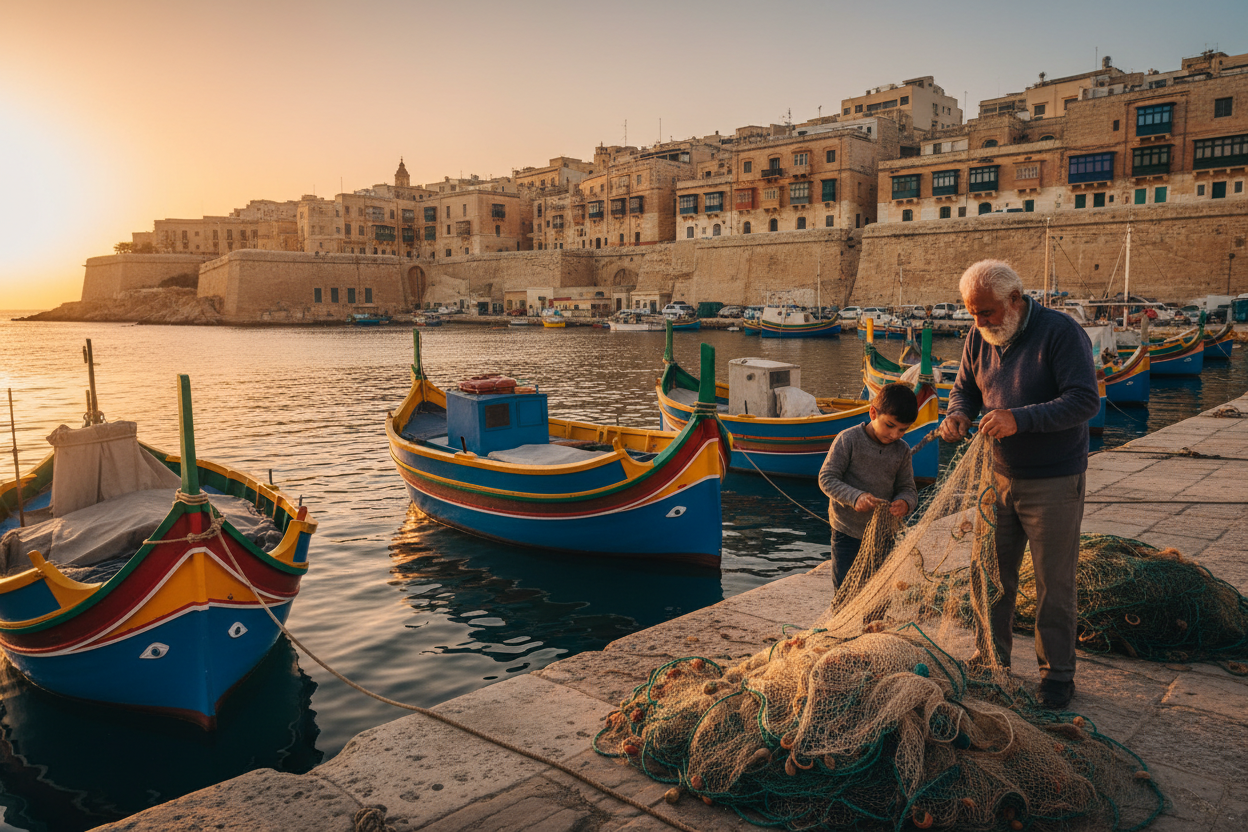
No discussion of Malta’s fishing culture would be complete without celebrating the luzzu, perhaps the most recognizable symbol of Maltese maritime heritage. These brightly painted wooden boats, with their distinctive pointed prows and vibrant colors, have been plying Maltese waters for centuries. The design of the luzzu is believed to have Phoenician origins, though it has evolved over time to perfectly suit local conditions and fishing methods.
What makes the luzzu truly special is not just its functionality, but its artistry. Each boat is hand-painted in brilliant blues, reds, yellows, and greens, with intricate patterns that often reflect the owner’s personal style or family traditions. The most striking feature, however, is the pair of eyes painted on either side of the prow. Known as the “Eye of Osiris” or “Eye of Horus,” these ancient symbols are believed to protect fishermen from harm and help them navigate safely through treacherous waters.
The construction of a luzzu is an art form passed down through generations of boat builders. Traditional craftsmen use locally sourced pine wood, shaping each plank by hand and joining them using techniques that have remained virtually unchanged for centuries. The process can take several months, with each boat being uniquely tailored to its owner’s specific fishing needs and preferences.
Beyond the famous luzzu, Malta’s fishing fleet includes several other traditional vessel types. The kajjik, smaller and more maneuverable than the luzzu, is perfect for inshore fishing and navigating Malta’s rocky coastline. The larger ferilla, though less common today, was once used for deep-sea fishing expeditions that could last several days.
Malta’s Historic Fishing Harbors and Ports
Malta’s coastline is dotted with harbors and fishing ports, each with its own character and history. These maritime gateways have served as the lifeline between land and sea for countless generations of Maltese fishermen, and today they continue to pulse with activity while offering visitors authentic glimpses into traditional island life.
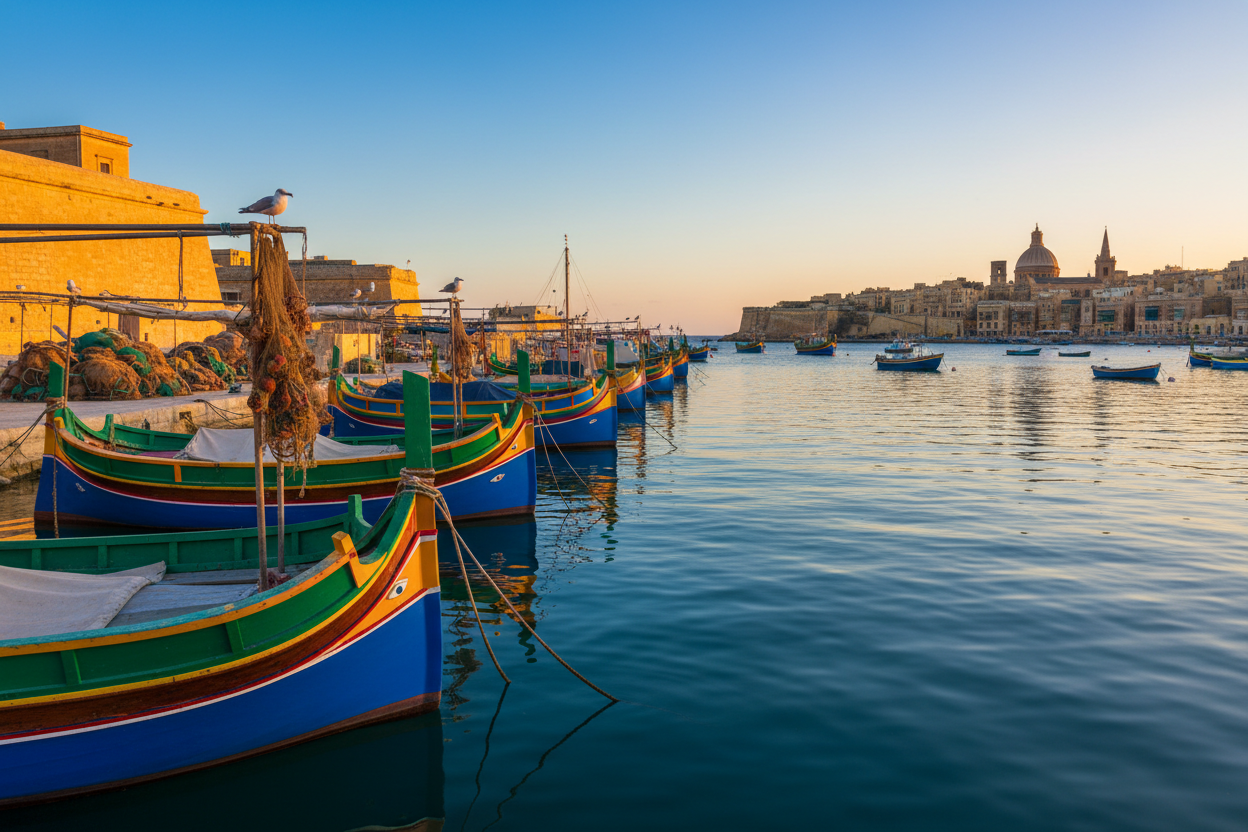
Marsaxlokk, located on Malta’s southeastern coast, stands as the crown jewel of Maltese fishing ports. This picturesque bay has been in continuous use as a fishing harbor for over 3,000 years, making it one of the oldest active ports in the Mediterranean. The sight of dozens of colorful luzzu boats reflected in the calm morning waters is truly breathtaking, especially during the early hours when fishermen return with their overnight catches.
The Sunday fish market at Marsaxlokk has become legendary, drawing visitors from across Malta and beyond. Here, local fishermen sell their fresh catches directly from their boats, continuing a tradition that has remained essentially unchanged for centuries. The market offers everything from traditional Mediterranean species like sea bream and red mullet to seasonal specialties such as lampuki (dolphin fish) and local prawns.
Valletta’s Grand Harbor, while now dominated by cruise ships and commercial vessels, maintains strong connections to Malta’s fishing heritage. The smaller creeks and inlets around the harbor still house working fishing boats, and the area’s maritime museums preserve important artifacts and stories from Malta’s fishing past.
On the sister island of Gozo, Xlendi Bay and Marsalforn offer more intimate fishing experiences. These smaller ports maintain a slower pace of life, where visitors can still witness traditional fishing methods and enjoy freshly caught seafood in family-run restaurants that have been serving the local community for generations.
Traditional Fishing Methods and Seasonal Practices
Maltese fishing culture is deeply intertwined with the natural rhythms of the Mediterranean Sea. Traditional fishermen have developed an intimate understanding of seasonal patterns, weather conditions, and fish behavior that allows them to maximize their catches while respecting the marine environment.
The fishing calendar in Malta is closely tied to religious observances and natural cycles. The lampuki season, running from late August through November, represents one of the most important periods in the Maltese fishing year. During this time, fishermen use traditional techniques passed down through generations to catch dolphin fish as they migrate through Maltese waters. The method involves creating artificial fish aggregating devices using palm fronds and other natural materials to attract schools of fish.
Night fishing remains a cornerstone of Maltese fishing culture. Many traditional fishermen prefer to work under cover of darkness, using techniques that have been refined over centuries. The use of traditional fish traps, known locally as “kannizzati,” represents one of the most sustainable fishing methods still practiced in Malta. These ingenious devices, constructed from bamboo and nets, allow fishermen to catch fish while minimizing environmental impact.
Seasonal specialization is another hallmark of traditional Maltese fishing. Spring brings opportunities for catching sea bream and red mullet in shallow coastal waters, while summer focuses on pelagic species in deeper waters. Winter fishing, though more challenging due to rough seas, offers unique opportunities for catching larger predatory fish that come closer to shore during the cooler months.
Maritime Heritage Preservation and Modern Challenges
As Malta has transformed into a modern European nation, its fishing culture faces both opportunities and challenges. The traditional fishing industry must now navigate complex European Union regulations, environmental concerns, and competition from industrial fishing operations while trying to preserve centuries-old traditions and ways of life.
Several organizations and institutions have emerged to protect and promote Malta’s maritime heritage. The Malta Maritime Museum, housed in a former naval bakery in Vittoriosa, showcases the islands’ rich seafaring history through exhibits of traditional boats, fishing equipment, and maritime artifacts. The museum’s collection includes several restored luzzu boats and detailed displays explaining traditional fishing techniques.
Local fishing cooperatives continue to play crucial roles in maintaining traditional practices while adapting to modern realities. These organizations help fishermen navigate regulatory requirements, share resources, and maintain traditional knowledge. Many cooperatives also work to promote sustainable fishing practices that protect Malta’s marine environment for future generations.
The challenge of preserving traditional boat-building skills has led to several innovative programs. Local craftsmen now work with cultural organizations and schools to teach young people the art of luzzu construction, ensuring that these skills don’t disappear with the current generation of builders.
The Cultural Impact of Fishing on Maltese Society
The influence of fishing culture extends far beyond Malta’s harbors and boats, permeating virtually every aspect of Maltese society. From language and cuisine to festivals and religious practices, the sea has left an indelible mark on the Maltese way of life.
Maltese cuisine reflects centuries of maritime influence, with fish and seafood playing central roles in traditional dishes. Lampuki pie, made with Malta’s national fish, represents one of the most beloved traditional foods. Fish soup, prepared with local catch and traditional herbs, remains a staple in Maltese households. The preparation and sharing of these dishes often involve entire families and communities, reinforcing social bonds forged through shared maritime heritage.
Religious festivals in Malta frequently incorporate maritime elements, reflecting the deep spiritual connection between fishermen and the sea. The feast of St. Peter and St. Paul, patron saints of fishermen, is celebrated with boat processions and the blessing of fishing vessels. These ceremonies blend Catholic traditions with older maritime customs, creating uniquely Maltese expressions of faith and cultural identity.
The Maltese language itself carries numerous fishing-related terms and expressions that have entered everyday speech. Many common phrases and idioms derive from maritime activities, demonstrating how deeply fishing culture has penetrated Maltese consciousness.
Experiencing Malta’s Fishing Culture Today
Modern visitors to Malta have numerous opportunities to experience authentic fishing culture firsthand. Many traditional fishermen now offer boat trips that combine sightseeing with fishing experiences, allowing tourists to learn traditional techniques while enjoying Malta’s stunning coastal scenery.
Cooking classes focused on traditional Maltese seafood dishes have become increasingly popular, offering visitors hands-on experiences with local ingredients and traditional preparation methods. These classes often include visits to local fish markets, providing insights into how Maltese families have traditionally selected and prepared their seafood.
Several festivals throughout the year celebrate Malta’s maritime heritage. The Marsaxlokk Fish Festival, held annually, combines traditional boat displays with seafood tastings and cultural performances. These events offer excellent opportunities to experience authentic Maltese fishing culture in festive, community-oriented settings.
For those interested in deeper cultural immersion, several local organizations offer volunteer opportunities with fishing cooperatives and maritime preservation projects. These programs allow visitors to contribute to the preservation of Maltese fishing culture while gaining intimate insights into traditional ways of life.
Conclusion: Preserving a Living Heritage
Malta’s fishing culture represents far more than a picturesque tourist attraction or historical curiosity. It embodies a living connection to the sea that has sustained the Maltese people for thousands of years, shaping their identity, traditions, and way of life in profound and lasting ways. The colorful luzzu boats that grace Malta’s harbors are not merely beautiful objects – they are working vessels that continue to support families and communities while maintaining ancient traditions in an increasingly modern world.
As Malta continues to evolve as a member of the European Union and a popular Mediterranean destination, the challenge lies in preserving this authentic maritime heritage while adapting to contemporary realities. The success of this endeavor depends not only on the dedication of traditional fishermen and cultural organizations but also on the appreciation and support of visitors who recognize the value of experiencing genuine cultural traditions.
The story of Malta’s fishing culture is ultimately a story of resilience, adaptation, and the enduring human connection to the sea. By understanding and supporting these traditions, we help ensure that future generations will continue to witness the sight of brightly painted boats setting out from ancient harbors, carrying with them the accumulated wisdom and traditions of countless generations of Maltese fishermen. In preserving Malta’s fishing culture, we preserve not just a way of life, but a unique window into the soul of the Mediterranean itself.
 English
Leave a Reply