Malta Stone Architecture: The Timeless Beauty of Limestone Buildings and Construction
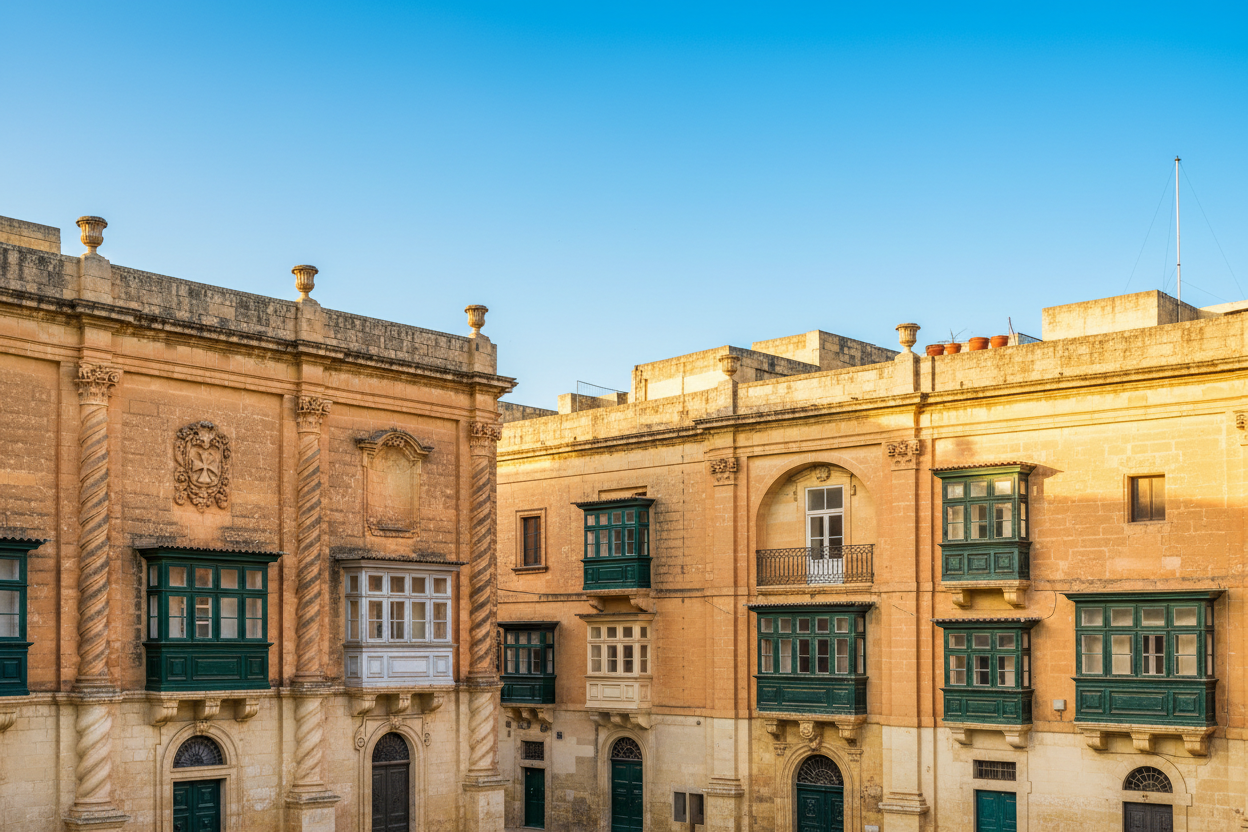
When you first set foot on the Mediterranean archipelago of Malta, one thing strikes you immediately – the warm, honey-colored buildings that seem to glow under the intense island sun. This isn’t just coincidence or careful urban planning; it’s the result of centuries of building with Malta’s most precious natural resource: limestone. From ancient temples to modern constructions, Malta stone architecture tells the story of a civilization that learned to work in perfect harmony with its geological gifts.
Malta’s limestone isn’t just building material – it’s the very foundation of the island’s identity. Walking through Valletta’s narrow streets or exploring the ancient city of Mdina, you’re witnessing one of the world’s most cohesive architectural landscapes, where every building, from grand palaces to humble homes, speaks the same geological language.
The Geological Foundation of Malta’s Architectural Heritage
Malta sits on a foundation of sedimentary rock formed over millions of years when the Mediterranean was a much different place. The limestone that defines Malta’s architecture comes in two main varieties: the harder Coralline limestone and the softer Globigerina limestone. Each type has played a crucial role in shaping how Maltese builders have approached construction over the millennia.
The Coralline limestone, with its pale cream to white color, forms the upper layers of Malta’s geological structure. It’s incredibly durable and has been the preferred choice for exterior facades and structural elements that need to withstand the island’s sometimes harsh weather conditions. Meanwhile, the golden-hued Globigerina limestone, softer and easier to work with, became the mason’s friend for intricate carvings and decorative elements.
What makes Malta’s limestone particularly special is its workability when first quarried. Fresh from the ground, it’s relatively soft and can be cut with simple tools, but it hardens significantly when exposed to air – a property that made it perfect for the detailed stonework that characterizes Maltese architecture.
Traditional Maltese Stone Construction Techniques
The art of working with Malta stone has been passed down through generations of skilled craftsmen who developed techniques perfectly suited to the material’s unique properties. Traditional Maltese stone construction relies on the principle of working with the stone’s natural characteristics rather than fighting against them.
Maltese masons learned early that timing was everything. The stone had to be quarried, shaped, and positioned while it was still in its “green” state – soft enough to work but beginning its hardening process. This required careful coordination between quarrymen, stone carvers, and builders, creating a rhythm of construction that has remained largely unchanged for centuries.
The traditional building process begins with selecting stones based on their intended use. Larger, more uniform blocks form the structural walls, while smaller pieces are carefully fitted to create the tight joints that characterize quality Maltese stonework. The absence of mortar in many traditional structures isn’t an oversight – it’s a testament to the precision with which Maltese craftsmen could cut and fit their stones.
Iconic Malta Stone Buildings Through History
The story of Malta stone architecture spans over 5,000 years, beginning with some of the world’s oldest free-standing structures. The megalithic temples of Hagar Qim and Mnajdra, built between 3600 and 3200 BCE, represent humanity’s earliest experiments with large-scale limestone construction. These ancient builders somehow moved massive limestone blocks weighing several tons, creating structures that have survived longer than the pyramids of Egypt.
The medieval period brought new sophistication to Malta stone architecture. The ancient capital of Mdina, known as the “Silent City,” showcases how medieval builders refined limestone construction techniques. Walking through its narrow streets today, you can see how craftsmen learned to create increasingly complex architectural elements – from simple rectangular blocks to elaborate carved balconies and decorative facades.
The arrival of the Knights of St. John in 1530 marked a golden age for Malta stone architecture. These wealthy crusaders brought European architectural knowledge and combined it with local limestone expertise to create some of the Mediterranean’s most impressive buildings. The construction of Valletta, beginning in 1566, represents the pinnacle of Malta stone architecture – an entire city built almost exclusively from local limestone, designed to be both beautiful and defensible.
The Art of Limestone Carving and Decoration
One of the most distinctive features of Malta stone architecture is the incredible detail that craftsmen could achieve with limestone. The material’s workability allowed for intricate carvings that would be nearly impossible with harder stones. From the elaborate baroque facades of Valletta’s churches to the delicate tracery of medieval windows in Mdina, limestone carving became an art form in its own right.
The famous Maltese balconies, with their colorful wooden shutters and intricate stone supports, showcase this carving tradition at its finest. These aren’t just decorative elements – they’re functional architectural features that provide shade and privacy while adding visual interest to building facades. The stone brackets that support these balconies often feature elaborate scrollwork, heraldic symbols, or religious motifs, each one unique to its building.
Religious architecture provided another canvas for limestone artistry. Malta’s churches, from the massive St. John’s Co-Cathedral in Valletta to smaller parish churches scattered across the islands, demonstrate how limestone could be shaped into soaring columns, delicate rose windows, and elaborate altar pieces. The warm color of the stone creates an atmosphere that’s both grand and welcoming, perfectly suited to the island’s deeply religious culture.
Modern Applications of Traditional Malta Stone
While Malta’s construction industry has embraced modern materials and techniques, limestone remains an important part of contemporary architecture. Today’s builders face the challenge of respecting Malta’s architectural heritage while meeting modern needs for comfort, efficiency, and sustainability.
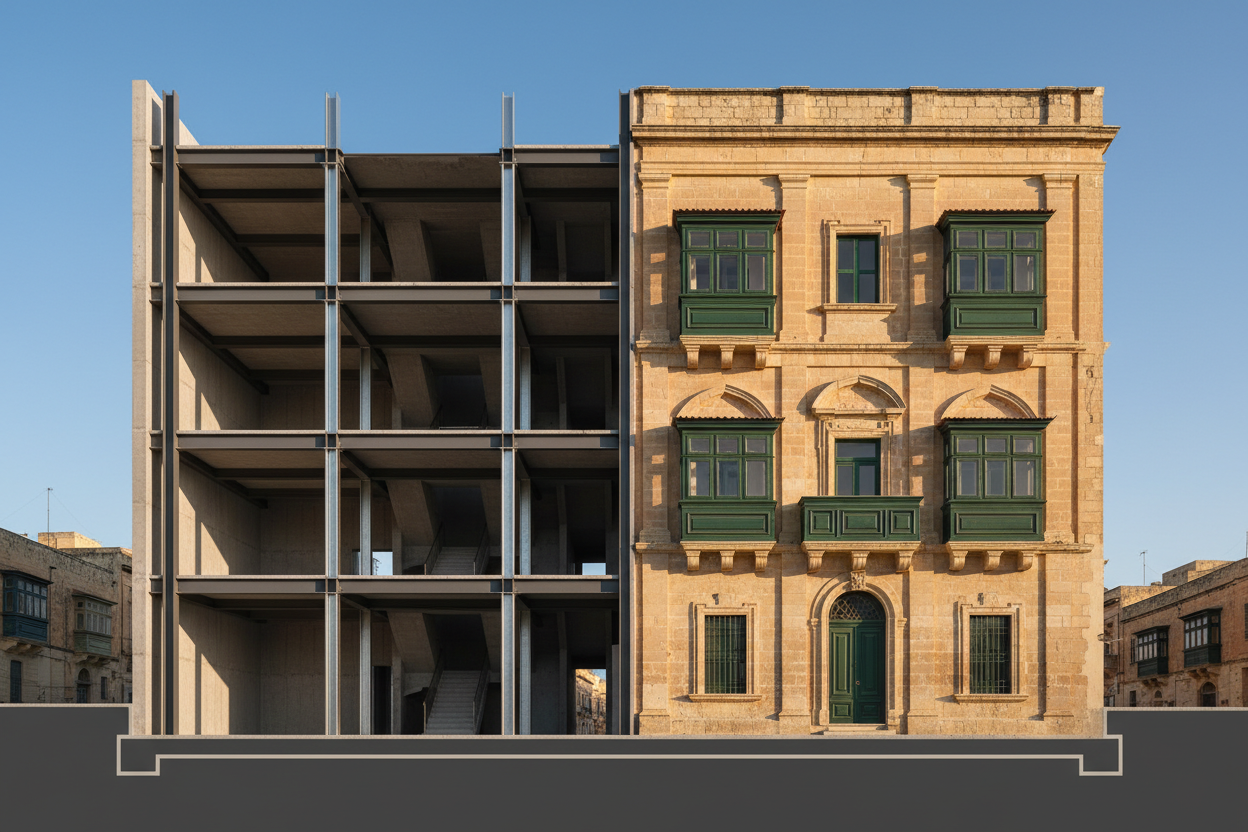
Contemporary Malta stone architecture often combines traditional limestone facades with modern structural systems. Steel and concrete provide the strength and flexibility required for larger buildings, while limestone cladding maintains the visual continuity that makes Malta’s built environment so distinctive. This approach allows architects to create buildings that are unmistakably modern in their functionality while remaining true to Malta’s architectural DNA.
The restoration and adaptive reuse of historic limestone buildings has become a specialized field in Malta. Converting centuries-old palaces into boutique hotels or transforming medieval houses into modern residences requires deep understanding of both traditional construction techniques and contemporary building requirements. These projects often reveal the remarkable durability of well-built limestone structures – many buildings that are hundreds of years old require only minor structural interventions to meet modern standards.
Preservation Challenges and Conservation Efforts
Malta’s limestone architecture faces unique preservation challenges. The same properties that make the stone workable when fresh can create problems over time. Salt air from the surrounding Mediterranean can penetrate the stone, causing gradual deterioration. Modern pollution and increased tourism also put stress on historic buildings that were never designed to handle such pressures.
Conservation efforts in Malta have developed sophisticated approaches to limestone preservation. Traditional lime-based mortars and renders, which allow the stone to “breathe,” are preferred over modern cement-based materials that can trap moisture and accelerate deterioration. Skilled craftsmen still practice traditional stone carving techniques, ensuring that replacement elements match the original work in both appearance and performance.
The Maltese government has implemented strict planning regulations to protect the islands’ architectural heritage. New buildings in historic areas must use limestone facades, and alterations to existing structures require careful approval. These measures help maintain the visual coherence that makes Malta’s built environment so remarkable, though they sometimes create tension between heritage preservation and modern development needs.
The Future of Malta Stone Architecture
As Malta looks toward the future, limestone continues to play a central role in the islands’ architectural identity. Climate change and sustainability concerns are driving new interest in traditional building materials and techniques. Limestone’s thermal mass properties, which help moderate interior temperatures, make it increasingly relevant in an era of energy-conscious design.
New technologies are also opening possibilities for limestone architecture. Computer-controlled cutting equipment allows for precise stone shaping that would have taken master craftsmen weeks to achieve by hand. 3D scanning and modeling help architects and conservators understand historic structures in unprecedented detail, improving both restoration techniques and new design approaches.
The challenge for Malta’s future architects and builders lies in maintaining the essential character of Malta stone architecture while adapting to changing needs and technologies. Success will require the same deep understanding of materials and place that has characterized the best of Malta’s building tradition for thousands of years.
Malta stone architecture represents one of the world’s most successful examples of building in harmony with local materials and conditions. From prehistoric temples to contemporary constructions, the warm honey-colored limestone has provided not just building material but a unifying aesthetic that makes Malta’s built environment instantly recognizable. As the islands continue to evolve, this geological gift ensures that Malta’s architectural future will remain rooted in its remarkable stone foundation, creating new chapters in a story that began over five millennia ago.
 English
Leave a Reply