Malta Religious Processions: Easter and Feast Day Traditions
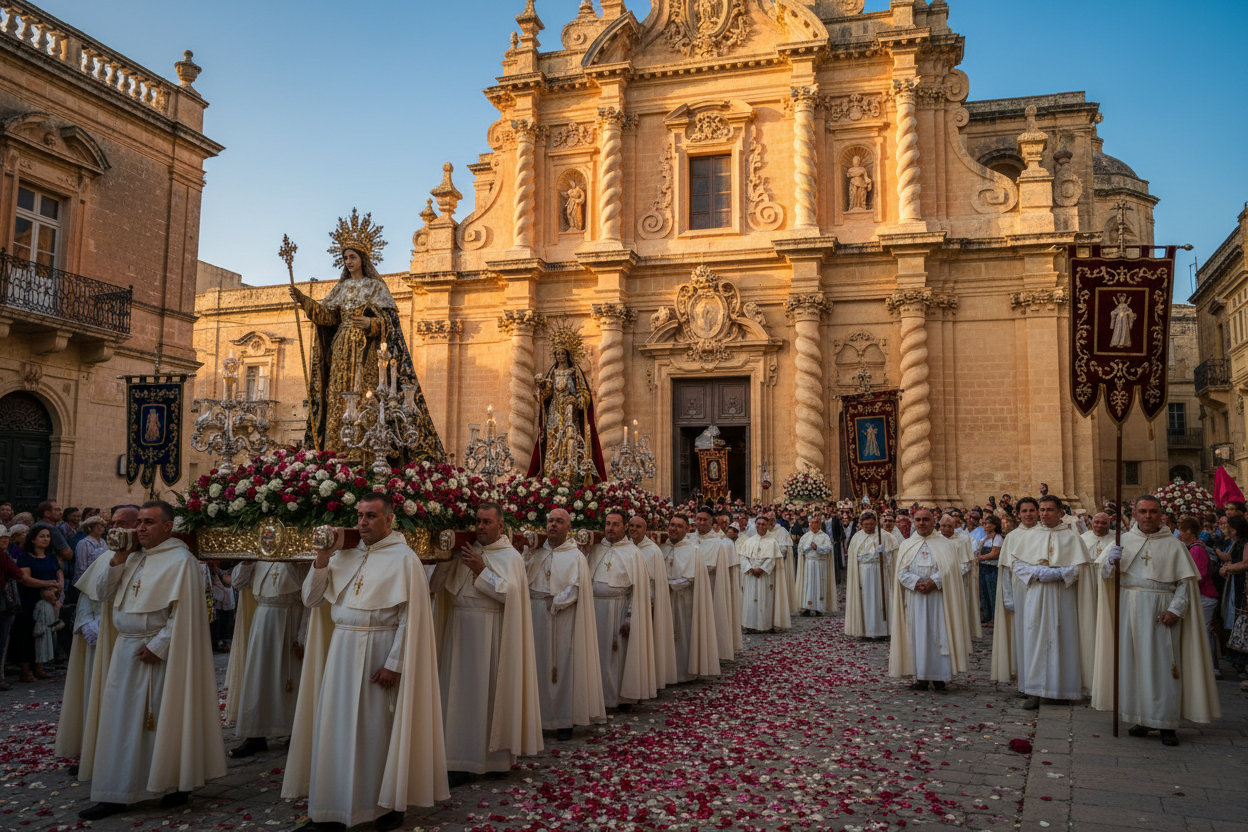
The Mediterranean island of Malta comes alive with profound spiritual fervor during religious processions that have shaped its cultural identity for centuries. These deeply rooted traditions, particularly during Easter and feast days, transform the narrow streets of ancient cities into open-air theaters of faith, where centuries-old customs meet contemporary devotion. Walking through Malta during these sacred times feels like stepping back in time, where every stone seems to whisper stories of unwavering religious dedication.
Malta’s religious processions represent more than mere ceremony – they embody the soul of a nation whose Catholic heritage runs deeper than the limestone foundations of its ancient temples. From the haunting Good Friday processions to the jubilant feast day celebrations, these events showcase a living tradition that continues to captivate both locals and visitors alike.
The Historical Roots of Maltese Religious Traditions
Malta’s religious procession traditions trace their origins back to the arrival of Christianity on the island, traditionally attributed to St. Paul’s shipwreck in 60 AD. However, the elaborate processions we witness today began taking shape during the medieval period, flourishing under the Knights of St. John who ruled Malta from 1530 to 1798.
The Knights brought with them European religious customs that blended seamlessly with existing local traditions, creating a unique Maltese interpretation of Catholic ceremonial practices. Spanish and Italian influences became particularly pronounced, as many Knights hailed from these regions, introducing processional elements that remain integral to Maltese celebrations today.
During the British colonial period, these traditions faced challenges but ultimately survived and even strengthened, as the Maltese people used religious celebrations as a means of preserving their cultural identity. The resilience of these customs during World War II, when processions continued despite bombing raids, demonstrates their profound importance to the Maltese psyche.
Easter Week Processions: A Journey Through Sacred Time
Easter week in Malta transforms the archipelago into a living passion play, where each day brings its own unique processional traditions. The week begins with Palm Sunday celebrations, but it’s the events of Holy Week that truly showcase the depth of Maltese religious devotion.
Maundy Thursday processions focus on the Blessed Sacrament, with parishes organizing solemn walks that commemorate Christ’s institution of the Eucharist. These processions often feature elaborate floral decorations and candlelit pathways that create an atmosphere of reverent contemplation.
However, it’s the Good Friday processions that represent the pinnacle of Malta’s Easter traditions. These somber, deeply moving ceremonies recreate Christ’s path to Calvary with remarkable attention to historical detail and emotional authenticity.
Good Friday: The Crown Jewel of Maltese Religious Processions
Good Friday in Malta is unlike anywhere else in the world. The island’s most significant religious procession takes place in Valletta, Malta’s capital, but virtually every town and village holds its own version of this sacred drama.
The Valletta Good Friday procession features seven life-sized statue groups depicting scenes from the Passion of Christ. These masterpieces of religious art, some dating back centuries, are carried through the streets by devoted volunteers who consider it a profound honor to participate. The statues include representations of the Agony in the Garden, the Scourging at the Pillar, the Crowning with Thorns, Christ meeting His Mother, Simon of Cyrene helping carry the Cross, the Crucifixion, and the Descent from the Cross.
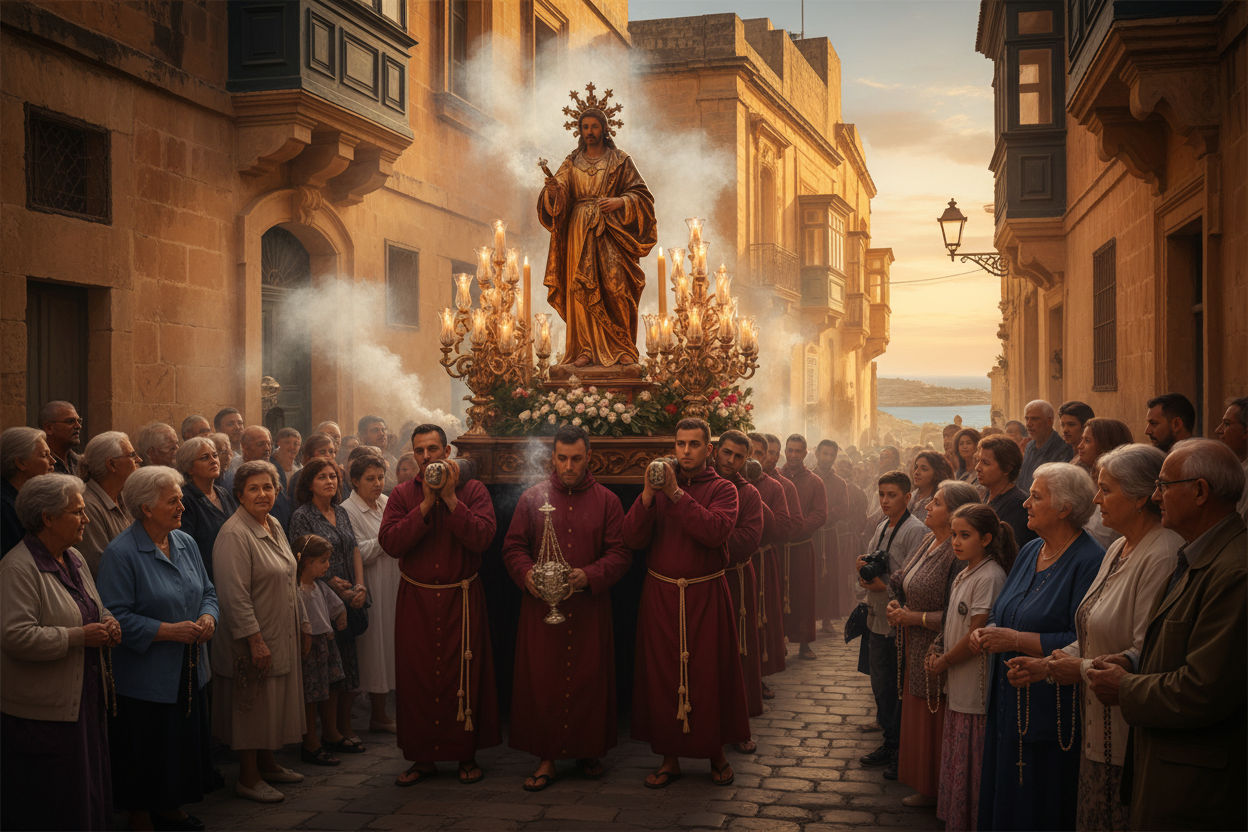
What makes these processions particularly moving is the absolute silence that falls over the crowds. Thousands of people line the streets, yet you can often hear only the shuffling of feet and the occasional whispered prayer. This silence creates an atmosphere of collective meditation that’s both haunting and beautiful.
The procession participants, dressed in traditional robes and hoods, move with deliberate solemnity. Many walk barefoot as an act of penance, while others carry heavy wooden crosses. The sight of hooded penitents, reminiscent of medieval religious brotherhoods, adds to the timeless quality of these celebrations.
Feast Day Celebrations: Joy and Community Spirit
While Easter processions focus on solemnity and reflection, Malta’s feast day celebrations burst with joy, color, and community spirit. Each parish has its own patron saint, and the annual feast in their honor represents the highlight of the local religious and social calendar.
These celebrations typically span several days, building up to the main feast day with novenas, special masses, and smaller processions. The atmosphere is festive rather than penitential, with decorations adorning every street corner and balcony.
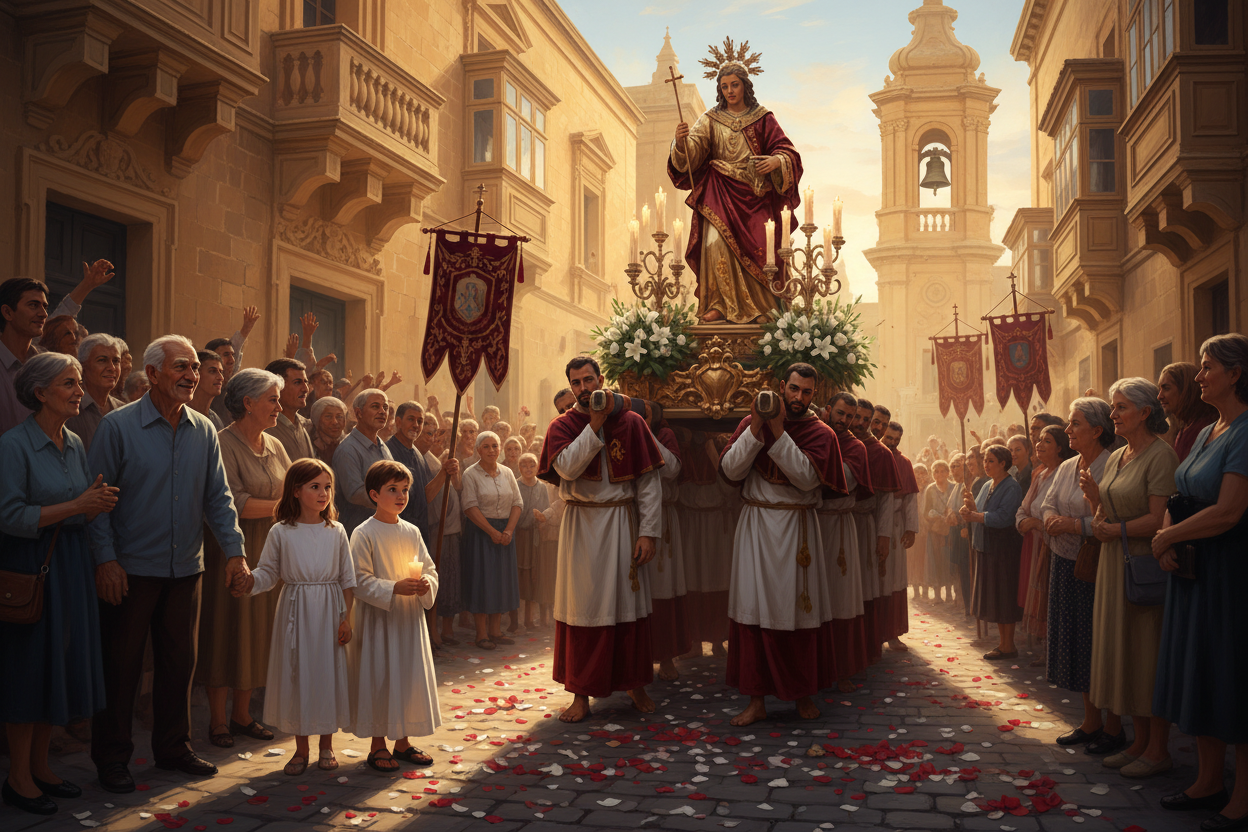
The feast day procession itself centers around the parish’s statue of its patron saint, often a magnificent work of art crafted by renowned sculptors. These statues, some weighing several tons, are carried through the streets by teams of men who train for months to ensure they can handle the physical demands safely.
What strikes visitors most about feast day processions is the genuine community involvement. Entire families participate, from elderly grandparents who remember decades of celebrations to young children experiencing their first feast. The procession route becomes a stage where social bonds are reinforced and cultural values are transmitted to new generations.
The Art and Craftsmanship Behind the Processions
The religious statues that form the centerpiece of Malta’s processions represent centuries of artistic achievement. Many were crafted by master sculptors from Italy, while others showcase the talents of local Maltese artists who learned their trade through generations of family tradition.
These statues require constant maintenance and restoration, work that’s often carried out by volunteer craftsmen who view their efforts as acts of devotion. The attention to detail is extraordinary – from the realistic facial expressions to the intricate folds of clothing, every element is designed to inspire religious contemplation.
The processional banners, decorative arches, and floral arrangements that accompany the statues also represent significant artistic endeavors. Local committees spend months preparing these elements, often incorporating designs that have been passed down through generations while adding contemporary touches.
Music and Malta’s Religious Processions
Music plays a crucial role in Malta’s religious processions, though its use varies significantly between Easter and feast day celebrations. Good Friday processions traditionally maintain silence or feature only the most solemn hymns, creating an atmosphere of mourning appropriate to the day’s significance.
Feast day processions, however, showcase Malta’s rich tradition of band music. Local philharmonic societies, some dating back over a century, provide musical accompaniment that ranges from traditional hymns to elaborate marches composed specifically for processional use.
The rivalry between different band clubs adds an interesting dynamic to feast celebrations, as communities take pride in their musical traditions and often compete to present the most impressive performances. This friendly competition has helped maintain high musical standards and ensures that Malta’s band tradition remains vibrant.
Modern Challenges and Adaptations
Like many traditional practices, Malta’s religious processions face challenges in the modern era. Urbanization has changed the landscape through which processions pass, while changing social attitudes have affected participation levels among younger generations.
However, these traditions have shown remarkable adaptability. Organizers have embraced technology for coordination and safety purposes while carefully preserving the essential spiritual elements. Social media has actually helped spread awareness of these events, attracting both local participants and international visitors.
The COVID-19 pandemic posed unprecedented challenges, forcing organizers to adapt centuries-old traditions to modern health requirements. The creativity shown in maintaining the spiritual essence of these celebrations while ensuring public safety demonstrated the resilience and importance of these traditions to Maltese society.
Experiencing Malta’s Religious Processions as a Visitor
For visitors, witnessing Malta’s religious processions offers an authentic glimpse into the island’s cultural soul. These events are not tourist attractions in the conventional sense – they’re living traditions that welcome respectful observers while maintaining their genuine spiritual purpose.
The best viewing spots are often along the traditional routes that wind through Malta’s historic city centers. Arriving early ensures good positions, but the real magic often happens in the quieter side streets where the procession’s spiritual impact feels most profound.
Photography is generally permitted, but visitors should be mindful of the sacred nature of these events. The most rewarding approach is often to put cameras aside and simply absorb the atmosphere, allowing the centuries-old traditions to work their contemplative magic.
Malta’s religious processions represent far more than colorful pageantry or tourist spectacle. They embody a living connection to centuries of faith, community, and cultural identity that continues to shape Maltese society today. Whether witnessing the profound solemnity of Good Friday or the joyful celebration of a patron saint’s feast day, these processions offer an authentic encounter with traditions that have survived conquest, colonization, and modernization.
For the Maltese people, these processions remain vital expressions of their deepest values and beliefs. For visitors, they provide an opportunity to witness authentic cultural traditions that reveal the spiritual heart of this remarkable Mediterranean nation. In an increasingly secular world, Malta’s religious processions stand as powerful reminders of faith’s enduring ability to unite communities and preserve cultural heritage across generations.
 English
Leave a Reply