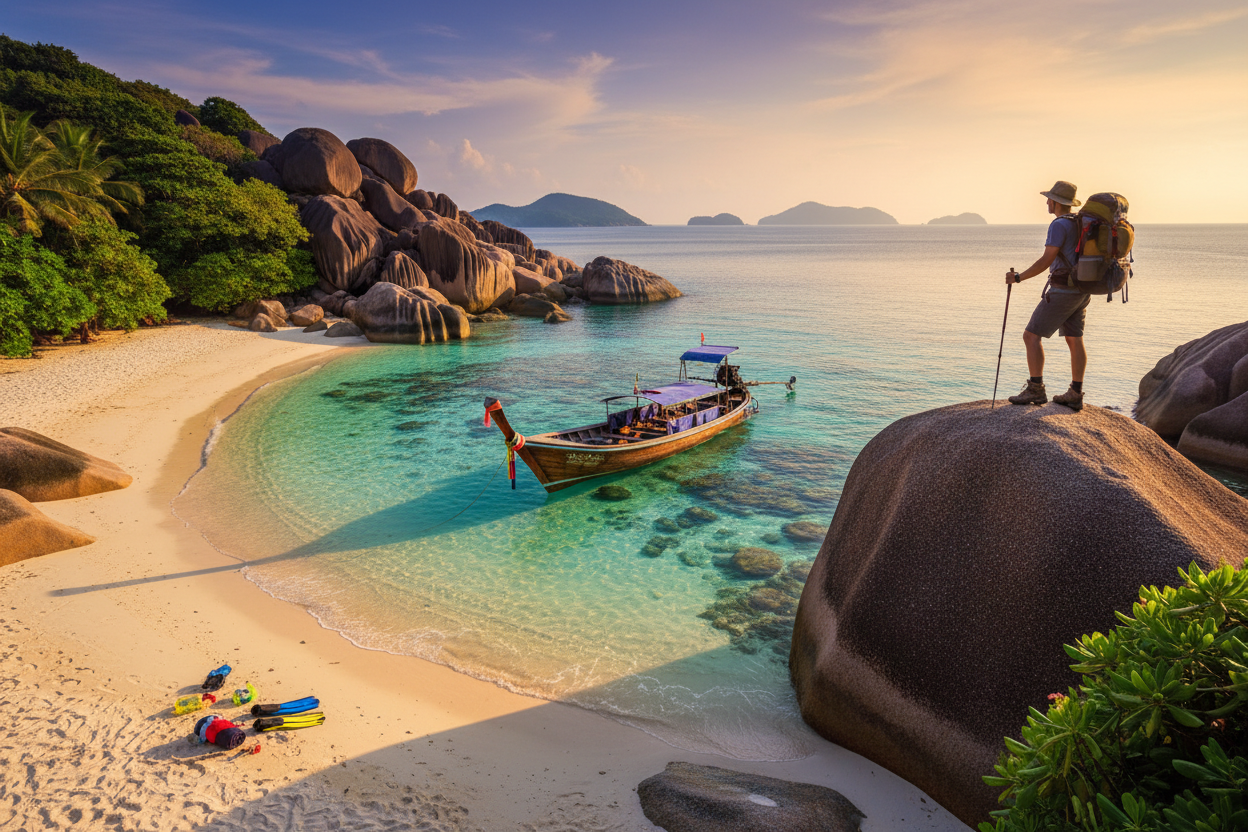
Picture this: crystal-clear turquoise waters stretching endlessly, pristine white sand beaches that feel untouched by time, and underwater worlds teeming with vibrant marine life. Welcome to the Similan Islands, Thailand’s crown jewel of diving destinations and a backpacker’s paradise that remains refreshingly unspoiled despite its growing popularity.
Located in the Andaman Sea, about 84 kilometers northwest of Phuket, the Similan Islands National Park consists of nine granite islands that offer some of the most spectacular scenery and diving experiences in Southeast Asia. For budget-conscious travelers seeking adventure without breaking the bank, these islands present the perfect blend of natural beauty, thrilling activities, and affordable exploration opportunities.
Whether you’re a seasoned backpacker or someone planning their first budget adventure in Thailand, this comprehensive guide will help you navigate everything from transportation and accommodation to the best diving spots and money-saving tips for your Similan Islands adventure.
Getting to Similan Islands on a Budget
The journey to Similan Islands begins with getting to one of the departure points along Thailand’s west coast. Most backpackers choose between Khao Lak, Phuket, or Ranong as their base, with Khao Lak being the closest and most economical option.
From Bangkok, take an overnight bus to Khao Lak for around 400-600 baht, which saves you both accommodation costs and travel time. If you’re coming from other parts of Thailand, local buses and minivans connect major cities to these coastal towns. Once you reach your departure point, speedboat transfers to the islands typically cost between 1,800-2,500 baht for day trips, depending on the season and operator.
Here’s a money-saving tip I learned during my first visit: book your boat transfer through local guesthouses rather than tourist agencies. The prices are often 20-30% lower, and you’ll get the same service. Many backpacker hostels in Khao Lak have partnerships with boat operators and can arrange transfers at discounted rates.
Best Time to Visit Similan Islands
The Similan Islands National Park operates on a seasonal schedule, typically opening from mid-October to mid-May. This timing coincides with Thailand’s dry season, ensuring calmer seas and better visibility for diving and snorkeling.
For backpackers seeking the best value, consider visiting during the shoulder seasons – late October to November or April to early May. During these periods, you’ll encounter fewer crowds, potentially lower accommodation rates, and still enjoy excellent weather conditions. The peak season from December to March offers the most predictable weather but comes with higher prices and more tourists.
I’ve visited during both peak and shoulder seasons, and honestly, the difference in experience quality is minimal while the savings can be substantial. The water remains warm year-round at 26-29°C, and marine life is abundant throughout the entire season.
Accommodation Options for Budget Travelers
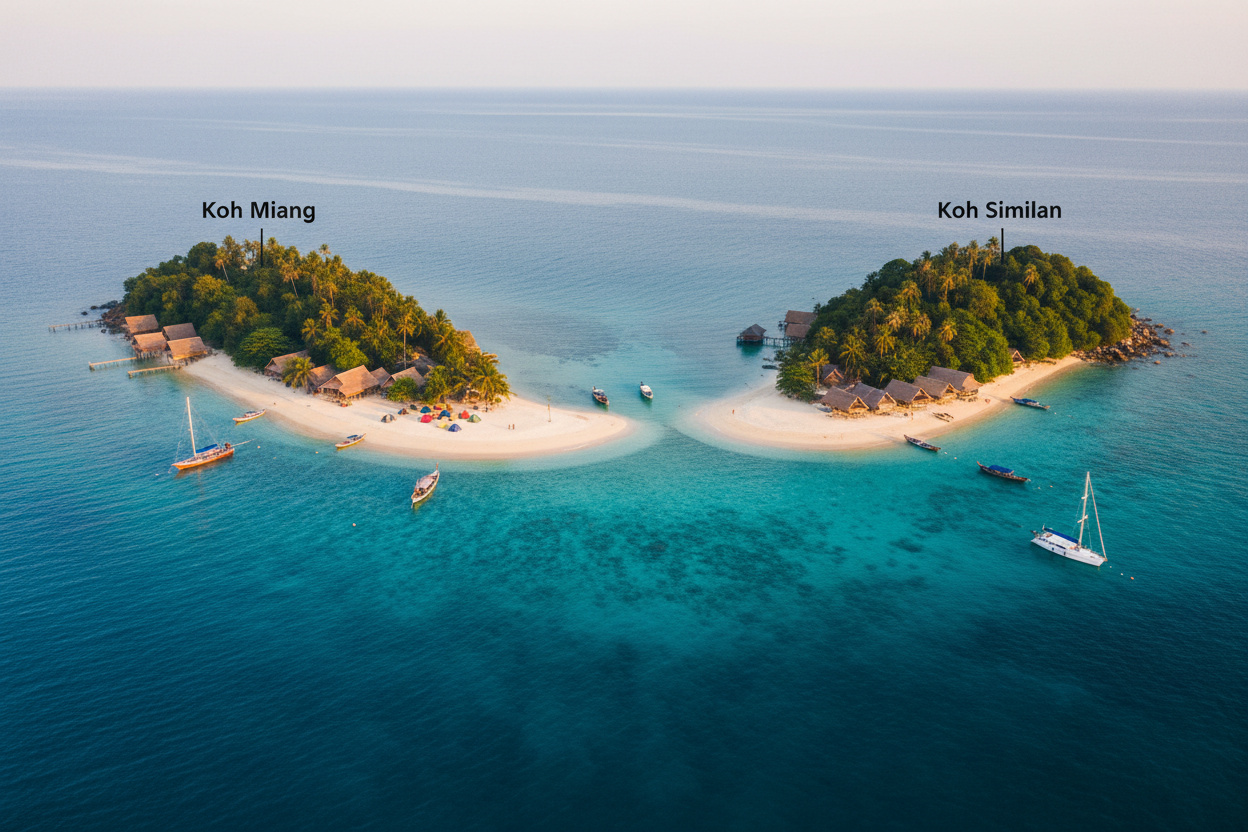
Here’s where planning becomes crucial: overnight stays are only permitted on Koh Miang (Island No. 4) and Koh Similan (Island No. 8), and options are limited. The national park operates basic bungalows and camping facilities, but these fill up quickly during peak season.
Park bungalows cost around 1,000-2,000 baht per night for basic fan-cooled rooms that sleep 2-6 people, making them perfect for backpacker groups. Camping is the most budget-friendly option at approximately 30 baht per person per night, plus tent rental fees if you don’t bring your own gear.
Many budget travelers opt for day trips instead, staying in affordable guesthouses in Khao Lak for 300-800 baht per night. This approach offers more comfort and dining options while still allowing you to experience the islands’ beauty. However, if you’re serious about diving or want to witness the islands’ magical sunrise and sunset moments, spending at least one night on the islands is worth the extra cost.
Diving and Snorkeling Paradise
The Similan Islands rank among the world’s top ten diving destinations, and for good reason. The underwater landscape features massive granite boulders, vibrant coral reefs, and an incredible diversity of marine life ranging from tiny nudibranchs to majestic manta rays.
For certified divers, the islands offer dive sites suitable for all skill levels. Elephant Head Rock and Christmas Point are perfect for beginners, while advanced divers can explore the dramatic swim-throughs at Deep Six or the challenging currents around Koh Bon and Koh Tachai.
Budget-conscious divers should look for package deals that include multiple dives, meals, and accommodation. Many dive shops in Khao Lak offer 2-3 day liveaboard trips starting around 8,000-12,000 baht, which breaks down to excellent value when you consider the number of dives, meals, and accommodation included.
Don’t worry if you’re not certified – the snorkeling here is absolutely world-class. The shallow reefs around Koh Miang and Koh Similan offer incredible visibility and abundant marine life accessible right from the beach. Snorkeling gear rental costs about 200-300 baht per day, or you can bring your own to save money.
Must-Visit Spots and Activities
Each island in the Similan chain offers unique attractions beyond the underwater wonders. Koh Similan, the largest island, features the famous Sailing Rock viewpoint that provides Instagram-worthy panoramic views of the archipelago. The hike to the top takes about 20 minutes and is absolutely free – just bring water and wear proper footwear.
Koh Miang boasts two beautiful beaches connected by a short jungle trail. The beaches here are perfect for swimming, sunbathing, and beach camping. Princess Beach on Koh Miang offers some of the finest white sand you’ll find anywhere in Thailand.
For those interested in marine biology, the islands’ ranger stations often have information displays about local ecosystems and conservation efforts. It’s fascinating to learn about the delicate balance that maintains these pristine environments.
Photography enthusiasts will find endless opportunities both above and below water. The contrast between the white sand, turquoise water, and granite boulders creates stunning compositions that don’t require expensive equipment to capture effectively.
Budget-Friendly Food and Dining Tips
Food options on the islands are limited but adequate for budget travelers. The national park restaurants serve basic Thai dishes and Western options at reasonable prices – expect to pay 80-150 baht for main dishes. While not gourmet, the food is fresh and filling.
Smart backpackers bring snacks, instant noodles, and non-perishable items from the mainland. There are small shops on the islands, but prices are significantly higher than on the mainland. Bringing your own water bottles and refilling them at available stations helps reduce costs and plastic waste.
If you’re staying in Khao Lak and doing day trips, take advantage of the excellent local food scene. Street food and local restaurants offer delicious meals for 40-80 baht, and many guesthouses provide complimentary breakfast.
Essential Packing List for Similan Islands
Packing smart can save you money and enhance your experience. Essential items include reef-safe sunscreen (regular sunscreen damages coral reefs), a reusable water bottle, quick-dry clothing, and a waterproof bag for electronics.
If you plan to camp, bring a good tent, sleeping bag, and camping gear. While rental options exist, having your own equipment provides better comfort and saves money on longer stays. A headlamp or flashlight is crucial since the islands have limited lighting after dark.
Don’t forget underwater cameras or waterproof cases for your phone. The marine life encounters you’ll have deserve to be documented, and underwater photography equipment rental on the islands is expensive and limited.
Conservation and Responsible Tourism
The Similan Islands face increasing pressure from tourism, making responsible travel practices essential for preserving this natural wonder for future generations. Follow all national park rules, including restrictions on touching coral reefs, feeding marine animals, and collecting shells or rocks.
The park has implemented various conservation measures, including limiting daily visitor numbers and closing certain areas for ecosystem recovery. As budget travelers, we have a responsibility to minimize our environmental impact while maximizing our positive contribution to local communities.
Choose tour operators and accommodations that demonstrate genuine commitment to environmental protection. Many local businesses now participate in coral restoration projects and marine conservation initiatives that you can learn about during your visit.
Money-Saving Tips and Final Thoughts
Traveling to the Similan Islands on a budget requires some planning, but the rewards are immense. Book accommodations and tours in advance during peak season, travel in groups to split costs, and consider longer stays to take advantage of package deals.
Bring cash, as ATMs are not available on the islands, and card acceptance is limited. Budget around 2,000-3,000 baht per day for a comfortable backpacker experience including accommodation, food, and activities.
The Similan Islands offer an unparalleled combination of natural beauty, adventure, and cultural experience that justifies every baht spent. Whether you’re seeking world-class diving, pristine beaches, or simply a break from the more crowded destinations in Thailand, these islands deliver experiences that will stay with you long after you’ve returned home.
Remember, the best travel experiences often come from embracing the unexpected, connecting with fellow travelers, and maintaining flexibility in your plans. The Similan Islands provide the perfect backdrop for creating those unforgettable backpacking memories that define great adventures.
 English
Leave a Reply